Category: Volume 25 – Number 2 – January 2015

  • Introduction: Medium and Mediation

    Matt Tierney (bio) and Mathias Nilges (bio)

    As we were composing the introduction to this special issue of Postmodern Culture, a Missouri grand jury delivered its decision not to indict a white police officer, Darren Wilson, for the killing of an unarmed black teenager, Michael Brown. This decision, baffling to many, was announced in a press conference by Robert McCulloch, the prosecuting attorney for St. Louis County. McCulloch considered the grand jury’s deliberation to have been difficult, but not because the jury was distraught over the racism built into most forms of American policing, and not because the jury knew that there would be public outcry no matter what choice it made, and certainly not because the prosecutor’s office had made any mistakes in presenting the case against Wilson. Indeed, it was never in question that Wilson had fired the gun that killed Brown on August 9, 2014. In spite of this, McCulloch professed: “The most significant challenge encountered in this investigation has been the 24-hour news cycle and its insatiable appetite for something, for anything to talk about. Following closely behind were the nonstop rumors on social media.”1 News media and social media thus bore the blame for any difficulty in the grand jury’s decision because, immediately after Brown’s death, “neighbors began gathering and anger began growing because of the various descriptions of what had happened.” Any conflict that followed the shooting was, in McCulloch’s eye, due to the contradictory and mediated “descriptions” of the shooting, and not to the shooting itself. The media, both news and social, had spread “speculation and little if any solid, accurate information.” By McCulloch’s logic, it was the inaccuracy of reporting and the media’s formal insolidity, rather than the actual death of Michael Brown, that had led to widespread anger and protest.

    The effort in this special issue is both to refine and to broaden the conceptual language of “media” and “medium,” so that we may reduce some of the distance between its scholarly employment within theory and its popular use to describe culture. This is a matter of terminological precision, not populism. McCulloch’s traffic in the language of “media” is both banal and troubling. Banal because McCulloch’s use of the word is too mundane to merit further notice. Yet troubling because the word’s flexibility is what allows McCulloch to perform an insidious rhetorical move, draping a single heading over a broad array of cultural forms, from television to print and from cellphones to the Internet, and then blaming that whole array, in one triumphant gesture, for having impeded justice in the death of Michael Brown. “Media” is just a word, it could be argued. But in this case, it is a word and an idea that, no matter how much it was touted in the struggle against reactionary social forces, had come to belong as much to the reactionary forces as to the struggle. Whatever truth-telling capacity may survive in the fourth estate, it could be said, this capacity vanishes as soon as the press is dismissed for its “insatiable appetite” and “inaccurate descriptions.” And whatever countervailing common voice might be heard in the texts and images of Twitter and Facebook, this voice is hushed by the accusation of mere rumormongering. There may be a great deal of liberation latent in the specific techniques of protest and knowledge called “media” in their plurality and “medium” in their discrete character. It is difficult to tell. As long as these words allow the techniques they name to be so easily lumped together and then marginalized, those techniques might not liberate much of anything. Conversely, we insist, as long as these words may be sculpted by someone like McCulloch, they might also bend to other hands.

    What do we mean when we say the word “media,” and is there any chance that its refinement might facilitate, or even communicate, an ameliorative language? This question stands fittingly at the beginning of the introduction to this issue, since it is the fundamental question with which each essay in the volume grapples. We also begin here because it is precisely this question that gave rise to our inquiry. Why, then, are we confused about definitions and nomenclature when dictionaries are so readily available? We agree with Siegfried Zielinski’s argument in his 2011 book [… After the Media] that “it is possible to create a state with media” because “media are an integral part of everyday coercive context” and therefore “no longer any good for a revolution” (19). He continues: “Media are an indispensible component of functioning social hierarchies, both from the top down and the bottom up, of power and countervailing power. They have taken on a systemic character” (19). Indeed, in the case of the St. Louis County prosecutor, it seems that exactly those platforms or devices that might share or show events, or exhibit a common will, can summarily be dismissed as nothing but media. This leaves to us the development of a method and an alternative set of terms: a method by which to describe media as ever in use, never neutral, sometimes liberatory, often not, and always suspect; and a terminology of “medium” and “mediation” that will both acknowledge the ideological problem of “media” and make an effort to move beyond it, to situate it and unthink it through non-systemic, partial, and processual notions of art, history, communication, and culture.

    Our confusion over the language of media is not ours alone. The more one reads into past and current work on the concept of media, the more one has the impression that the concept remains always one step ahead of any attempt to stabilize it by describing it. And while one could argue, in loosely Adornian terms, that this is always true of concepts, nevertheless the confusion surrounding the concept “media” arises to no small degree out of what we take to be precise historical and structural conditions. As Sarah Kember and Joanna Zylinska point out in their 2013 book, Life After New Media, much recent work on media tends to understand the term in a way that is connected either to what we commonly understand as “the media,” no doubt the most ubiquitous use of the term, or to primarily technological definitions like those encountered in the field of New Media studies. Media here acquires a distinctly material quality, without losing its capacity to be involved in a more conceptual analysis. Media is technology, then, and most often computational technology: the stuff that such studies take as their object, the stuff to which a lot of other dimensions—say politics, thought, or social structures—can be attached. Although much work is being done to illustrate that the secondary dimensions of media are not truly secondary but are instead more deeply and fundamentally attached to a medium’s history and ontology, the insistence upon the new in media technology still proliferates. What remains is an all-too-often reified notion of medium that is externally and not immanently defined.

    To be sure, a critique such as ours risks collapsing back into a purely immanent concept of medium, such as the one that underlies the Greenbergian notion of medium specificity. Universal and transhistorical, and relying on the idea that there might be ideal employment of a given cultural or artistic medium, such a notion might be understood as one key factor in the disciplinary constitution of contemporary archives for critical work. Yet the lapse into medium specificity is but one risk—the reverse is no better. In re-theorizing medium apart from Greenberg and apart from narrow disciplinarity, the critic seems invariably drawn to the supposedly “sexy archive,” that is, to the archive that includes not one but several media. In our view, however, pluralization only mirrors the neoliberal fetishization of multiplicity over the not-so-sexy singular. We follow Kember and Zylinska’s argument that media studies has relied on a large set of restrictive binary oppositions, such as new versus old, and to which we would add singular versus multiple. These oppositions restrict and impoverish the ability to understand what is truly meant by “medium” at a given moment in history. For us, it is important to ask how concepts of medium may be bound up—and not just on a secondary level but far more immediately—with the ideological or linguistic norms of a given moment. Stuck here, between the rock of specificity and the hard place of the multiple archive, the primary dimension of the medium remains uninterrogated. This special issue asks how analysis would change if it were to interrogate the history and presence of each individual medium, to isolate that medium without accepting it as given, precisely by studying it as a nexus of contact and tension, similarity of and difference between media. Having said this, advocating a mode of attention to the individual medium need not imply a logic of separation and medial autonomy that is no longer tenable, particularly in light of recent work in the field.

    As Kember and Zylinska so persuasively illustrate, whether we understand our moment as one guided by “intermediation” (Hayles) or “remediation” (Bolter and Grusin), the terms of critique remain defined largely by an “essentially McLuhanite emphasis on the connectedness rather than isolation of media,” which in turn “has led some commentators to propose that we are currently living in a ‘media ecology’” (12). If one dimension of our critique rests upon the overly capacious account of media (the direct commitment to technological innovation on one side and the refusal of modernist singularity via the plural archive on the other), it is important to point out that the historical difference between a commitment to “media” over and against “medium” does not signify an actual conceptual difference, as if the terms alone could announce a commitment to plurality over and against singularity. Any perceived difference has arisen, we believe, from an under-theorization of both terms. Any given medium is always already plural, as recent work on intermediality, remediation, and intermediation illustrates. But it is from this conceptual and material plurality that we derive the specific understanding of any given medium. And while the title of this issue harkens back to Baudrillard (the articulation of the logical relation between simulacra and simulation, of a relation between the terms that in not at all post-Marxist fashion provides us with a fundamentally Hegelian understanding of mediation shared by many contributions to this issue), we focus on “medium” over “media” in order to illustrate that any medium is simultaneously immanent and external plurality. Between the static singularity of the notion of medium that attaches to medium specificity and the capaciously defined inverse notion that attaches to media studies, our issue begins its intervention. As an ontological term, medium names the heterogeneous specificity of particular mediations. As a term of critical method, it names the starting point from which to study the variegated history and momentary specificity of a cultural form that neither transcends nor reduces to its parts.

    But let us step back and unfold this logic in order to illustrate the ways that the essays in this issue aim to contribute to current critical discourse. In rejecting the singularity of medium specificity and the flattening plurality of media, we follow recent work on the concept of medium by, among others, Rosalind Krauss. Krauss traces this simultaneity in the “post-medium condition” of conceptual art, and recounts that her first impulse was to sidestep the term altogether and to reframe the conditions of the debate: “at first I thought I could simply draw a line under the word medium, bury it like so much critical toxic waste, and walk away from it into a world of lexical freedom,” because “‘Medium’ seemed too contaminated” (5). Krauss notes a troubling relation between conceptual art and the concept of medium, but she is aware that the way forward cannot lie in a renewed attention to modernist definitions of medium or in a pluralizing commitment to post-mediality. The notion of medium specificity must, Krauss argues, remain intrinsic to any discussion of medium. How, then, might we speak of the specificity of a medium in ways that develop the heterogeneity of that term? Can we retain the demand for specificity (which Krauss says cannot be avoided anyway) without falling into the traps of ahistorical or nostalgic modernism? Might we explore the specificity of individual media without indulging in the secondary reductions so often attached to the notion of specificity? How might we talk about a medium in any detail and with any conceptual rigor in an era in which the medially heterogeneous archive, for better or for worse, has become the new standard? The term medium has, in art history, experienced a critical flatness that mimics the infamous flatness in Greenbergian accounts of painting. One could point toward a similar flattening of the term in literary and cultural studies, where it is increasingly reduced to a technophiliac dimension. We consider this technophilia to be directly connected to efforts to insist upon the continued relevance of literary and cultural study by empiricizing it. We consider this empiricization, in turn, to be reminiscent of the formalist project of the early and mid-twentieth century, when formalism arose not primarily as a way to develop the understanding of the category of form, but instead as a way to make literary study relevant and acceptable by lending it a scientific character and method.

    In this context, then, this special issue aims both to concretize and to open up the concept of medium. To be sure, this is not to suggest that there is no value in the technological side of the study of media. Recent books have studied important political consequences of new media.2 Yet, there are, this issue proposes, a variety of other ways to conceive the political dimension of a medium. One way of doing so is by restoring the focus on the immanent and specific processes of mediation that concretize the ontology and function of discrete media. Such a line of inquiry neither reduces the ontology and function of a medium to its mere technological properties nor does it seek to formulate a medial ontology that rests upon transhistorical universals. Instead, this inquiry asks what worldly exposures might variegate the medium, as well as the idea of medium. Such an approach also aims to sidestep well-known accounts of a medium’s essence—the reduction of painting to flatness is likely the most notorious example of this. What emerges instead is the ability to examine the specificity of media as a process. By historicizing the specific processes of mediation that provide an individual medium with its content, function, and developing ontology, this issue seeks to arrive at an appreciation of medium as a developing concept that arises in part precisely from its non-fixity and from the interaction between discrete media. Here, the notion of medium specificity is an account of the process of mediation by which an artistic medium establishes specific relations between itself and the material, the social, the historical, the political, or the technological. Hence, medium specificity conceived this way also seeks to foreground the specificity of relations and conceptual bases that are often obfuscated in the context of a sexy archive along with the different forms of mediation that occur not only between discrete media and lived reality but also between media themselves.

    The essays that make up this issue pursue the specificity of relations and processes. The different ways in which cinema or literature—or even a medium such as debt, as one of the essays in this issue illustrates—mediates a given object or socio-historical context is fundamental to a detailed effort to understand the ontology, function, and history of a medium. The history of a medium can on this account be mapped as the often discontinuous processes of hyper- and remediation that become medially and historically specific precisely via their constitutive processes of mediation, which are always simultaneously external and contextual as much as they arise immanently. Avoiding the reduction of different media both to simple notions of text, ideology, or language and to mere matters of technology, and instead developing a multi-medial archive in which the specific relations and differences between media matter and are allowed to develop in all their complexity is, we would argue, the way to arrive at the sexy archive. The specificity of the medium that allows us to speak to processes of mediation that establish clear connections and causalities and that concretize our efforts at speaking to matters of ontology and function, politics and history, is what truly brings sexy back to the archive in contemporary cultural and literary study.

    There remains the evident promise of the media on behalf of radically egalitarian social change. In spite of Zielinski’s claim that “media are no longer any good for a revolution,”3 we still hear myriad voices to the contrary, claiming that there is nothing but revolution and mediation at work in the efforts of WikiLeaks, Anonymous, or the diverse movements lumped together under the designation Arab Spring. This returns us to the events with which this introduction began, and the murder of Michael Brown by the white policeman Darren Wilson. At the same time that the prosecutor dismissed the news and social-media narratives, Brown’s family released their own brief and moving statement to the press, concluding that: “We need to work together to fix the system that allowed this to happen. Join with us in our campaign to ensure that every police officer working the streets in this country wears a body camera” (“‘Profoundly Disappointed’”). The Browns’ call to action is righteous, and was quickly embraced by representatives of the Executive Branch of the US government.4 Effectively, it also offers a practical détournement of surveillance technology, redirecting a basic technology of policing against the police by whose hand their son was slain. One week after the Wilson decision, however, a separate but symmetrical decision was delivered by a grand jury in Staten Island, New York. As in Missouri, the facts of the case were not in question. A white police officer, Daniel Pantaleo, had killed an unarmed black civilian, Eric Garner, with an illegal chokehold, as Garner whispered the now famous words, “I can’t breathe.” This time the visibility of events was not at issue. The whole event was captured, in vivid audio and video, by a bystander with a cellphone. Still, the legal results were identical: a refusal by the grand jury to indict the admitted killer, Pantaleo. Before protests from the Missouri decision had cooled, or even slowed, an identical betrayal had occurred half a continent away, but this time without even the possibility that it could have been solved through the use of digital, news, and social media—which indeed had spent months airing and re-airing the audiovisual recording of Garner’s murder. As race theorist Tricia Rose posted on Facebook and Twitter: “Body cameras can’t end racism. Rodney King, cameras, Tamir Rice, cameras, #EricGarner cameras.” Following Zielinski and Rose, we agree that the tools that “create a state” (19), along with the state’s racist apparatus of legal judgment and enforcement, are not the tools that will bring justice to Mike Brown and Eric Garner.

    How does this statement impact method, so that it is to be worked out differently by the contributions that follow in this issue? For Zielinski, marginalizing the revolutionary aspects of media does not mean diminishing their influence in the world. Instead, it means differentiating between what he names “media-explicit and media-implicit discourses” (173). In a media-explicit discourse, such as those that often obtain in media studies, but that can even be seen in the St. Louis County prosecutor’s press release, “individual media or a random collection of media or the media in the strategic generalization expressis verbis are the subject of [the] exposition” (173). By contrast, a “media-implicit discourse” is an “exact philology of precise things” as they compose social processes. In any method that pursues media-implicitness, Zielinski argues, “media phenomena are integrated as subjects of research in wider discourses or epistemes. They are thematically incorporated into other foci or overarching contexts, such as history, sexuality, subjectivity, or the arts” (173). Our contributors’ discussions of debt, communication, cinema, aesthetics, and form are bound together by such an incorporation—by the conviction that to talk about medium and mediation must mean to sideline the media themselves, at least a little bit, so that their place in the world, and their relations to each other, are what rise into the field of theoretical vision.

    In terms that resonate with our “media-implicit” approach, the late novelist Joanna Russ wrote in 1978: “Technology is a non-subject … is the sexy rock star of the academic humanities, and like the rock star, is a consolation for and an obfuscation of, something else. Talk about technology is an addiction” (27). Russ saw that it was folly to ignore the concrete effects of media change upon artistic and political ways of responding to the world. But she also saw, as an equal error, that any engagement in the science or being of technology, whether favorable or unfavorable, must risk making communication or computation into the object of a creative or scholarly myopia. She concludes: “The technology-obsessed must give up talking about technology when it is economics and politics which are at issue” (39). In the present moment, although not in the present volume, it is media in its technological character, and in its supposedly essential links to the possibility of freedom, that preoccupies many scholars and policy-makers, no matter their vast differences in political motivation. Our contributors instead focus on procedures of medium and mediation, in their particularity and interpenetration, so as to draw out of media discourse its made qualities, its cultural and political qualities, and its malleability in a moment that calls for just such a hands-on molding.

    The issue begins with Timothy Bewes’s “A Sensorimotor Collapse?,” which forcefully articulates the stakes of examining the relationship between medium, mediation, and what Deleuze calls “the mediator” for the study of cinema. If film history is, as Deleuze claims, defined by a “sensorimotor break” that separates the classical cinema of the movement-image from the modern cinema of the time-image, a break that marks the breakdown of the elements constituting the movement-image—perception, action, and affection—then how, Bewes asks, might we consider the historical status of this transition? What really is the role of cinema in what appears to be a larger historical development in the way that humankind imagines the relationship between self and world? Does cinema merely register and represent this break that is to be understood as a historical shift in consciousness? Or does cinema take on a direct role in facilitating this shift? Offering a rigorously historicized and diligently argued account of the notion of a sensorimotor break beginning with Bergson and concluding with Rancière’s critique of Deleuze, Bewes illustrates how detailed attention to the question of the mediator and mediation allows us to foreground the ways in which cinema relates to an event that is elsewhere understood as centrally informing the departure from realism and the turn toward modernism or the aesthetic shift from modernism to postmodernism. By tracing the often surprising lines of congruence between Deleuze and Rancière, Bewes shows that the shift from the movement-image to the time-image in cinema does nothing less than make thinkable the historical event of the sensorimotor collapse. The particular ontology and function of cinema as a medium in this regard, Bewes shows, lies in its ability to make some of the fundamental historical shifts of the twentieth century accessible to thought.

    Next we turn to Nicholas Brown’s essay, “Musical Affect, Musical Citation, Music-Immanence.” The essay opens with a consideration of a curious distinction between painting and music in Hegel’s Aesthetics. Instances in which painting contracts into pure form, Hegel claims, cause non-formal content to be present but “indifferent.” When music contracts into pure form, however, content falls by the wayside and the result is a display of “mere … skill in composition.” What this illustrates, Brown argues, is that Hegel “has no concept of a purely painterly or purely musical idea.” Hegel’s perplexed relation to music, Brown argues, is a result of a problem that is urgent for us today: what defines music as a medium in opposition to other arts is its ability to produce affective reactions in listeners. But, Brown suggests, if this is true, then it raises a second problem, namely that this feature would disqualify “music from the arts even more strongly in our day than in Hegel’s,” for any such provoked reaction is “always already a commodity.” Brown’s essay explains why the fundamental commitment of music as a medium to the ability to generate affective responses would disqualify it from being considered art, and why the ability to “produce music whose aim is not to produce an effect” becomes not only a crucial question for music as an artistic medium today, but also allows us to foreground some of the fundamental aspects of the current status of the work of art. In much the same way that Bewes’s account of cinema allows us to understand better the ontology and function of cinema as an artwork in the context of some of the defining historical changes of the twentieth century, Brown’s courageously argued essay illustrates how a detailed examination of the current status of music as a medium also allows us to understand some of the profound challenges that the artwork faces now.

    In ways that echo some of the fundamental concerns and approaches of the first two essays, Michael D’Arcy’s contribution engages with the status of critical attention to the category of medium in general and the problem of medium specificity in our time. If we consider Adorno’s reflections on cinematic medium as crucially depending upon the suggestion that medium-specific aesthetic analysis has become obsolete, then, D’Arcy suggests, we may be able to put Adorno’s work on medium into productive conversation with the form and language of the novel to develop forms of “aesthetic rationality.” What this means, D’Arcy suggests, is that such attention to medium allows us to formulate aesthetic rationality as a discrete category of reason that is distinct from and that allows us to aesthetically and politically critique our era’s more general, prevailing social condition of technological advancement. Like Bewes and Brown, D’Arcy believes that our current moment requires attention to the category of medium if criticism wants to be able to speak to the status of the artwork. However, we must develop a way of doing so that moves past outdated notions of medium specificity. An alternate critical approach, D’Arcy illustrates in detail in his essay, may be found in a form of critical attention to “a history of linguistic medium that exceeds the specificity of art forms.” Adorno’s analysis of novelistic-filmic language, D’Arcy argues, registers that medium-specific aesthetics may have become “fatally disabled.” At the same time, however, D’Arcy maintains, this line of argument and analysis in Adorno also contains a continued investment in the notions of art’s uneven development and of the waning of our ability to distinguish art from technological forms in their social context. Adorno’s examination of the cinematic medium allows us to understand the collapse between artistic technique and technology as it presents itself in current artistic production (and as it is discussed in critical commentary that examines medium as technology); D’Arcy shows that by studying the disappearance of art’s critical distance from reigning forms of social totality that become legible through film, we can highlight the medial abilities of novelistic language in order to better understand the material, social, and political function of the medium.

    Krista Geneviève Lynes addresses media in its aesthetic sense as well as its computational sense, while moving beyond the reflexive celebration of social media’s world-making capacities. Lynes remains skeptical of Facebook or Twitter as revolutionary tools, but insists that their legitimating rhetorics have provided a shared affective mode for some radical collectivities. She argues that even though the political effects of social media may differ broadly, these media nonetheless aid in “binding communities of protest, if not in a common language, at least in the dream of a common purpose.” To provide an account of this binding force, yet without recourse to the totalizing image of a “global village,” Lynes turns to the Belgrade artist Milica Tomic. Tomic, for Lynes, provides a picture of “worldedness, in the interest of forging sites of solidarity and resistance.” Movement politics thus coincides with the politics of art, which in turn produces a revised image of the world. Therein lies Lynes’s urgent materialism, in its development of a theory of art and technology at once, and of the struggle to transcend media even while putting media to use.

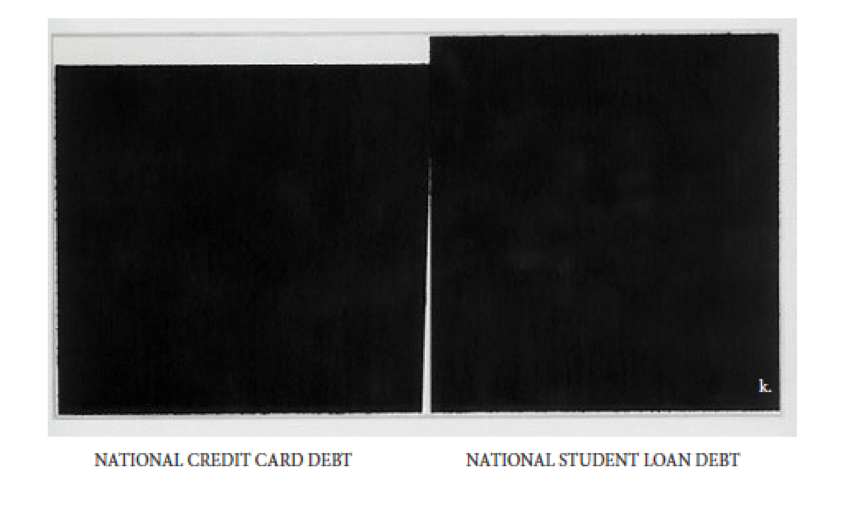
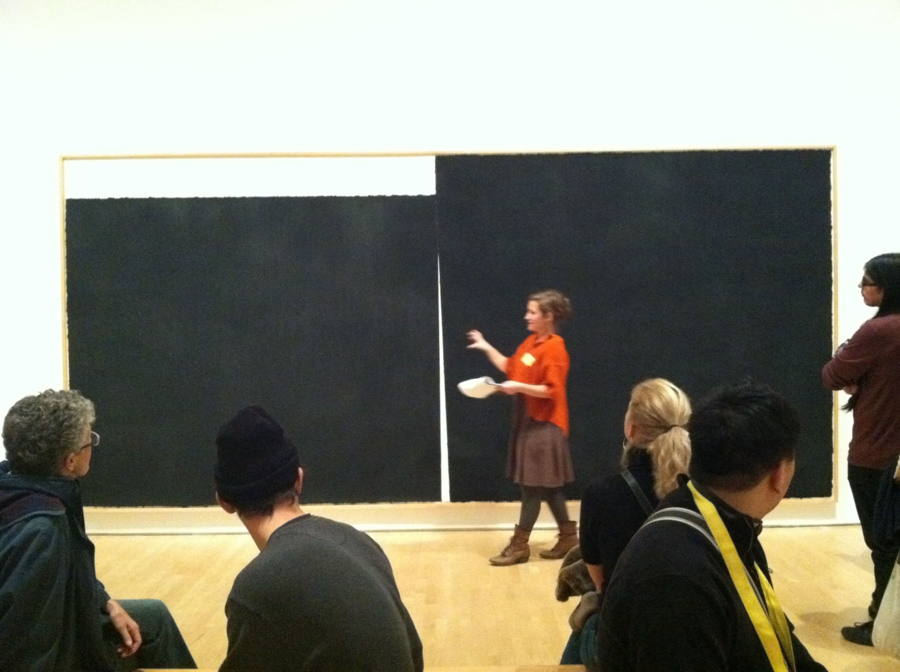
    Finally, Leigh Claire La Berge and Dehlia Hannah advance the most direct argument in favor of a materialist understanding of the category of medium. La Berge and Hannah argue that it is possible to understand debt as a medium. They show it should be very clear in our historical moment that debt itself becomes one of the principal forms that mediates the relationship between capitalism and its social dimension. A structured yet evanescent form of violence it surely is. However, for La Berge and Hannah, as for the visual artist Cassie Thornton, debt also founds a regime of aesthetics. The authors find Thornton’s practice unique in that “its radical departure from traditional media leads us squarely back to the problem of the medium itself.” Moreover, in their account of Thornton, debt aesthetics can expose the “never completed but embodied and experiential concretization of capital’s dimension of abstract labor.” La Berge and Hannah locate debt, or indebtedness, as a modified form of modernist self-reflexivity that in Thornton’s work eludes reification. Insofar as one may understand the attention to medium and mediation as the antidote to collapsing a complex social relation into the pure thing-ness of a reified relation, La Berge and Hannah show, there is much at stake in foregrounding the function of debt as medium for art today, a medium that art itself is in turn able to make legible and to inflect politically in a radically different way.

    Postscript

    In many ways, it is too soon to write about the episodes of police violence with which portions of this introduction have been concerned. It will likely always be too soon to theorize them. But at the same time, theory cannot pretend to be impervious to a world of legitimated power abuses. Such a world is barbed and hot, and must change theory by destroying it or by setting it in motion before its time. To this end, as this special issue is going to press, we note that another pair of killings has put pressure on its conclusions. These events must not be put to use by theory, or be absorbed into an existing scholarly project. They may however derail such a project—thus derailed, we risk the following. On April 2, 2015, Eric Harris was shot and killed by Bob Bates, a full-time insurance executive and part-time reserve sheriff in Tulsa, Oklahoma. Three days later, on April 5, Walter Scott was shot and killed by Michael Slager, a patrolman in North Charleston, South Carolina. Both law officers are white, both victims were black, and both killings were recorded on video.

    The shooting of Eric Harris was captured by a body camera that was carried by a second officer, not Bates. In the video, when this second officer tackles Harris, he holds him down, the camera presses onto the pavement, and viewers must rely on audio alone. We hear rapid footsteps, presumably those of Bates. We hear a pistol report, followed by the words “I shot him. I’m sorry.” We hear Harris plead, in words too reminiscent of Eric Garner, “I’m losing my breath.” And we hear the second offer reply, “Fuck your breath.” Without question, the body camera has failed to save Eric Harris’s life. Yet also without question, the body camera has produced a record, and therefore a circulable document, that would not otherwise have existed, and that can now be exhibited through a variety of online video streaming services. Any media theory of body cameras in policing must account for the difference between a version of events in which the killing of Eric Harris is recorded and a version in which it is not recorded. Yet only a media-implicit theory of racialized state violence can even begin to account for the fact of Harris’s death in spite of those cameras, or for the persistence of a nearly unaccountable object, that recording of an actual human voice that is capable of saying “fuck your breath.”

    The killing of Walter Scott was captured by a bystander’s cellphone. The phone is in motion, but it is held at a great enough distance from the scene that the entire sequence of events is visible. In the video, Scott runs from Slager, Slager raises his pistol, the pistol fires five times, and Scott falls to the ground where he lies on his stomach as Slager cuffs his wrists. Responses to this murder have been vocal, as have responses to the other killings mentioned in this introduction. Among responses to Scott’s death, the most pertinent is that of Jay Smooth, the public intellectual and Internet personality. In an edition of Smooth’s YouTube series, entitled The Illipsis, he tells his listeners that the news of Scott’s death had interrupted his plan to cover a quite different news story about the release of a new music streaming service called Tidal, founded by the hip-hop mogul Jay-Z and promoted with language of social-movement formation and community building. Confronted with the cellphone video of the events in South Carolina, says Smooth, “I can’t see that and then go back to watching people talk about movements and taking stands in reference to an Android app that keeps giving me errors.”

    Rather than speak about Tidal and its co-opted rhetoric, Smooth imagines a digital and social medium that, unlike Tidal, would be appropriate for this world-historical conjuncture. Addressing himself to the “superstars” behind Tidal, Smooth opines:

    What you should do next is take some of the money from this imitation of Spotify and put it into another app called Copify that lets us press a single button for unlimited hi-fi recording of police misconduct while also automatically live-streaming and uploading to our special Copify cloud-storage, so they can’t just snatch our phone and delete it. What we need right now more than delivering FLAC files to our homes in lossless quality is something that somehow helps us deliver black lives to their homes in lossless quality.

    For Jay Smooth, the language of new media can be writ large only under erasure, in the form of an extended metaphor that remains a metaphor, as well as a protest, rather than a concrete proposal. He concludes that it is not enough to disseminate videos like those that record the shootings of Eric Garner and Tamir Rice and Eric Harris and Walter Scott, and yet: “until we upgrade this whole operating system, and get the systemic changes we need, it seems to be all we’ve got.” For Smooth, and for us, there is no use, and no good, in imagining a world stripped of its digital media. Moreover, there are limited advancements of justice toward which such media might be directed. But only a discourse that foregrounds politics, in the way that Joanna Russ uses that word, can “upgrade” the societal “operating system.” It is such a discourse, based on a politics of culture in which media are full of legible content, and implicit rather than centered, that we mean to acknowledge and build upon with this special issue.

    Mathias Nilges is Associate Professor of English at St. Francis Xavier University in Nova Scotia, Canada. His essays have appeared in collected editions and in journals such as American Literary History, Callaloo, and Textual Practice. With Emilio Sauri, he is the co-editor of Literary Materialisms (2013) and with Michael D’Arcy of The Contemporaneity of Modernism (2015). He has recently completed a monograph titled Still Life With Zeitroman: The Time of the Contemporary American Novel.

    Footnotes

    1. A transcript of McCulloch’s decision is available from CNN, and a video is available on YouTube.

    2. See for instance Bessant and Fuller and Goffey.

    3. This claim in fact graces the back cover of Zielinski’s [. . . After the Media].

    4. For instance, in remarks on December 1, 2014, U.S. Attorney General Eric Holder announced that, “this Administration will continue to strongly support the use of body cameras by local police,” and promised the federal provision of “more than $200 million to support a three-year initiative that will invest in body-worn cameras,” as well as training and other resources.

    Works Cited

    • Bessant, Judith. Democracy Bytes: New Media, New Politics and Generational Change. London: Palgrave Macmillan, 2014. Print.
    • Bolter, Jay David, and Richard Grusin. Remediation: Understanding the New Media. Cambridge: MIT P, 2000. Print.
    • Byers, Dylan. “Ferguson prosecutor blames the media.” Politico. Politico LLC. November 25, 2014. November 25, 2015. Web. Fuller, Matthew, and Andrew Goffey. Evil Media. Cambridge: MIT P, 2013. Print.
    • Hayles, Katherine N. My Mother Was a Computer: Digital Subjects and Literary Texts. Chicago: U of Chicago P, 2005. Print.
    • Holder, Eric. “Attorney General Eric Holder Delivers Remarks During the Interfaith Service and Community Forum at Ebenezer Baptist Church.” Website of the United States Department of Justice. December 1, 2014. Web. January 7, 2016.
    • Kember, Sarah, and Joanna Zylinska. Life After New Media. Cambridge: MIT P, 2012. Print.
    • Krauss, Roland E. A Voyage on the North Sea: Art in the Age of the Post-Medium Condition. New York: Thames and Hudson, 2000. Print.
    • McCulloch, Robert. “No Indictment: Brown Family Profoundly Disappointed; Pres. Obama To Speak Soon About Grand Jury Decision; Prosecutor: There was a full investigation.” Transcript. Anderson Cooper 360. CNN.com. 24 Nov. 2014. Web. 31 Jan. 2016.
    • ‘“Profoundly Disappointed’: Michael Brown Family Reacts to Lack of Indictment.” NBC News. NBC News. November 24, 2014. Web. November 20, 2015.
    • Russ, Joanna. To Write Like a Woman: Essays in Feminism and Science Fiction. Bloomington: Indiana UP, 1995. Print.
    • Smooth, Jay. “On Walter Scott: ‘Why do they never try to save them?’” YouTube. YouTube, LLC. April 8, 2015. Web. November 30, 2015.
    • Zielinski, Siegfried. [. . . After the Media]: News from the Slow-Fading Twentieth Century. Minneapolis: Univocal, 2013. Print.
  • Notes on Contributors

    Timothy Bewes is Professor of English at Brown University. He is the author of Cynicism and Postmodernity (1997), Reification, or The Anxiety of Late Capitalism (2002), and The Event of Postcolonial Shame (2011). He has co-edited several collections of essays, including Georg Lukács: The Fundamental Dissonance of Existence (Continuum, 2011), and a special issue of the journal Novel: A Forum on Fiction on Jacques Rancière and the Novel. The subjects of his recently published essays include W. G. Sebald (in Contemporary Literature, 2014) and Mikhail Bakhtin (Mediations, 2015).

    Nicholas Brown teaches in the departments of English and African American Studies at the University of Illinois at Chicago.

    Michael D’Arcy is Associate Professor of English literature at St. Francis Xavier University (Nova Scotia, Canada). His research interests include twentieth-century British, Irish, and Anglophone literature, media studies, film and visual culture, and literary theory. His published work includes: The Contemporaneity of Modernism: Literature, Media, Culture (Routledge, 2016; collection co-edited with Mathias Nilges); “Beckett’s Trilogy and the Deaths of (Auto)biographical Form,” in Samuel Beckett Today / Aujourd’hui 26 (2014); “Influence,” in Samuel Beckett in Context (Cambridge UP, 2013); and “Indifferent Memory: Beckett, Naipaul, and the Task of Textuality,” in The Journal of Beckett Studies 19.1 (2010). He is currently completing a monograph titled The Slow Novel: Late Modernism and the Adventure of Narrative Stupidity.

    Cristin Ellis is Assistant Professor of English at the University of Mississippi. Her book, Antebellum Posthuman: Race and Materiality in American Romanticism, is forthcoming from Fordham University Press.

    Dehlia Hannah is the Research Curator of the Synthesis Center and Assistant Research Professor in the School of Arts, Media and Engineering at Arizona State University. She received her Doctorate in Philosophy from Columbia University in May 2013. Her dissertation and current book project, entitled Performative Experiments, articulates the philosophical implications of an emerging genre of contemporary artwork that takes the form of scientific experiments and deploys scientific methods and materials as new media. Timed to commemorate the 200th anniversary of the global climate crisis that formed the environmental background for the writing of Frankenstein, her current research and curatorial project, A Year Without a Winter, (2015-2018) explores possible climate futures by engaging artists and scholars in the performance of a collective thought experiment.

    Leigh Claire La Berge is currently working on a book entitled Wages Against Artwork: The Social Practice of Decommodification, sections of which have been published in South Atlantic Quarterly and Postmodern Culture. Concerned with the economic trend of uncompensated work and the aesthetic trend of artwork that seeks to ameliorate social inequality, Wages Against Artwork asks what kind of claims the aesthetic can make in an expiring welfare state. Her first book, Scandals and Abstraction: Financial Fiction of the Long 1980s (Oxford, 2015) tracked the contest between postmodern and realist fictions about finance in a nascent era of financialization, and her articles have appeared in Radical Philosophy, Studies in American Fiction, Criticism, Journal of Cultural Economy, and the Radical History Review. She is the co-editor, along with Alison Shonkwiler, of Reading Capitalist Realism (Iowa, 2014). She is assistant professor of English at the City University of New York (BMCC).

    Krista Geneviève Lynes is Canada Research Chair in Feminist Media Studies and Associate Professor in Communication Studies at Concordia University (Montreal). She is the author of Prismatic Media, Transnational Circuits: Feminism in a Globalized Present (Palgrave Macmillan, 2012), as well as numerous essays appearing in ADA: Journal of Gender, New Media and Technology, Signs, Third Text, Theory & Event, among others. Her current research examines the aesthetics of ‘groundedness’ on contemporary media art. She is also the director of the Feminist Media Studio (http://feministmediastudio.ca), which supports and critically engages with representations of gender under conditions of political struggle and exploitation.

    Jeff Menne is assistant professor and program director of Screen Studies at Oklahoma State University. His recent publications include a study of Francis Ford Coppola and the “underground corporation,” Francis Ford Coppola(Univ. of Illinois Press, 2014), and a co-edited collection, Film and the American Presidency (Routledge, 2015). His essays have appeared in Representations, Cinema Journal, Post Script, and elsewhere. Presently he is preparing a monograph, Art’s Economy: Post-Fordist Cinema and Hollywood Counterculture, 1962-1975, which historicizes the auteur theory within the “managerial revolution” of the postwar business corporation.

    Mathias Nilges is Associate Professor of English at St. Francis Xavier University in Nova Scotia, Canada. His essays have appeared in collected editions and in journals such as American Literary History, Callaloo, and Textual Practice. With Emilio Sauri, he is the co-editor of Literary Materialisms (2013) and with Michael D’Arcy of The Contemporaneity of Modernism (2015). He has recently completed a monograph titled Still Life With Zeitroman: The Time of the Contemporary American Novel.

    Emilio Sauri is Assistant Professor of English at the University of Massachusetts Boston. His research focuses on twentieth- and twenty-first-century literature and visual art from the United States and Latin America, and reads these in relation to the development of the world-system.

    Matt Tierney teaches media theory, American literature, and film at The Pennsylvania State University, where he is an Assistant Professor of English. He is the author of What Lies Between: Void Aesthetics and Postwar Post-Politics (2015).

  • Captivation and the Work of Art

    Emilio Sauri (bio)
    University of Massachusetts Boston

    A review of Rey Chow, Entanglements, or Transmedial Thinking about Capture. Durham: Duke UP, 2012.

    In the introduction to Entanglements, or Transmedial Thinking about Capture, Rey Chow draws our attention to two senses of the word “entanglement.” While the “most obvious sense” is that of a “relativization” or blurring of conceptual boundaries and “stable categories of origination and causation such as author, owner, actor, mind, intention, and motive” (10), “entanglement,” Chow reminds us, also “carries the more familiar connotation of being emotionally tied to a person or an object, from whom or from which one cannot extricate oneself” (11). These two senses, then, speak to two distinct and, in many ways, contradictory tendencies: one toward a “democratization of society” and “elimination of elitist distinctions” and another toward an “affective or aesthetic form of capture and captivation” that “bear the persistent constitutive markings of hierarchical distinctions (such as domination and submission)” (11). Each of the essays gathered in Entanglements stages and attempts to think through this double-movement within and across an extraordinarily wide range of discourses, disciplines, and media to illustrate the extent to which each of these tendencies often entails its opposite. At the same time, it may not be too much to say that Chow’s book most often calls on the affective dimension of this same double-movement in order to question more conventional accounts of the “democratization, indistinction, and liberalization of social boundaries,” as well as of capture and captivation themselves (11). Ranging over a wide array of media (including film, literature, photography, and digital work) and theory from several traditions and periods, Entanglements also suggests that focusing attention on the subject’s experience of captivation—as prey, as audience, and even as object of representation—would play an important role in the transformation of concepts like art, freedom, sacrifice, and visibility.

    Chow’s essays regularly return to a set of overlapping issues that create what she describes as a “topological looping” or “loops” woven into and between individual essays (1, 2). Thus, the operation of “enmeshing,” to which “entanglement” also refers, not only appears on the level of content but structures the relationship among the concepts, sections, and chapters that comprise the book on the whole (1).Recurrent questions concerning the relationship between mediality and reflexivity, capture and captivation, mimesis and its relation to violence, victimization and forgiveness, and the role of East Asian cultural production in the globalized Western academy today are brought to bear on each other in order to modify the reader’s engagement with concepts as they move between discourses and across medial forms. Importantly, however, “entanglement” does not refer to the effort to think sameness, but on the contrary, to “linkages and enmeshments that keep things apart” and “the voidings and uncoverings that hold things together” (12). Entanglement, in this sense, becomes a refusal to read these issues as expressions of the logic of a unifying whole.

    The significance for Chow of transmedial thinking is already apparent in the opening essay, where Chow’s primary interest is reflexivity, or the “process in which thought becomes aware of its own activity,” and the manner in which thinking through (rather than simply about) medium has long been central to the staging of any reflexivity as such on the part of the artwork (18). Of course, as Clement Greenberg suggested long ago, modernism may just be another name for the moment when medium emerges both as the artwork’s central concern, and as a means to stage its reflexivity, though the point here will be to underscore the extent to which such staging “materializes as an intermedial event” (18).[1] Thus, in a perceptive discussion of Bertolt Brecht’s alienation effect [Verfremdungseffekt], Chow not only shows that, in his hands, reflexivity is a “conscious form of staging” that “far exceed[s] the genre of drama,” but that the aims of such reflexivity—what Walter Benjamin described as the “uncovering (making strange, or alienating) of conditions”—are no less at the heart of the enterprise known as “theory” (18, 13). Accordingly, if Brecht’s theater asks how reflexivity is “possible when a particular form is involved,” then “Staging, understood as phenomenological rather than simply empirical process, is … one way in which these questions have been answered” in the work of theorists like Louis Althusser, Pierre Macherey, and Laura Mulvey (23). And if, in Brecht’s method, a “leaning toward science and experimentation” comes into view with a “suspension, if not evacuation, of empathetic identification,” this distancing—which Chow describes as a “move to de-sensationalize”—finds any number of equivalents in the “analyses of drama, painting, literature, and film as undertaken by theorists such as Althusser, Macherey, and Mulvey” (23, my emphasis). The few examples provided here are illuminating, and although Chow herself admits these are “schematic,” we might nonetheless ask whether the claim that theory constitutes a “systematic response to, and a continued enactment of, the key Brechtian legacy” overstates the case (22). For what follows from this interest in the “phenomenological” aspects of staging is, in many instances, an emphasis on the subject that, ultimately, renders its truth primary. In other words, what is at stake in a good deal of theory since the 1970s is not so much what Benjamin in “What Is Epic Theater?” calls “conditions”—which are, from the perspective of poststructuralism, fragmentary, unknowable, and untotalizable—but rather an elucidation of the subject’s position vis-à-vis the unknowable structure (a point Chow herself appears to concede in a brief critique of Baudrillard footnoted in the following chapter).[2]

    In tracing a line of development that extends from modernist aesthetics of estrangement, through poststructuralism, and to the films of Michael Haneke, Chow’s essay is not interested in highlighting theory’s debt to Brechtian reflexivity, but rather in assessing the ethical and political limits of those aims. For Chow, this becomes increasingly important today, when the “nonfusion and nonintegration between audience and actor, between actor and fictional character, and between spectacle and emotion” Brecht sought in his own method have become well-known moves in the culture industry’s game (16).[3] Chow subsequently maintains that Brechtian alienation aims for a “laying bare” or “version of purification that seeks to revive a certain before—before the onset of corruption, before the loss of innocence”—that now bears a “close affinity between pornography’s denuding conventions and the logic of mediatized reflexivity” (27, 28). Having failed to produce the spectator who, as Althusser put it, “would complete the unfinished play, but in real life” (21), this de-sensationalizing reflexivity has instead borne witness to a neutralization of its utopian possibilities in the form of “spectorial apathy” (29-30). Perhaps no director, according to Chow, is more aware of these limits than Haneke, and in a compelling reading of Benny’s Video and Funny Games, she argues that even the “extreme revelations” at the heart of both “may be pointless, the films seem to say, for they may well mean nothing to those who are watching” (29). Not unlike pornography, Haneke’s films also involve a kind of distancing between spectacle and spectatorship, which, as Chow reminds us, is “precisely the point of the Brechtian project of estrangement, designed as it was to make us suspend the embodied fellow feeling such as pity and fear, and unlearn the identificatory habits that typically accompany catharsis” (30, emphasis in original). Unlike the Brechtian project, however, Haneke’s films ostensibly signal the ethical limits of this refusal of such “embodied fellow feeling” and “identificatory habits” (30). But even if this “nonaffect (or affect of nonresponse) is symptomatic of one dominant direction in which reflexivity as a modernist theoretical practice has mutated in postmodernity,” Chow’s conclusion nonetheless begs the question: how would redirecting the aims of art and criticism toward such feelings and habits—that is, toward the subject’s affective response—allow us to read the material conditions—Brecht’s object of inquiry—that underlie something like this very mutation (30)? That an emphasis on embodied feeling and identification may very well tell us something about the relationship between audience and artwork, between emotions and artworks, or even between subjects themselves, is obvious enough; yet, insofar as the horizon of this reversal is an empathy or compassion between subjects, it isn’t entirely clear how it might clarify—let alone transform—the conditions that structure those relationships in the present. That is, if what counts as ethics here is ultimately affective, then how might ethics speak to the transformation of that system of exploitation Brecht believed the proscription against identification would help reveal?[4]

    Chow shows how an attention to the subject’s experience vis-à-vis the artwork radically alters the conceptualization of art, its ontology, and function, as her discussion of captivation indicates. At the center of this discussion is the trap, or more specifically, the question of how the trap might complicate and transform standard notions about capture. The trap emerges as a powerful figure in Chow’s analysis of Florian Henckel von Donnersmarck’s Das Leben der Anderen (The Lives of Others), as well as, later, in her consideration of Ang Lee’s Se, jie (Lust, Caution), where Foucault’s well-known claim, “visibility is a trap,” takes on an entirely new significance in relation to China’s new visibility within the Western academy. But Chow takes up this question first in her consideration of Jacques Rancière’s work and his commitment to the indistinction between art and nonart in order to determine whether the democratizing impulse that underlies this commitment is any different from current valorizations of fashionable concepts like dispersion, circulation, and migration that “have together produced a facile form of progressive thinking, capitalist and otherwise” (35). Here, as elsewhere, Chow refuses the easy identification of a leveling of hierarchies with more freedom, and asks us to consider whether Rancière’s effort to liberalize art—or even his notion of “emancipation”—leads to the opposite: a restriction or capturing of such freedom in the service of a system that demands inequality. Entanglements subsequently turns to the trap as conceptualized by the cultural anthropologist Alfred Gell. For Gell, Chow explains, the trap is a kind of conceptual art or avant-garde project openly at variance with the “institutional notion of art” and the Western insistence on the distinction between artworks and artifacts (41). No doubt Gell’s account resonates with Rancière’s commitment to a democratization of the arts, so that, “Notwithstanding their different cultural frames of reference, the two authors share an ethicopolitical interest in the liberalizing of boundaries of sensibility, identity, and agency” (42). At the same time, the trap also entails another hierarchy, one between the hunter and the prey that transforms this “zone of contact,” as Chow puts it, into a “site of cruelty, domination, subordination, and asymmetrical power dynamics,” and as such, reveals how the “philosophical and social scientific attempts to realign freedom … tend to run into a paradox, one that revolves around the (knotty figure of the) trap” (43).

    For Chow, however, the trap does not deceive, disable, or disempower alone, and this becomes all the more apparent, she suggests, when we think of it not simply as a “clever device” that captures prey but as an “archetypal epistemic or representational device” that bears a “semiotic kinship” to literature, and art more generally (45). Of course, this conception of the artwork as trap is, as she points out, already implicit in the idea of being “captivated” by something or someone that fascinates us or compels our attention. And yet, the point here will be that, like literature and art, the trap is an “index of a type of social interaction” and unequal “division of labor” that, at the same time, “sets into motion a new process that becomes, strictly speaking, indeterminate,” thereby escaping the “intent and intelligence of the trap’s design” (46). Thus, while the artwork as trap insists on a kind of hierarchy between (an active) artistic intent and (a passive) captive audience indicative of the relationship between hunter and prey, it also makes a leveling of this same hierarchy possible by means of the captive’s experience of “being captured,” a form of captivation that suggests a particular type of “affective state” (46, 48). And it is this experience of capture and captivation or entanglement that makes the trap something other than a trap in its most conventional sense—makes it, in other words, what Chow, following Derrida, describes as a “hinge or pivot” “around which multiple planes rotate in perpetual slippage from one another, in such ways as to conjoin mobility with enclosure, and alterity with capture” (46). Giving rise to a “discursive excess” in the form of the subject’s experience as prey, reader, or beholder that both completes the trap’s design and escapes it, the artwork as trap can be said to facilitate freedom even as it restricts (47). But seeing the artwork as trap also allows the critic to prioritize the reader’s or viewer’s relation to it. Absent that subject’s experience, the trap not only fails to level the hierarchies of art and nonart, artwork and artifact, hunter and prey, artistic intent and affective response, but also remains incomplete.[5]

    As Chow makes clear, this shift in emphasis will also require us to ask certain kinds of questions that have less to do with what the artwork might say about itself (as with medial reflexivity) than with the captivated subject, including “Whose captivation counts in the end, and whose captivation counts as art?” (57). Art here no doubt refers to the conjunction of artistic intent, artwork, and audience, though the emphasis is clearly on the reader or viewer and his or her own experience. Perhaps not surprisingly, this is also the perspective from which the artwork’s claim to autonomy will look more or less unintelligible. As Chow puts it, “medial reflexivity” is that “process by which an artistic medium becomes self-conscious, in the sense of having a heightened awareness of its own activity, capability, and limits” (38), as in Rancière’s example, Flaubert’s Madame Bovary. She continues, “Once art takes on a specificity of its own, boundaries are no longer simply the demarcations externally imposed but must involve as well differentiations internal to the work itself” (37-8), recalling what Pierre Bourdieu called the “field of restricted production” which, in contrast to the “field of large-scale cultural production,” “tends to develop its own criteria for the evaluation of its products” and to “obey its own logic.” Thus, to the extent that the development of the field of restricted production is decidedly “towards autonomy” (Bourdieu 113), what transmedial thinking and its attention to the subject’s experience amounts to is, in this sense, an attack on the any assertion of autonomy as such; and indeed, Chow suggests as much when she describes capture and captivation as a “type of discourse, one that derives from the imposition of power, and that contains the makings of what may be called a heteronomy or heteropoiesis” (6).

    Accordingly, such reflections on captivation or the experience of “being captivated” need not be restricted to the scope of the artwork’s influence alone, and this is nowhere clearer than in Chow’s account of the short story “Lian” (“Attachment”) by the Chinese author Lao She.  Chow considers what an “intimacy with inanimate objects [does] to one’s sense of belonging, of being part of, say, a national community”—or how, in other words, the individual’s relationship with such objects provides a line of flight, so to speak, from a specific kind of identity (59). Chow’s essay is interested in suspending the Marxist tradition’s “stern criticism of commodity fetishism” and its “suspicion and distrust of objects” in favor of an “empathetic reading of the inorganic” that gives rise to a “historical-materialist practice,” which she discovers in the love of things that Benjamin expresses in his essay on book collecting (61, 62, 63). Taking up the art collector’s “devotion to his objects” embodied by the protagonist Zhuang Yiya—who ultimately betrays the nation to save his collection—and particularly the story’s juxtaposition of two kinds of collectors, Chow observes that, in “Lian,” whereas for collectors from “the new middle-class in early twentieth-century urban China” culture is “something to be enjoyed for itself,” the “second kind of collector is merely opportunistic” and collects “to make money” (65). Later described as playing out the “familiar binary opposition” that “recalls none other than the classical Marxist analysis of commodities in terms of use and exchange values,” we might say that this difference in attitude can also be understood in terms of the difference between the exchange formulas, C-M-C (the collector who collects for the pleasure—or use-value—the art object offers) and M-C-M (whereby the art object serves as mere commodity in the valorization of capital (71). And yet, what “Lian” demonstrates is, according to Chow, that “the intrinsic use-value of an object … comes inevitably to be validated by what is foreign or extrinsic to it” (73). “By implication, the collector who only collects for the sake of the object (for the love of art) is at best a fantasy; in actual practice he is not entirely distinguishable from the peddling and hoarding kind” (73). Which is to say that rather than dealing in art and nonart, both kinds of collector traffic in commodities. For this reason, Lao She’s short story can be said to produce something akin to collapsing of the Bourdieusian distinction between “symbolic capital” (or what Chow describes as the “social recognition, or the professional approval of the connoisseur”) and “economic capital” (or “money”) (73). But this also complicates the claim that what “makes Zhuang’s decision provocative or scandalous … is not simply that he surrenders … to the enemy [the Japanese] for the sake of art, but that he is faithfully (that is, positively) attached to something other than the national community” (73). For if his “devotion to objects” is not to be distinguished from a devotion to commodities, then we might ask, with Chow, whether this “idiotic and narcissistic dedication to a set of objects” could also be understood as a devotion to the market (73). Whether or not this was a more radical position than nationalism in China on the eve of WWII, recent history suggests that the same devotion to the market—which insists on the indistinction between commodities and everything else—has come to define the position of the radical right.

    Nevertheless, it is worth stressing that Chow’s subject of captivation is not defined by typical markers of identity like nation, race, gender, or sexual orientation, and so the “state of being captivated,” she explains, “has no such collective name recognition based in identity politics, even though it is a situation in which an undeniable relation to alterity unfolds” (51). But Entanglements also shows how this attention to the subject’s experience will have similarly far-reaching consequences beyond the discourses of literature and art that extend to ethical concerns, including the theorizing of victimhood and forgiveness. Thus, for example, Chow’s reflections on sacrifice, mimesis, and victimhood begin with a fascinating discussion of Giorgio Agamben’s work that alerts us to what she identifies as the “antimimetic aesthetics and ethics” underlying his refusal to read the Holocaust as sacrifice (88). The essay’s primary concern is to  understand the manner in which narratives of sacrifice and victimhood might afford a kind of agency that Agamben’s “antimimetic resistance to sacrifice (and with it, representation)” otherwise denies—a concern which is taken up again in an essay on forgiveness in the Korean film Miryang (Secret Sunshine) by Lee Chang-dong and Shakespeare’s Merchant of Venice, as well as in her analysis of Akira Kurosawa’s Hachigatsu no rapusodī (Rhapsody in August) in relation to American studies and theories of translation (91). Chow’s account subsequently opens onto a critique of the feminist and postcolonial appropriation of mimesis as mimicry or imitation, which, she contends, “still by and large leaves in place the inequalities of the situation” that “remains governed by white man or the white man as original” (96).  Even as it becomes “equally deserving of critical attention,” such mimesis as mimicry is relegated to a “secondary phenomenon” that “continues to be accorded a subaltern or instrumentalist status” (96).

    We should note here that although Entanglements has little interest in the autonomy of artworks, such critiques will suggest it is deeply invested in the autonomy—cultural and otherwise—of collective and individual subjects found within wide-ranging networks of racial, ethnic, and gendered social relations. No doubt this is simply another way of addressing the question of agency, though Chow offers a unique answer by turning to the work of René Girard and his conception of mimetic desire as an “absolute and universal condition—an assertion that is accompanied by a refusal to explain violence by confining it to domains of cultural difference or particularism” (100). Understood according to the logic of mimesis and sacrifice, victimhood, for Girard, is “more a matter of structural and social necessity”; for this reason, Girard “challenges us to think of victims not simply as victims but rather as bearers of a systemic function” (101, 102). This is because violence itself is the product of a “mimetic desire” that emerges “both as a fundamental antagonism that defines every confrontation among human individuals and as what constitutes cultural processes of reenactment that are aimed at warding off the original violence” (102). From this perspective, violence is less the unwelcome moral byproduct of social relations than that which makes such social relations possible in the first place. But this also raises the question of whether this “generalized state of competition” can be historicized as the universality to which the social mediation of the commodity gives rise under capitalism.[6] That is, if mimetic desire is to be truly grasped as “an absolute and universal condition,” might this have something to do with that system of violent exploitation and expropriation capitalism names? But this, in turn, raises another, perhaps more crucial question: is the “fundamental antagonism” that Chow, following Girard, claims underlies society none other than the antagonism between labor and capital? Indeed, this is an antagonism whose violent displacements have taken various forms—both materially as “spatial fixes” and ideologically as nationalisms of all stripes—which, at the same time, make society itself possible (“the purpose of which,” as Chow puts it, “is to forestall a worse form of disaster”) (103). Would this suggest that the contemporary concern with victimization is not only the mimetic remainder of that which has been “lost, given up, or surrendered—in other words, sacrificed” but the mark of the displacement of a specifically economic antagonism whose resolution would render society as we know it unrecognizable, if not altogether obsolete (90)?

    The questions raised here attest to the power of Chow’s analysis and approach, which more often than not avoids conclusive answers in order to invite speculation. The strength of Chow’s interventions lies in her refusal to think about these disciplines and discourses in terms of equivalence, as well as in her ability to engage each of these on its own terms.  To keep things apart and, at one and the same time, hold them together in the same thought: this is the impossible task that Entanglements invites us to consider. In being captivated by this impossible task, Chow suggests, we might discover a point of departure for new lines of flight.

    Footnotes

    [1] See, for example, Greenberg’s claim that, in modernist painting, the “task of self-criticism became to eliminate from the specific effects of each art any and every effect that might conceivably be borrowed from or by the medium of any other art” in “Modernist Painting” (Greenberg 86). Chow mentions Greenberg in her essay on captivation.

    [2] See, for example, Michaels.

    [3] For a somewhat different perspective on the fortunes of Brecht’s legacy in the present, see Roberto Schwarz, “Brecht’s Relevance: Highs and Lows,” trans. John Gledson, in Two Girls (London: Verso, 2012), 235-259.

    [4] For a set of incisive perspectives on Brecht and affect, see the essays collected in Affect, Effect, Bertolt Brecht.

    [5] In this way, the artwork as trap calls to mind what Michael Fried called “literalism” in 1967 (and what is more commonly identified as “minimalism”), suggesting a commitment not simply to the indistinction of art and nonart, but also to what Fried saw as the “objecthood” and “theatricality” of literalist art. See Fried.
    [6] For an excellent account of the relationship between society’s self-reproduction, mimesis, and commodity production see Larsen.

    Works Cited

    • Affect, Effect, Bertolt Brecht. nonsite.org 10 (2013). Web. 28 Sep. 2015.
    • Bourdieu, Pierre. “The Market of Symbolic Goods.” The Field of Cultural Production: Essays on Art and Literature. Ed. Randal Johnson. New York: Columbia UP, 1998: 112-141. Print.
    • Fried, Michael. “Art and Objecthood.” Art and Objecthood: Essays and Reviews. Chicago: U of Chicago P, 1998: 148–172. Print.
    • Greenberg, Clement. Modernisms with a Vengeance, 1957-1969: The Collected Essays and Criticism. Vol. 4. Chicago: U of Chicago P, 1995. Print.
    • Larsen, Neil. “Literature, Immanent Critique, and the Problem of Standpoint.” Literary Materialisms. Eds. Mathias Nilges and Emilio Sauri. New York: Palgrave Macmillan, 2013: 63-77. Print.
    • Michaels, Walter Benn. The Shape of the Signifier. Princeton: Princeton UP, 2003. Print.

  • Object-Oriented Ontology’s Endless Ethics

    Cristin Ellis (bio)
    The University of Mississippi

    A review of Ian Bogost, Alien Phenomenology, or What It’s Like to Be a Thing. Minneapolis: U of Minnesota P, 2012.

    It is reported that, while out on a stroll with friends one day, the Transcendentalist Elizabeth Peabody walked into a tree limb. Picking herself up, she explained to her concerned companions, “I saw it, but I did not realize it.”[1] This story’s appeal lies in its succinct, slapstick debunking of Transcendentalist claims to omniscience: whilst enjoying the view as a “transparent eye-ball,” Peabody got poked in her real one. For scholars in the small but energized field of Object-Oriented Ontology, however, Peabody’s myopia could more broadly be said to exemplify, albeit in cartoon form, a kind of object-blindness that in fact plagues the entire tradition of post-Kantian philosophy.

    Spearheaded by the work of philosopher Graham Harman, Object-Oriented Ontology (“OOO”) takes issue with Kant’s conclusion that, since the object-in-itself is beyond human perception, the question of object ontology lies outside of philosophy’s purview.[2] It argues that, by exiling object-being from the field of inquiry, Kant’s Copernican Revolution sentenced philosophy to a narrow anthropocentrism, sponsoring a tradition that unjustly privileges human perception as the only available gauge of reality. OOO proposes to remedy this error by framing a new metaphysics that would restore unmediated object-being to the sphere of philosophical speculation. This is not to say that OOO proposes to solve the problem of human finitude—and here is one of many ways OOO diverges from other metaphysics associated with Speculative Realism, the philosophical movement of which OOO is a branch.[3] On the contrary, OOO freely concedes Kant’s point that the ontology of objects is inaccessible—being, in Harman’s words, infinitely “withdraws from human view into a dark subterranean reality” (Harman, Prince of Networks 1). Instead of overturning Kant, OOO universalizes the problem of finitude, arguing that all instances of relation—human and nonhuman, animate and inanimate—are subject to the conditions of mediation. On this view, a billiard ball’s encounter with a felt bumper is no less mediated than Peabody’s encounter with a tree limb. OOO would argue that both Peabody and the billiard ball “prehend” (in Whitehead’s term) their worlds according to rules particular to their constitution. Thus OOO strives to combat philosophical anthropocentrism by insisting that human experience is only one of billions of modes of perceiving the world. That it happens to be our mode does not justify the decision to preclude philosophical speculation about others.[4]

    In Alien Phenomenology, or What It’s Like to Be a Thing, Ian Bogost’s enticingly slim and conversational new contribution to OOO, Bogost contends that media studies are uniquely suited to take up this challenge of imagining object “perception.” Since Alien Phenomenology is therefore not a book of object-oriented philosophy per se, but rather a book about object-oriented methodology, it will likely be of more use to those already familiar with OOO than to those seeking an introduction to object-oriented philosophy. Wondering if “scholarly productivity [must] take written form,” Alien Phenomenology envisions an alternative philosophy that would involve fewer precarious sentences and more instructive objects. In this applied practice, objects would serve as “philosophical lab equipment” for exploring and exemplifying theory (89, 100). 

    For Bogost, this shift from argumentation to objectification is particularly critical to the future of object-oriented studies. That is, while Bogost suggests that all philosophy might benefit from a move away from academic writing (which he finds hopelessly prone to “obfuscation, disconnection, jargon and overall incomprehensibility”), he argues that OOO is particularly disadvantaged by academia’s “semiotic obsession” insofar as this has had the tendency to aggrandize linguistic over other modes of representing the world (89, 91). By contrast, Bogost observes, if we wish “to approach the nonsemiotic world,” we must do so, in Levi Bryant’s words, “‘on its own terms as best we can’” (qtd. in Bogost 90). That means blending conventional philosophizing with extralinguistic techniques to investigate the perspective of objects. To this end, Alien Phenomenology demonstrates what an applied OOO might look like by assembling an ecstatic yard sale of objects—from diagrams and photographs to bossa nova lyrics, light sensors, and data visualizers—which, as Bogost reads them, help to “illuminate the perspective of objects” (109). 

    There is, however, something distinctly perverse about this project. As Bogost explains, “even if evidence from outside a thing…offers clues about how it perceives, the experience of that perception remains withdrawn” from human access (63). “Alien phenomenology” thus names a philosophy which can only exist as a speculative practice, and never as an achieved or verifiable knowledge. The aim of knowing “what it’s like to be a thing” therefore remains strictly aspirational; alien phenomenology invites us to hypothesize endlessly about what must nevertheless, by definition, lie beyond our grasp. 

    So why bother? Why should we undertake a philosophical endeavor that Bogost himself describes as “benighted meandering in an exotic world of utterly incomprehensible objects” (34)? At times, Bogost envisions the possibility of attaining a speculative approximation of object perception, as when he argues that, although “the alien phenomenologist’s carpentry seeks to capture and characterize an experience it can never fully understand,” it may nonetheless yield “a rendering satisfactory enough to allow the artifact’s operator to gain some insight into an alien thing’s experience” (100). But absent an explanation of how one might hope to assess the accuracy of a likeness whose referent is strictly unknown to us, this argument risks collapsing alien phenomenology back into the empiricism it denigrates. Much more compelling are Bogost’s and Harman’s defenses of OOO on the grounds of its ethical force. They suggest that the very futility of the alien phenomenologist’s effort to “[ferret] out the specific psychic reality of earthworms, dust, armies, chalk, and stone” may yet constitute his ethical triumph, for by foundering against the limits of human knowledge he shows us just how parochial our understanding truly is (Harman, Prince of Networks 213). Only then—chastened, at a loss, dusting flakes of tree bark from our hair—might we finally begin to appreciate the “awesome plenitude of the alien everyday” (Bogost 134). Accordingly, Alien Phenomenology closes with a climactic chapter on wonder, that attitude of equal parts ignorance and astonishment from which, Bogost concludes, we may at last learn “to respect things as things in themselves” (131).

    In moments like this, OOO begins to emerge as a new or vastly more extensive form of multiculturalism—a kind of deep ecology if ecology also included manufactured objects (like billiard balls or nuclear waste) among the categories of being it sought to respect. The centrality of this ethical impulse is similarly evident in the emphatically moralized terms of Harman’s critique of the Kantian tradition, which he refers to as “a Hiroshima of metaphysics,” a “crime against humans and non-humans,” and a “global apartheid” against non-human being (Prince of Networks 103, 102). Rhetoric like this clearly suggests that OOO’s disagreement with Kant (or with humanism more generally) is more ethical than philosophical. In the way that racism is a moral crime against certain humans, so humanism is criminally prejudicial to pandas and comets and cigarettes for Bogost and Harman.

    But if OOO thus asks to be assessed as an ethics, then its most pressing tasks remain before it. First, it will need to justify more explicitly why and to what ends we should undertake the project of ethical extension it enjoins. This will also entail explaining what ethical standing will look like once it is transformed from a privileged status to a status universally accorded to literally everything. Second, it will need to find a way to make its case in a way that avoids being merely self-defeating. It may be that no one is particularly interested in arguing the case against more respect—surely there is no one who thinks the world would be worse if we spent more time treating everything as “worthy of consideration for its own sake” (Bogost 129). But OOO’s argument for itself cannot simply be that it does no harm to wonder at objects. It has to believe that it does harm not to wonder—that the world would be a better place if we honored the ontology of things by wishing we could know more about them. But better for whom—or, more to the point, better according to whom? Here OOO risks undercutting its antihumanism with an ethics that can’t help but be a human (if not a humanist) ethics. As a practical matter, things are even more complicated by the fact that, after all, OOO’s imperative is underwritten by the formerly humanist imperative not to treat others merely as instrumental means. But even if this weren’t the case, it would still be true that because OOO can’t, by definition, offer ethical arguments based in the experiences of the objects (whose being we cannot know), it will have to offer them in terms of the very humans it wants to see beyond. Without answers to these questions, OOO risks being a philosophical tradition that is post-humanist in name only.

    Footnotes

    [1] We have this story from a letter by Harriet Hosmer to Cornelia Carr (April 22, 1854); cited in Bruce Ronda, Elizabeth Palmer Peabody: A Reformer on Her Own Terms (Cambridge: Harvard University Press, 1999), p. 261.

    [2] Graham Harman is the chief architect of OOO, the foundations of which he lays out in his first two books, Tool Being: Heidegger and the Metaphysics of Objects (2002) and Guerrilla Metaphysics: Phenomenology and the Carpentry of Things (2005). His prolific output over the past decade also includes studies that clarify the relation of his work to that of adjoining contemporary philosophers, including Bruno Latour (in Prince of Networks: Bruno Latour and Metaphysics, 2009) and Quentin Meillassoux (in Quentin Meillassoux: Philosophy in the Making, 2011).

    [3] Harman explicitly identifies OOO as a variety of Speculative Realism, a movement which houses a variety of metaphysical projects united by their shared opposition to the anthropocentrism of post-Kantian philosophy—its insistence that philosophy is prevented, by the unavoidable mediation of human perception, from gaining knowledge of reality as it exists beyond human thought. But the commonality amongst Speculative Realists effectively stops there. For instance, as Harman himself acknowledges, the differences between his own work and that of Quentin Meillassoux, the most prominent philosopher currently associated with Speculative Realism, could hardly be more glaring. Whereas Meillassoux argues that mathematical reasoning in fact allows us to “think what there can be when there is no thought,” Harman, despite his opposition to Kantian finitude, does not ultimately deny the limitations of human access to reality as such (After Finitude 36). Instead, OOO opposes the philosophical habit of treating human finitude as a reason to foreclose speculation about those noumenal realities which we cannot directly perceive.

    OOO also bears a functional resemblance to Bruno Latour’s Actor-Network Theory (ANT) as well as other varieties of processualism currently housed under the large tent of New Materialism. Both OOO and ANT, for instance, reject the uniqueness of human being and instead endorse a “flat ontology” positing the equality of being across all phenomena—human and nonhuman, animate and inanimate, extant and abstract or fictional. As a result, OOO and ANT (as well as New Materialism) function to counteract the historic privileging of the human over other forms of being, and seek to resituate human-being amongst a diverse and lively array of nonhuman entities and agencies. However, OOO diverges from Latour’s and other processualist approaches insofar as OOO takes an essentialist view of object being (objects are prior to their relations) whereas for processualism, relations are prior to objects. For an account of OOO’s relation to ANT, see Harman’s Prince of Networks; for a concise comparison of OOO to New Materialism, see Jane Bennett’s “Systems and Things: A Reply to Graham Harman and Timothy Morton,” New Literary History 43:2 (Spring 2012), pp. 225-233.

    [4] Despite references to object “perception,” OOO distinguishes itself from panpsychism: as Harman puts it, in OOO, “real objects have psyche… insofar as they relate” with other objects (Prince of Networks 213). Invocations of object “experience” in OOO are thus meant to be taken strictly in this limited, though admittedly counterintuitive, sense.

    Works Cited

    • Bennett, Jane. “Systems and Things: A Reply to Graham Harman and Timothy Morton.” New Literary History 43.2 (2012): 225-233. Web. 16 Sep. 2015.
    •  Bogost, Ian. Alien Phenomenology, or What It’s Like to Be a Thing. Minneapolis: U of Minnesota P, 2012. Print.
    •  Harman, Graham. Guerrilla Metaphysics: Phenomenology and the Carpentry of Things. Chicago: Open Court, 2005. Print.
    •  —. Prince of Networks: Bruno Latour and Metaphysics. Melbourne: re.press, 2009. Print.
    •  —. Quentin Meillassoux: Philosophy in the Making. Edinburgh: Edinburgh UP, 2011. Print. 
    • —. Tool Being: Heidegger and the Metaphysics of Objects. Chicago: Open Court, 2002. Print.
    •  Meillassoux, Quentin. After Finitude: An Essay on the Necessity of Contingency. Trans. Ray Brassier. New York: Continuum, 2008. Print.
    • Ronda, Bruce. Elizabeth Palmer Peabody: A Reformer on Her Own Terms. Cambridge: Harvard UP, 1999. Print.
  • The Critical Realist in Naïve New York

    Jeff Menne (bio)
    Oklahoma State University

    A review of Johannes Von Moltke and Kristy Rawson, editors, Siegfried Kracauer’s American Writings, Berkeley: U of California P, 2012.

    Nothing has marked the maturity of cinema studies as much as its reckoning with Siegfried Kracauer’s writings. The discipline’s nominal adjustment, from “cinema studies” to “cinema and media studies,” signals its expansion; its reckoning with Kracauer, though, marks its increased conceptual and methodological sophistication. This reckoning has largely been carried out in a Germanist strain of media studies, which was first given focus in a 1991 special issue of New German Critique and would then include the efforts of Miriam Bratu Hansen, Thomas Levin, Dagmar Barnouw, Heide Schlüpmann, Gertrud Koch, Gerd Germünden, and Johannes von Moltke, among others.[1] Conceptually, the nascent discipline’s need for a united front (just to situate itself in the academy, where, by virtue of its object’s “mass” appeal, it was always vulnerable) had been satisfied by a reified version of Kracauer as the theorist of “naïve realism,” fixed in place by Dudley Andrew for the sake of distinguishing what he deemed the more salutary achievement of André Bazin and his Cahiers du cinéma cohort (Andrew, Major Film Theories 131-133).[2] The discipline’s unilateralism, in other words, took the form of obeisance to French intellectual culture. For many years Stanley Cavell’s The World Viewed was overlooked for the same reason. “The general reason given,” Cavell would report, “was that in 1971 American academic film studies was still in its formative stages, and its founders were preoccupied with the monthly, even weekly, onrush of material originating mostly in France and then in England” (32).[3] But now a consensus holds there to be no more misleading a tag for Kracauer’s work than “naïve realism.” In an afterword to Johannes von Moltke and Kristy Rawson’s new edited collection of Kracauer essays, Siegfried Kracauer’s American Writings, Martin Jay suggests, in fact, that we call Kracauer a “magical nominalist” (227). Whichever the apposite term—magical nominalist, curious realist, critical realist—the interest in conceptual nuance indexed therein is a product of the greater methodological rigor in cinema studies today.[4] Von Moltke and Rawson’s collection is an instance of this. It brings together Kracauer’s work from the 1940s and 50s, essays from “little magazines” such as Commentary and Public Opinion Quarterly, and film and book reviews from New Republic, Film Culture, and Saturday Review of Literature. The effect is to suggest Kracauer’s influence on the intellectual culture in New York City in the moment it was admitting film into its ambit as an object of study. Researched at the Deutsches Literaturarchiv in Marbach, von Moltke and Rawson’s collection—partnered with Graehme Gilloch and Jaeho Kang’s forthcoming collection—helps, they claim, provide the most “comprehensive picture” to date of Kracauer’s intellectual personality (ix). This picture might give a perspective on Kracauer different from the one that posits an “epistemological shift” between his Weimar writings and his exile writings, between the conceptual aliveness of essays such as “The Mass Ornament” and “The Little Shopgirls Go to the Movies” (both 1927) and the pedantic closure of Theory of Film (1960) (3).[5] From this perspective, von Moltke and Rawson propose, we can understand Kracauer within “three overlapping contexts”: the institutional enfranchisement of film study, the relations of the New York Intellectuals, and the relations of the exiled Frankfurt School associates (4). Perhaps the most interesting yield of this overlap is the dynamic relation in which it lets us place modernism and cinema, as the two became co-articulated in the institutions of culture by way of appeals cast in traditional aesthetic terms. Reading by Kracauer’s light, however, we glimpse an alternative history in which the unruly works of modernism might not have been domesticated along Lionel Trilling’s lines (or Clement Greenberg’s or even Irving Howe’s), but would have been reinserted in the media ecologies of early-century modernity, a moment in which the new media, as Kracauer narrates them, reflected back on aesthetic form as traditionally construed.

    Rather than begin with Kracauer’s place among the New York Intellectuals—and in turn the subjunctive disciplinary histories of modernism and cinema that might have played out had he enjoyed the same institutional clout as Greenberg and Howe—I prefer to consider first whether, and how much, Kracauer’s subsumption into New York institutional life alienated him from the Frankfurt School methods that he, though not an Institute member, had practiced in his own way as a Weimar journalist. Theodor Adorno faulted Kracauer for not returning to Germany with himself and Max Horkheimer. He would surely bristle at Kracauer’s use of first-person pronouns when describing American habits (“Why France Liked Our Films,” for instance, describes not the reception of German but Hollywood cinema in France), and he felt Kracauer’s quick adoption of the English language curbed his expression. “It is a terrible shame that in his most mature years,” Adorno writes, “under the compulsion to write English but probably also out of revulsion over what had happened, Kracauer became ascetic with regard to his own verbal art, which is inseparable from the German language” (172). Adorno denies Kracauer what seems to me his rightful place in the dialectical tradition. “Dialectical thought never suited his temperament,” he said of Kracauer, whom he believed to be stubbornly ontological, committed to “a moment that always evaporated in the idea stage for the German spirit of almost any orientation” (164). This threw him from the idealist side to the materialist side, as it did his colleague Walter Benjamin, but it threw him too far to this side, so Adorno thought. But no doubt the habit of inquiry which Adorno learned from Kracauer is dialectical. Reading Kant with Kracauer, Adorno says, taught him to see Kant’s critique “as a kind of coded text from which the historical situation of spirit could be read”; Kracauer showed “how the objective-ontological and subjective-idealist moments warred within it” (160). What Adorno and Kracauer’s latter-day dispute might be said to index, finally, is how differently they had negotiated Marxism in their own theoretical projects. In Kracauer’s notes, he complains that by Adorno’s standards no one was sufficiently dialectical “à la Hegel and Teddie himself (who invokes the Hegel of his making as a sort of protective cover & shield)” (American Writings 129). This critique includes “Marx to the extent that his dialectics is controlled by an ontological vision” (132). Pace Adorno, Kracauer claims Marx as an alibi because he shared with Marx a commitment to the indigestible moment—call it the “ontological moment,” the “objective spirit,” or the trace of history—in what Adorno calls “the idea stage” (Adorno 164).

    But whether Kracauer was so intransigently opposed to idealism that it rendered him nondialectical, the long and short of Adorno’s critique is an assessment we might put to test in von Moltke and Rawson’s collection. There we find a series of one-off analyses (in the mode of his feuilleton writing in Weimar) that Kracauer wrote while evolving the putatively more systematic ideas of Theory of Film. For present purposes I consider two pieces, one a set of unpublished notes in defense of qualitative analysis, “A Statement on the Humanistic Approach,” and the other a review of Roberto Rossellini’s Paisan (1946), a movie perfectly suited to show the affinity of the object world for what Kracauer calls “camera reality” and to reveal how little his film theory is closed or historically invariant. In the former, Kracauer denounces a tendency (endemic, we infer, to the American academy) to apply positivist methods to a range of “phenomena which differ from the subject matter of exact science in that they are historical entities and as such carriers of unique values and qualities” (American Writings 124). What is valid in such analysis, he concedes, is that it wishes to rise above merely subjective evaluation; but its mistaken belief that so-called objective measures will negate subjective influence leaves such analysis blind to the “technical or managerial interest” behind it (124). The question remains, though, whether qualitative analysis can better cope with “plain subjectivism” (126). Kracauer claims that the problem is likely overstated and that distortions coming from “the analyst’s philosophical viewpoints” will be “neutralized” in the very performance of analysis (126). “Whether or not he states them overtly from the outset, they are bound to leak out anyway,” and “can in a measure be controlled and discounted” (126). Kracauer depends, that is, on a dialectical reading process. Perhaps his most compelling maneuver, in this regard, is to have recourse to the shape a medium imposes on an object of analysis. His essay, “Photography” (1927), marks his peculiar orientation on medium-specificity. There he argues that photography is opposed to memory, a telltale of subjectivism, because it works on a different “organizing principle” (Mass Ornament 50). “The fact that the grandmother was at one time involved in a nasty story” that her grandchildren always recount “does not matter much from the photographer’s perspective,” which liquidates memory’s residue and gets to know instead “every little wrinkle on her face” (50). The effect, then, is to dis-embed the object from what Kracauer calls “the demonic nature of the drives,” which thoroughly govern memory (51). This, roughly, is the virtue of photography.

    One recognizes here broad compatibility between Kracauer’s argument and the ones Bazin and Roland Barthes make for photographic ontology.[6] In the photograph there is a displacement in the dialectical process, its poles of subject-object now assumed into an operation involving reality and its impress in a medium, carried out in a way that leaves the subject no special privilege. Kracauer’s response to Rossellini’s Paisan, though, shows that affirming these photographic properties is nothing so straightforward as subordinating the subject to the laws of the object world. In his understanding, it’s a “go-for-broke game of history” that might end one of two ways: in the worst outcome, the “nature” that consciousness had “failed to penetrate would sit down at the very table that consciousness had abandoned”; in a more hopeful outcome, the subject, no longer locked in its modernist agon with the object, and “less enmeshed in the natural bonds than ever before,” can find emancipation where “the original order is lost” and “the valid organization of things remains unknown” (61-63). In Paisan, Kracauer finds, “Rossellini’s infatuation with reality” places him at odds with high modernist Sergei Eisenstein because “Rossellini patiently observes where Eisenstein ardently constructs” (American Writings 155).

    This does not mean, however, that for Kracauer “reality” is self-identical and available to empirical methods; it only means that its construction is being thematized. Kracauer’s famous statement, after all, is: “Reality is a construction” (Salaried Masses 32).[7] What he finds in Rossellini, rather, is self-exculpation from a relentless, subjectivist will to construct. Rossellini’s movie, anyway, creates the space to roll back fascist ideology, which, in Italy and elsewhere, will constitute the critical project of the postwar era. Paisan seems “now determined to do without any messages and missions—at least for the moment” (American Writings 155). The review turns on this phrase “at least for the moment,” and I believe that this dialectical gesture separates Kracauer’s critical project from the end-of-ideology ballyhoo that would carry away some of the New York Intellectuals. If in Rossellini’s movie “humanity assumes all the traits of self-sufficient reality,” Kracauer says, it “is a mirage” but one “which may appear as more than a mirage only at a very peculiar moment” (156). Paisan is “delusive,” though, to the extent that it “makes the triumph of humanity dependent on a world released from the strain of ideas” (156). The subject, then, does not cede ordering power to the flux of nature alone, but rather lets the denaturing force of the technological media unveil for the subject how susceptible social arrangements are to reordering. This, according to Miriam Bratu Hansen, owes to Kracauer’s grasping in “film and cinema the matrix of a specifically modern episteme” (“Introduction” xi). A site of technological modernity, the cinema, for Kracauer, “also emerged as the single most accessible institution in which the effects of modernization on human experience could be acknowledged, recognized, negotiated, and perhaps reconfigured and transformed” (xi). In the afterword to American Writings, Martin Jay suggests that, though Adorno would never recognize him as such, on these grounds—the grounds of an ontology always open to its conceptual reordering—Kracauer may in fact be one of the “inadvertent exemplars” of Adorno’s negative dialectics (235).

    Insofar as von Moltke and Rawson imagine that Siegfried Kracauer’s American Writings will fill a hole in Kracauer’s “intellectual biography,” in particular as it relates to the dialectical tradition of the Frankfurt School, this collection does what it intends (3). Kracauer’s writings, in toto, are maybe less tractable than another oeuvre due to the unique conditions of their production. By this, I don’t mean that his flight from Nazi Germany has been too easily read as an epistemological shift. I mean that his journalism, his occasional pieces, and his other freelance writing resulted in a different, more motley body of work than that of someone like Adorno, much of whose work was done in the framework of the university. Because Kracauer composed to the beat of the feuilleton press schedule in Weimar, and to a still more irregular rhythm in New York, he could light on curious and minor practices (as Barthes did in Mythologies) and theorize, as it were, at street level. Benjamin hence called him a “rag-picker,” sifting—as von Moltke and Rawson put it—the objects “of the bourgeois era at the dawn of revolution” (21). Kracauer might describe his job, as movie critic Gene Siskel once did his own, as “covering the national dream beat” (Ebert 148). But his approach to the cinema’s oscillation between “projections” and “portraits,” as he puts it in “National Types as Hollywood Presents Them,” means that Kracauer’s reader follows the to-and-fro analysis of dream production (in Weimar, then in Hollywood) and of the historical process as it shoots through this dream production (American Writings 101). In consequence, Kracauer has been misunderstood. For this Thomas Levin has offered the canny suggestion that we read “Theory of Film and From Caligari to Hitler as a two-volume textual dialectic” (28).

    Another consequence for Kracauer, one that gives his writing its vitality, is that he never had to specialize. The to-and-fro of his analyses becomes, in effect, their ethical imperative. This is what I take to be most helpfully illuminating in Siegfried Kracauer’s American Writings, the way it places Kracauer on the scene, albeit its margins, of New York’s postwar “expert-culture.” In hitherto unpublished reflections entitled “About the State of the Humanities,” Kracauer warns against the structure of the university and the symptomatic developments of MIT’s “Young Professors Growth Fund” and the Princeton Council of the Humanities’ sponsorship of “group studies” (118). Efforts to buy time for their faculty’s broad learning (what we would recognize today as interdisciplinary initiatives), both programs are symptoms, Kracauer claims, of the strict “compartmentalization of knowledge,” and a corollary separation that C.P. Snow would identify as the “two cultures” (the humanities and the natural sciences), as well as a similar separation “between the academic world and the world at large” (119). This was the twilight of the public intellectual, and though the “little magazines” such as Partisan Review, Commentary, and Dissent allowed many writers a conduit to a non-specialized reading public, many, such as Lionel Trilling and Irving Howe, were being absorbed into the universities at the same time. As they were absorbed, so too were modernism and cinema. Modernism, in particular, suffered in this process, being made a byword for hyper-specialization. The autonomizing effect of Clement Greenberg’s medium-specificity lent the modernist idiom to the university’s “expert-culture” writ large. The artwork, for Greenberg, found purpose in discovering its support, its peculiar integrity, in relation to nothing beyond it; humanistic inquiry, following the same logic, cordoned itself off and engaged in narcissistic self-definition. Cinema, on the other hand, was made assimilable in the university through those ongoing arguments that it could be construed on the model of the traditional arts. Kracauer’s finely dialectical observation, here, is that art was being instrumentalized to fend off the very situation, i.e. uncontrolled specialization, that gave rise to its instrumentality. “Nearly every university,” he reports, “now aspires to do something about Art in grand style. MIT’s Humanities Department is all set to expand its facilities for extra-curricular work in this vast and lofty area; and Columbia dreams of an $8,000,000 building wholly dedicated to art education. A campus without an Art Center of its own will soon be a remote memory” (120).

    Nothing could be more inimical to Kracauer than art passed off as ideology, and the modernist moment was defined for him, in fact, by the way that photography, and by extension cinema, had destabilized the aesthetic tradition in general and had thrown into doubt the prerogative of intentional order. Rather than bring this version of modernism into the academy, though, founded as it was on medium-specificity of a sort quite different from Greenberg’s—the frame of the photograph, for Kracauer, is but “a provisional limit” and “its structure denotes something that cannot be encompassed” because, as a medium, it “transmits material without defining it”—the New York Intellectuals helped install modernism in the university as a study of media that stake themselves off from each other, their purity being a displaced version of the individual’s freedom from society (211).[8]

    What is so tantalizing about von Moltke and Rawson’s collection, then, is that it inserts Kracauer into this historical moment, as a contributor to Commentary and to Jonas Mekas’s Film Culture and as a member of Amos Vogel’s Cinema 16; and yet the institutional path taken by modernism would make a hard turn away from Kracauer.  Cinema studies would consolidate itself by means of a simplified Kracauer that only in recent decades, thanks to collections such as this one, has been complicated. 

    Footnotes

    [1] What this issue coordinated was the ongoing work of a handful of scholars to expand access to Kracauer’s corpus beyond the two postwar studies by which he had been known. In this regard, Miriam Bratu Hansen’s scholarship has been absolutely crucial, including her essay “‘With Skin and Hair’: Kracauer’s Theory of Film, Marseille 1940”; her introduction to the new edition of Kracauer’s Theory of Film; and most substantial of all, her Cinema and Experience, which D.N. Rodowick has described as “our most critically and historically important investigations of Kracauer’s work in English” (Aesthetics and Philosophy of Film). Thomas Levin’s introduction to Kracauer’s anthologized Weimar essays, The Mass Ornament, has been equally crucial. See also Barnouw; Schlüpmann; Koch; and Gemünden and von Moltke. One might add to this bibliography recent reassessments of Kracauer issuing more from the middle of cinema studies such as Mary Ann Doane’s uptake of “Photography” in The Emergence of Cinematic Time; Rodowick’s correction of the “scandalous” “general misunderstanding” of Kracauer’s English-language work in Reading the Figural; Malcolm Turvey’s leaguing of Kracauer with “revelationist” film theorists in his study Doubting Vision; and Jennifer Fay’s highly persuasive interleaving of Kracauer’s Weimar and exile methodologies in her recent essay, “Antarctica and Siegfried Kracauer’s Cold Love.”

    [2] Elsewhere, Andrew offers what has since been roundly dismissed as a myopic, heavily partial assessment: “While Bazin’s notions of standard perception derive from Bergson and Sartre and are substantially more complicated than Kracauer’s naïve realism, both men think of cinema as extending, rather than altering, perception” (Concepts 34).

    [3] The discipline’s neglect of his contribution was explained to him, Cavell says in the introduction, by Dudley Andrew.
    [4] Martin Jay’s term, “magical nominalist,” indeed comes from a philological attention to wunderlich, the term Theodor Adorno applied to Kracauer.  It has been translated as “curious,” hence the “curious realist.” The other term, “critical realist,” derives from Dagmar Barnouw’s study.

    [5] The description of an “epistemological shift” in Kracauer’s thought comes from Patrice Petro’s “Kracauer’s Epistemological Shift” in the above mentioned special issue of New German Critique.

    [6] See Bazin’s essays, “The Ontology of the Photographic Image” and “The Myth of Total Cinema.” In the former essay Bazin famously and effusively writes, “Only the impassive lens, stripping its object of all those ways of seeing it, those piled-up preconceptions, that spiritual dust and grime with which my eyes had covered it, is able to present it in all its virginal purity to my attention and consequently to my love” (15); in the latter essay he writes that cinema was fulfilling a myth that had been pursued “from photography to the phonograph, namely an integral realism, a recreation of the world in its own image, an image unburdened by the freedom of interpretation of the artist” (21). For Roland Barthes in Camera Lucida, the work of photography is quite similar, only he calls the “preconceptions, that spiritual dust and grime,” or the artist’s freedom to interpret reality, the studium, and that which the “impassive lens” leaves unmanaged, the punctum.

    [7] For a discussion of this phrase in relation to the conception of realism in Theory of Film, see Drehli Robnik, “Among Other Things,” in Gemünden and von Moltke.

    [8] Cf. Barnett Newman’s remark that his paintings should have, he hoped, “the impact of giving someone as it did me the feeling of his own totality, of his own separateness, of his own individuality” (xxi).

    Works Cited

    • Adorno, Theodor W. “The Curious Realist: On Siegfried Kracauer.” Trans. Shierry Weber Nicholsen. New German Critique 54 (1991): 159-177. Web. 11 Oct. 2015.
    • Andrew, Dudley. Concepts in Film Theory. Oxford: Oxford UP, 1984. Print.
    • —.  The Major Film Theories. London: Oxford UP, 1976. Print.
    • Barnouw, Dagmar. Critical Realism: History, Photography, and the Work of Siegfried Kracauer. Baltimore: Johns Hopkins UP, 1994. Print.
    • Barthes, Roland. Camera Lucida. Trans. Richard Howard. New York: Hill and Wang, 2010. Print.
    • Bazin, André. What Is Cinema? Vol. 1. Trans. Hugh Gray. Berkeley: U of California P, 2004. Print.
    • Cavell, Stanley. Contesting Tears. Chicago: U of Chicago P, 1996. Print.
    • Doane, Mary Ann. The Emergence of Cinematic Time. Cambridge: Harvard UP, 2002. Print.
    • Ebert, Roger. Life Itself. New York: Hachette, 2011. Print.
    • Fay, Jennifer. “Antarctica and Siegfried Kracauer’s Cold Love.” Discourse 33.3 (2011): 291-321. Web. 11 Oct. 2015.
    • Gemünden, Gerd, and Johannes von Moltke, eds. Culture in the Anteroom. Ann Arbor: U of Michigan P, 2012. Print.
    • Hansen, Miriam Bratu. Cinema and Experience. Berkeley: U of California P, 2012. Print.
    • —. Introduction. Theory of Film: The Redemption of Physical Reality. By Siegfried Kracauer. Princeton: Princeton UP, 1997. Print.
    • —. “‘With Skin and Hair’: Kracauer’s Theory of Film, Marseille 1940.” Critical Inquiry 19.3 (1993): 437-469. Web 11 Oct. 2015.
    • Jay, Martin. Afterword. “Kracauer, the Magical Nominalist.” Siegfried Kracauer’s American Writings: Essays on Film and Popular Culture. By Siegfried Kracauer. Eds. Johannes von Moltke and Kristy Rawson. Berkeley: U of California P, 2012. Print.
    • Koch, Gertrud. Siegfried Kracauer. Trans. Jeremy Gaines. Princeton: Princeton UP, 2000. Print.
    • Kracauer, Siegfried. The Mass Ornament. Ed. and trans. Thomas Y. Levin. Cambridge: Harvard UP, 1995. Print.
    • —. Siegfried Kracauer: Selected Writings on Media, Propaganda and Political Communication. Ed. Graehme Gilloch and Jaeho Kang. Columbia: Columbia UP. Forthcoming. Print.
    • —.  Siegfried Kracauer’s American Writings: Essays on Film and Popular Culture. Ed. Johannes von Moltke and Kristy Rawson. Berkeley: U of California P, 2012. Print.
    • —. Theory of Film: The Redemption of Physical Reality. Introduction by Miriam Bratu Hansen. Princeton: Princeton UP, 1997. Print.
    • Levin, Thomas Y. Introduction. Siegfried Kracauer. The Mass Ornament.  Cambridge: Harvard UP, 1995. Print.
    • Newman, Barnett. Barnett Newman: Selected Writings and Interviews. Ed. John P. O’Neill. Berkeley: U of California P, 1992. Print.
    • Rodowick, D.N. Aesthetics and Philosophy of Film. “Classical Film Theory: Siegfried Kracauer.” Web. 8 Dec. 2015. http://isites.harvard.edu/icb/icb.do?keyword=k27441&pageid=icb.page124045.
    • —. Reading the Figural, or Philosophy after the New Media. Durham: Duke UP, 2001. Print.
    • Schlüpmann, Heide. “Phenomenology of Film: On Kracauer’s Writings of the 1920’s.” Trans. Thomas Y. Levin. New German Critique 40 (1987): 97-114. Web. 11 Oct. 2015.
    • Special Issue on Siegfried KracauerNew German Critique 54 (1991). Web. 11 Oct. 2015.
    • Turvey, Malcolm. Doubting Vision. New York: Oxford UP, 2008. Print.
  • Debt Aesthetics: Medium Specificity and Social Practice in the Work of Cassie Thornton

    Leigh Claire La Berge (bio)
    City University of New York

    Dehlia Hannah (bio)
    Arizona State University

    Abstract

    Fig. 1. Cassie Thornton, Application to London School of Economics

    Fig. 2. Cassie Thornton, Cover Page

    Fig. 3. Cassie Thornton, “Special Thanks"

    Fig. 4. Financial Planner’s “Fulcrum Drawings”

    Fig. 5. “Visualizations of Debt as a Thing of Space,” courtesy of Cassie Thornton

    Fig. 6. Cassie Thornton, National Credit Card Debt vs. National Student Loan Debt (2012)

    Fig. 7. Cassie Thornton, “Urgent Richard Serra Debt Tour”

    This article considers the “debt visualizations” of social practice artist Cassie Thornton. Thorton’s works use a combination of photography, performance art, sculpture, non-fiction narrative, text, and hypertext to explore the cost and consequence of the accumulation of student loans. The essay examines Thornton’s use of both traditional and non-traditional artistic materials and practices in order to articulate how the ‘immaterials’ of debt become an artistic medium; her radical departure from traditional media leads squarely back to the problem of the medium itself in Thornton’s assertion that “debt is [her] medium.” While it is tempting to read such a claim as an embrace of a “post-medium condition,” this essay argues that in our highly leveraged present, the very form of unsecured student debt that Thornton works in and on invites a return to and a reconsideration of the seemingly conservative impulses of aesthetic Modernism and its critique.

    I. Introduction: Social Practice, Medium, Critique

    “As I get closer to [the debt], the wind picks up. There are dead dry leaves in the air. It seems so far away, it looks like a huge pointy skyscraper, pointy, sharp at the top. It’s gray, no clouds. Farm fields surround it, the ground here is dewy, bare, with short dead grass. I’m completely alone” (Thornton).[1] So begins the text of one of the visual artist Cassie Thornton’s “debt visualizations,” in which Thornton uses “debt as a medium” so that it would be “materialized,” “collectivized,” and would “change forms.” Working in and on her own debt and that of her family and colleagues, Thornton’s art uses a combination of photography, performance art, sculpture, non-fiction narrative, text, and hypertext to explore the cost and consequence of the accumulation of private and government-subsidized student loans (Thornton). In the case of Thornton herself, the better part of this debt was obtained while studying for a Masters of Fine Arts (MFA) degree at the California College of the Arts, where she received her MFA in 2012 in the relatively new field of “social practice.”

    In this issue of Postmodern Culture on “intermediality, immediacy and mediation,” we explore Thornton’s use of both traditional and non-traditional artistic materials and practices in order to articulate how the “immaterials” of debt are constituted through her work as an artistic medium. In calling the socio-economic conditions of artistic production and exhibition into service as the substrate of art itself, Thornton follows in a long tradition of modern and contemporary art practice, particularly that of institutional critique. From Hans Haacke’s detailing of the alleged real estate holdings of the Museum of Modern Art trustees in his Shapolsky et al. Manhattan Real Estate Holdings, a Real-Time Social System, as of May 1, 1971 to Michael Asher’s placement of the sales office directly within the exhibition space of the Claire Copley Gallery in 1974, artists have long turned a critical gaze on the infrastructural world that supports them. These institutions, in turn, have learned to assimilate such critique, and eventually, to welcome it in the form of artists’ residencies (Fraser).[2] In this context, W.J.T. Mitchell’s expansion of the definition of medium to include “not just the canvas and the paint … but the stretcher and the studio, the gallery, the museum, the collector, and the dealer-critic system” is apt—and yet it leaves out a crucial condition of possibility for the creation and circulation of artworks, namely the cost of training as an artist (198).
    Thornton locates her critical practice within a highly ambivalent site of artistic infrastructure: the financial scene of the MFA program, that odd, leveraged, and vaguely shameful gateway to artistic professionalization.[3] Indeed, there may be no truer instantiation of the old McLuhanite maxim that “the medium is the message” than Thornton’s insistence that art students “make art and debt.” Thornton estimates her graduating MFA class will produce and absorb about 3.2 million dollars of student debt. (See image, page 5). What Thornton’s work demonstrates is that even as art students are being trained to work in various mediums and to circulate their work through an art world increasingly exposed as imbricated in its conceptual and economic structure into the circuits of contemporary capitalism, they are all the while implicitly training and being trained in the making of debt and in living, working, and creating art in a condition of indebtedness. [4] Whatever other medium and form it may take, much of contemporary art is thoroughly mediated by a financial scene in which the matter of accumulation finds a necessary correlate in a condition of indebtedness. It is debt as a site of mediation through Thornton’s use of debt as medium that we seek to illuminate in this paper.

    Fig. 1. Cassie Thornton, Application to London School of Economics (2012) (Debt Owed by the 2012 Graduating MFA Class of the California College of Art, Page 18, Courtesy of the Artist; SOPR is an abbreviation for “Social Practice”). Provided by the Feminist Economics Department (the FED).

    Disclosing the elusive formal structures of debt and its distinctive affective, aesthetic, and political potential as a medium seems to require recourse to a multiplicity of artistic strategies embedded within more familiar materials and immaterials. Rosalind Krauss contends that “the abandonment of the specific medium spells the death of serious art”; we contend that only through the abandonment of specific, traditional mediums does the emergence of a new medium with its own conceptual, material, and social specificity become possible (Perpetual 33).

    For this operation to be legible in contemporary arts discourse, Thornton’s work must first be situated in the context of an emergent aesthetic mode, one designated by its practitioners, theorists, and nascent degree-granting programs as “social practice.”[5] Deeply in conversation with a critical tradition first articulated by Nicholas Bourriaud in his 1998 Relational Aesthetics, social practice artwork places its emphasis on the work of art’s ability to intercede into a delimited social world of economic exploitation, including those relations that adhere to the such as feelings of belonging unequal distribution and accumulation of material resources such as wealth, as well as to immaterial recourses and respect. Such an orientation immediately changes what constitutes the work of art itself, and Bourriaud identifies what have come to be called relational artworks and social practice artworks as those whose “substrate is intersubjectivity.” In contrast to traditional modes of artistic practice in which one speaks of the visual, musical or plastic form of artworks, or of the readymade or performance art, Bourriaud urges that we concern ourselves with “formations” and argues that in “present-day art shows that form only exists in the encounter and in the dynamic relationship enjoyed by an artistic proposition with other formations, artistic or otherwise” (21). While it is no doubt correct to claim that “all good artists are socially engaged,” what differentiates social practice as a mode is that its engagement with scenes of economic and affective inequality is executed with specific attention toward some sense of restitution or recognition (Deller qtd. in Bishop, Artificial 2).[6] The social formation achieved through the work, then, marks a possible configuration of the world and of affects and experiences therein, one which, though itself transient, models and stimulates iteration and variation upon the same. Through such work, it becomes possible to explore the intersubjective relations and relations to objects and institutions that constitute the implicit forms of everyday life.

    This theoretical tradition inherited from Bourriaud has transformed into a still-expanding theoretical compendium that instructs how, precisely, we should categorize and critique what we might now refer to as social practice art works. The mode’s theoretical proponents include, most recently, Shannon Jackson, who argues in Social Works: Performing Art, Supporting Publics that such works’ theatricality is a site of “medium unspecificity,” and includes exegeses on artists ranging from William Pope L. to the Creative Time organization.[7] Almost simultaneously, Claire Bishop published Artificial Hells: Participatory Art and The Politics of Spectatorship, a modification and contextualization of her earlier critique of what she calls “participatory art” as, among other things, deriving from a “creative misreading of post-structuralist theory” in which “rather than the interpretations of a work of art being open to continual reassessment, the work of art itself is argued to be in perpetual flux” (“Antagonism” 52).[8] Bishop’s other concerns include these works’ focus on “ethics,” their overly ameliorative forms of sociality, their abandonment of modernist paradigms of discomfort, and, most interestingly for our purposes, a worry that such works are positioned unselfconsciously and homologously in relationship to the transition from a commodity-based economy to a service-based economy, and likewise from a curation of objects to a curation of subjects and subjectivity.[9]

    Our particular focus will be this final link between social practice artwork and what many social theorists (no less than art historians) have argued is the contemporary disaggregation of the social itself.  We believe that Thornton’s work might begin a conversation about the relationship between form, medium and our current economy that some have called “late,” others “neoliberal” and, most persuasively in our view, others “financialized.”[10] We maintain, then, a focus on the economic throughout and assume that if value is, as Marx said, a social relation, then debt might be understood to telescope a particular experience of that relationality in our financialized present.[11] Thornton’s work both concretizes and aestheticizes this necessary relationality and renders debt as what Dick Bryan, Randy Martin, and Mike Rafferty have called a “lived abstraction,” one that we take as a never completed but embodied and experiential concretization of capital’s dimension of abstract value (465).

    Our concern in this essay, then, is to obtain a level of economic specificity through Thornton’s debt-as-medium specificity and to explore what level of mediation is appropriate for an arts-production and arts-history system that is the most sensitive and responsive to the logic of capitalism in the academic humanities. It is not enough to acknowledge this fact, as countless critics do.[12] To return to the ur-example of a modernist critique of medium, would a truly “expanded field” of paint not take critics beyond the canvasses of abstract expressionism and into the oil fields and refineries from which the material of paint itself derives?[13] Indeed, once we, as critics, have embraced the concept of the expanded field, it becomes possible to address phenomena such debt that exist concretely only within the myriad of institutional, material, personal, and social spaces comprehended by the post-medium condition. The expanded field makes it possible to consider the specificity of a newly available or newly workable medium.

    II. Invest in Yourself: Unsecured Debt and Aesthetic Reflexivity

    There is a long tradition of Marxist critique of commodity aesthetics and capital aesthetics, and now an emergent tradition outside of Marxist theory that Walter Benn Michaels has recently called neoliberal aesthetics.[14] Within this divergent theoretical context we aim to articulate a problem of “debt aesthetics” that we believe is particularly germane to social practice artwork and its professionalization and institutionalization. To theorize a debt aesthetics, however, one must begin with some theorization of debt. As a result of the 2007–8 subprime mortgage crisis and the subsequent expansion of that crisis into a global credit contraction and “Great Recession,” the language of debt has entered the public imaginary through reportage, fiction, and, not least of all, individual experience. It has entered social scientific academic discourse in the work of a new generation of social theorists including David Graeber, Miranda Joseph, Richard Dienst and Mauricio Lazzarato, while Fred Moten has sought to articulate together the language of Kantian aesthetics, structural racism, and mortgage debt with his wonderfully titled paper “The Subprime and the Beautiful” (Eschavez See, fn.1). A more activist site of engagement and theorization has emerged in the Berkeley-based journal Reclamations and through the Strike Debt campaign and its 2012 Debt Resistors’ Operations Manual, both of which have devoted attention to student debt and discussed its salience for the current generation of undergraduates, graduate students, and young professionals.

    In each of these works, “debt” itself becomes unmoored from the familiar Marxist vocabulary of commodity, money, capital, and value in order to be re-articulated as a disciplinary apparatus of temporal and spatial organization and an omnipresent site of ongoing psychic investment and divestment. For this reason, it should not be surprising that anthropology no less than economics and political economy has played a particularly important role in elaborating our understanding of debt as a lived social relation and in emphasizing that quotidian practice should be the ground on which debt’s theoretical architecture is built.[15] This type of attention to the lived experience of debt is also foundational to our understanding of debt aesthetics as manifested in, and, we hope, able to be extrapolated from, Thornton’s work. Indeed, we are in a critical moment in which debt seems to have become conceptually differentiated from the panoply of concepts that have sustained economically-oriented cultural criticism—whether artistic, literary, or social-historical—such as the commodity, value, and capital.[16] It is too soon to judge whether this attempt will be successful. For example, it remains a real question whether, as so often happens, it makes sense under any conceptual regime to articulate the United States government’s national debt together with individual debt. One tension of this article, and of Thornton’s concept of “debt as medium,” is to take medium as a well-developed arts concept and put it into experiential and material dialogue with an emergent proto-concept of debt. In both cases, however, the simple representation of debt is not sufficient.

    From the Frankfurt School through the work of Fredric Jameson, Marxist aesthetic criticism and economically-oriented criticism more generally have centered on the commodity with careful attention to the exposition of its form. Walter Benjamin, for example, emphasizes the tension between the cult value and exhibition value of art, a dichotomy derived from the use value and exchange value of the commodity.[17] Theodor Adorno refers to the fetish character of music as a musical work assumes the commodity form and circulates accordingly (288-317). But debt, as one element of a structure that Marx calls “interest-bearing capital,” operates according to a different economic logic, one that evades habitual apprehension and therefore becomes generative of a different aesthetics and different forms of criticism. Marx writes that in contradistinction to the classic capitalist exchange of M-C-M’ [Money-Commodity-Money’], “[i]n interest-bearing capital, the capital relationship reaches its most superficial and fetishized form. Here we have M-M’, money that produces more money, self-valorizing value, without the process that mediates the two extremes” (Capital: Volume III 515). Marx offers us a clue into the aesthetics of interest-bearing capital when he suggests that “[i]n M-M’ we have the irrational form of capital, the misrepresentation and objectification of the relations of production, in its highest power” (516).[18] Debt may be seen as a particular species of what La Berge has called elsewhere a “financial form,” an economic instantiation that requires specific attention to temporality, to appearance, indeed to an aesthetics of capital reconstituting itself through interest as it seems to expand automatically in a highly mediated fashion (274).

    How then does debt appear and disappear, how is it recognized and misrecognized in aesthetic discourse? Perhaps because its formal structure has not been analyzed and historicized like that of the commodity, debt gets scant theoretical attention in the rare mentions of it in art criticism. Indeed, debt tends more often to be understood as an abstract and metaphorical concern rather than a concrete and economic one. Hal Foster and Yve-Alain Bois worry that “if artists become indebted to their situation they become finite — impotential” (100). While Foster and Bois are attentive to a state of indebtedness as a constraint on critical and aesthetic flourishing, we soon realize that the form of indebtedness they are concerned with is not literal. They continue:

    Debt to the situation translates into a sense of “responsibility,” like the artist who today finds him/herself in the midst of a capitalism in crisis—nothing new there!—and is compelled to make art out of a sense of pathos and guilt rather than affirmation. Aesthetic production becomes hopelessly derivative and mimetic in the worst sense of the operation. It becomes positivist rather than appropriative. And it is against this general weakness that we have thought of a fundamental question for artistic pedagogy—naturally, many others remain buried beneath the surface. The question is: how to change the classroom so that it will produce subjects (artistic, political, scientific)? (100)

    There is high irony in the fact that Foster and Bois deploy the language of debt and capitalist crisis to highlight a lack of aesthetic autonomy, a particularly modernist concern. Indeed, they go so far as to venture into the practice and structure of artistic education without noting that for most apprentices, debt first and foremost takes the form of a responsibility to repay student loans. Their use of debt as a metaphor, as an entry into a Badiouian situation, shows the elasticity of debt as a proto concept, but also reveals the importance for critics in distinguishing when debt functions as a metaphor and when it functions as a substance.

    In his much-cited The Making of the Indebted Man, Lazzarato himself deploys debt as both a metaphor and a concept. He labels it “an archetype of social relations” that, through the course of his treatise, becomes endowed with ever-greater philosophical if not economic specificity (33). “Debt constitutes the most deterritorialized and the most general power relation through which the neoliberal power bloc institutes its class struggle,” he writes (89). Deleuze, too, in his now-famous comment that has been used to mark the historical transition from a Fordist to a financial regime of accumulation (“man is no longer a man confined but a man in debt” [181]) was not referring to deferred payment or to money loaned at interest, but to a temporal extension of the well-known problem of capitalist enclosure. What even these brief treatments suggest is that debt’s multidisciplinary and multi-modal presence could benefit from conceptual differentiation and specification and, we believe, both affective and aesthetic specificity as well. Indeed, in Thornton’s case, the affective and the aesthetic are inseparable.

    Thornton’s effort to produce medium specificity through a mode of relational social practice, we argue, can be transposed into economic specificity and contribute to an emerging debt literature as well as to debates on mediality in a new medium ecology. The term “debt aesthetics” is meant to engage debt as a “lived abstraction”; it is meant to locate how debt as an abstraction and how debt as a metaphor can be reconnected to its substance. In working through Thornton’s archive of debt visualizations, performances, sculptures, texts and hypertexts, we are working through economic specificity and medium specificity simultaneously. Thornton’s chosen medium is debt, but it serves our critical purposes to identify what kind of debt it is. The type of debt we are concerned with is the unsecured student loan, which possesses several distinctive properties. First, in contrast to all other forms of debt except back taxes owed to the federal government, whether it is given by a state or private lender, student loan debt may never be absolved or forgiven through bankruptcy.[19] Second, the loans’ interest rates may fluctuate with changing laws. And finally, the debt is initially backed by the United States government, which pays the interest as long as the debtor is enrolled in an accredited educational institution, but which ceases to do so once the debtor leaves that institution. Perhaps most importantly, the debt is labeled “unsecured” because there is no collateral.

    One method of puncturing the odd spatial and temporal presence and absence, the seemingly abstract quality of any debt, is to consider what it is indexed to. With a secured loan, there is an object that serves as collateral: a car loan refers to a car, a home mortgage a house, and so on. Student debt and medical debt are somewhat different in this regard insofar as they are indexed to a process or experience rather than an object. This final property of unsecured debt creates a peculiar set of constraints and possibilities that the Chicago School economist Gary Becker captures well through his elaboration of “human capital,” that sum total of economic possibility contained within each individual:

    If I invest in my human capital, I cannot in modern societies use my capital as collateral to borrow loans. That’s why we have such a poorly developed commercial market for loans and investments. You look at student loans: they’ve developed extensively in the United States because of the government guarantee and subsidy to student loans…. [I]f I buy a house, I can give my house as mortgage. If I don’t make my payments, they take my house away from me, as we’re seeing all these foreclosures going on now. I can’t give myself as collateral. Now, in the past with slavery and other forms of indentured servitude you could do that. In modern society we’ve ruled that out, for good reasons I think. And so you can’t do that, and I think it makes it very difficult for poor people who don’t have other forms of capital to invest in themselves. (14)[20]

    Becker writes from a position of critique: how should “poor people” be able to invest the assets that accrue to their human capital, those drives and capabilities that are unique to their person? What if, for example, student loans were calibrated to individuals as they are to small businesses, to potential career paths, SAT scores and so on? Becker’s utopian hope for expanded opportunities of self-investment contains the obvious corollary—already perceptible in his allusion to mortgage—that under his scheme individuals would necessarily have expanded and personalized opportunities for indebtedness. Furthermore, the startling political implications of investing in oneself become obvious in Becker’s quasi-nostalgic references to slavery and indentured servitude. It seems that his concern is that these legal institutions and categories of personhood have been retired without being replaced by something comparable. What is missing from Becker’s account, however, is an understanding of the social and psychic discipline that debt exerts on its subjects and of how indebtedness is internalized through self-investment. Lazzarato, by recourse to Nietzsche, provides a crucial corrective to our understanding of unsecured debt, in particular, when he claims that “the creditor-debtor relationship is inextricably an economy and an ‘ethics’ since it presupposes, in order for the debtor to stand as a ‘self’-guarantor, an ethico-political process of constructing a subjectivity” (49).

    Education, like medical care, transforms the individual at a particular point in time, and, if all goes as planned, this transformation is retained over time in the form of health, skills, cultural capital, pedigree, professional networks and so forth. And while some have floated the idea that academic degrees should be rescinded for reason of default on student loans, it is clearly impossible to repossess the forms of personal development and opportunity that education promises and may have already delivered. While a degree, like a house or a car, is acquired, education is internalized. Unsecured debt, then, is indexed to the person of the debtor, but it is not ‘secured’ thereby because it cannot be extracted by anyone but the debtor herself—and she too may well find herself unable to capitalize on her investment. In lieu of wielding the threat of extracting compulsory labor from the body of the debtor in the form of a contemporary debtor’s prison, the infrastructure that grants and supports unsecured debt prepares subjects to repay their loans, Thornton will suggest, through other affective means. It is no surprise, then, that the accrual of student debt should produce particular kinds of affects and experiences, other forms of personal transformation attendant upon those promised by education itself.  Moreover, if art is at least to some degree an expression of the artist’s inner states, as R.G. Collingwood and Benedetto Croce argue, for example, then we should look for the traces of debt subjectification especially in the work of artists laboring under the burden of student loans. These forms of subjectification constitute the site and the medium of Thornton’s social practice, which, we recall from Bourriaud, takes intersubjectivity as its substrate. When Thornton invites her fellow students to visualize and articulate their debt, to bring it to psychic consciousness and give it aesthetic form, she brings the lived abstraction of unsecured debt newly to life, as it were, in the domain of the aesthetic.

    The aesthetics that result from employing that unsecured debt as a medium reflect the formal properties of this type of debt in a peculiar manner. In thinking about medium specificity, we want for the moment simply to mark the reflexive structure of unsecured debt as a site of self-investment, self-loss, and potentially of individual and collective self-transformation. This makes debt a particularly interesting candidate as a medium—but it does not make it a medium. For artistic practice to concern itself with and to exhibit the specificity of a medium—rather than merely to be beholden to its constraints and possibilities—the properties of the medium must be wrought in and through aesthetic form. In moving from making art in debt to making art out of debt, or from working in debt to working on debt, Thornton seeks to use debt against itself, to explore its properties, to grant to this persistently misrecognized and obfuscated immaterial new forms of visibility, sensibility and comprehensibility. And indeed her explorations of these unspoken experiences shared by art students disclose unexpected qualities, metaphors and sites of malleability in the lived abstraction of unsecured debt. Ultimately, Thornton will reveal debt aesthetics to be suspended between modernist reflexivity, as the problem of self-investment quickly becomes a problem of self-reflection, and contemporary romanticism, for the project of university education remains a romantic one despite the new economic toll it exacts. Yet whereas romanticism in its first iteration was reactionary, in this particular instantiation it seems able to dwell almost seamlessly beside its object of critique.

    III. Application to London School of Economics

    Following in the lead of contemporary practitioners of institutional critique, during her final year of study for her MFA at the California College of the Arts (CAA) Thornton tried to obtain an artist’s residency in the college’s financial aid office. The letters that she wrote recommending herself for this position and her proposals for artistic intervention came to be part of her Master’s Thesis, a far more ambitious project eponymously titled Application to London School of Economics. Although the unsolicited application was unsuccessful in its manifest aim of obtaining an artist’s residency, Thornton’s application is testimony to her multifaceted approach to rendering unsecured debt accessible and malleable as a medium of art. Application includes documentation of Thornton’s social and multi-media practices including personal narratives of her own life, institutional correspondence, graphs, charts, photographs, appropriated images and content from other artists, and the text of what Thornton has come to call “debt visualizations,” which she performed with members of her graduating class. The 53-page artist’s book extends into digital space where additional debt visualizations and associated images are collected on Thornton’s website.

    Perhaps the most immediately striking feature of Application is that much of its content is blacked out, as though sensitive information had been redacted. On the first page of Application (Figure 2), we are introduced to an ambiguous constellation of visual, textual and structural elements that undergird the debt aesthetic that Application develops.

    Fig. 2. Cassie Thornton, Cover Page from Application to London School of Economics (2012). Provided by the Feminist Economics Department (the FED).

    The book performs a persistent and agonizing negotiation of the representability of debt’s form and content. The refusal or impossibility of representation is also continually refigured in Application, reflecting the structure of unsecured debt. How does a debtor who does not have a job comprehend a debt of $84,000? How is such a debt located in space and time? Or how does that debt configure the debtor’s sense of space and time? Most crucially, Application investigates whether the affect that the indebted situation engenders can be discharged even if the debt itself cannot.

    Application begins by explaining itself: “I have declined the opportunity to use the formal application as my current research, which I hope to continue during the residency, adheres to strategies that require that I interact with all institutional communities using alternative logic and methods representative of my experimental practices, including this application process” (2). Thornton explains both the generic character of social practice artwork and her creative endeavor to “reveal a hidden logic central to the economic relationship in educational institutions of all types” (2). The play between disclosing and performing hidden logics continues as the artist thanks her collaborators and supporters in this project (image three):

    Fig. 3. Cassie Thornton, “Special Thanks,” Application to London School of Economics p. 4 (2012). Provided by the Feminist Economics Department (the FED).

    Thornton then moves jarringly from official (if nonetheless imploring) prose to first-person narration, positioning herself in a network of debtors along familiar lines of twenty-first century economic precarity. She describes how loss of health insurance results in medical debt for one parent while stagnant wages and periods of unemployment generate credit card debt for the other. She recounts her own passage through the global credit contraction caused by the American housing bubble and subprime mortgage crisis, in which low interest rates and predatory lending created an opportunity for her family to accumulate a home and an outsized mortgage, only to be quickly followed by foreclosure and bankruptcy. And finally, there are Thornton’s own debts, small debts incurred to pay for emergency flights home to attend to family members in crisis, and the looming debt for an arts education that inflects her writing style with a lilting, associative quality and her dreams with images of rocks and sculptures by Carl Andre. Every facet of social reproduction in Thornton’s orbit, it seems, transpires through a matrix of debt and indebtedness. Some of these debts began as sites of genuine hope, even utopian potential—a hope that still flickers in the form of her MFA and gives the thesis project a kind of urgency, even a desperation, that is disconcerting because it deprives the reader of any comfortable vantage point of aesthetic disinterest. Could there be a better liberal, humanist “self-investment” for “poor people,” in Becker’s words, than an education? Could there be a more reasonable or normative hope for stability than that of owning one’s own home?
    In her evocative personal history, found in a section dryly but not ironically titled “Financial History,” one gets the sense that Thornton is making a profound effort to convey her experience in a manner that, if not factually complete, warmly invites the reader into her personal world. Her disclosures contrast the black-block redactions that appear on most of the book’s pages and visually limit the viewer’s access to information, and they stand in tension with the provocations and evasions in which Thornton is clearly engaged in her correspondence with the institutional authorities at CCA. The shifts between openness and opacity and between visual and textual modes of communication create a readerly text the proto-narrative structure of which entrains the viewer to complete. And yet, one does not know whether to fill in the gaps with images, texts, economic data, or psychological speculation. The uneven and mixed media expand an imaginary of debt into multiple registers and one begins to comprehend how consuming it may be to live this capitalist abstraction.

    In order to understand the implications of her own debt, Thornton consults a certified financial planner, and we are privy to the planner’s analysis. As “someone who loves you [Thornton],” the anonymous financial planner writes, “I think it’s great that you’re creating images/visual experience around debt. I wish more people would do this.” The planner continues: “many people’s ‘ships’ are dangerously close to icebergs and they don’t have a clue!” The planner’s own visualization (Figure 4), what the planner herself refers to as “scribbles,” is designed to help the debtor decide what the ratio of productive to unproductive debt is in the debtor’s portfolio and where, in the particular case of Thornton, her education should be considered on the spectrum:

    So, from a purely analytical standpoint, we need to consider what your capitalized lifetime earnings are anticipated to be both WITH and WITHOUT your Master’s Degree from CCA. Based on our discussion and your estimates, it looks like over a 33 year career (allowing an initial two years to get your bearings or “foot in the door”) that you may conservatively earn about $600,000 more than if you did not complete your Master’s. Using a discount rate equivalent to the inflation assumption I used of 3.5%, on a present value basis, this equals $180,000. Because your Graduate School component of your debt, and in fact, all remaining student loans, total about $100,000, we can legitimately categorize this debt as “productive”. YEAH! (21)

    With the financial planner’s help, we are led to understand that Thornton’s net worth might be about $80,000 more over the course of her career than it would have been had she not invested in herself by obtaining an MFA. By the time a photograph of an iceberg appears in the final pages of Thornton’s book, the reader is likely to have missed or forgotten the financial planner’s explicit analogy of the frozen mass with financial danger.  Instead, the reader will have come to associate its shape and texture with the rocks, imaginary objects, and sculptures with which Thornton compounds our associations with debt.

    Fig. 4. Financial Planner’s “Fulcrum Drawings” showing age, career and time span balanced on the fulcrum of interest, capital, outlay. Cassie Thornton, Application to London School of Economics (2012) Page 20. Provided by the Feminist Economics Department (the FED).

    A series of conceptual and visual tropes emerge alongside Thornton’s narrative which fracture Application’s sense of plot and direction. There is a feeling of both energy and enervation; of trying to “transform the material of debt” and of being unable to locate a social space in which such a transformation would be possible. An association emerges of debt as an imposition, an omnipresence whose impenetrability is both psychic and physical. But Thornton struggles against this idea to present debt as constitutive of a shared reality that might potentially be intercepted and reorganized: “once its material form is identified, there is hope that the debt may be harvested and used as a pedagogical, social, and fiscal resource,” she writes (Application 19).

    As fitting of a social practice artwork, one of the most distinctive formal features of Thornton’s Application is its affective charge. The work’s affect is a mixture of inviting openness and intimacy with all willing to share in her utopian aspirations for debt as medium alongside as aggressive pursuit of those reluctant to become involved in her project. With a mixture of sincerity and aggression Thornton takes her appeal to restructure student debt to the director of the Social Practice program. She writes, “I’m anxious to hear your perspective on Social Practice and its many forms of social exchange in relation to the capitalist mechanism. As always, I appreciate your enthusiasm for unorthodox thought when everything seems doomed to utilitarianism. I’ll swing by your office. Best! Cassie” (50). The contraction of “I will” and the exclamation point render her anxiousness friendly and intimate; at the same time, if the director had repeatedly told her “no”—and he had, we have read the correspondence—then why does she insist on casually swinging by his office? One might almost say that Thornton repurposes the affect of a debt collector’s telephone presence: friendly and persistent, seeking all information and any form of contact because contact and positive identification of the debtor hold open a space for continued contact. While the time period during which a debt remains active in the USA differs by state, all that is required to keep it active is for the collector to maintain contact within that period, ranging from 3 to 7 years. Being hounded by debt collectors is not just their approach to collecting, but of keeping the debt alive and extending its futurity.

    Ultimately Application and Thornton’s practice itself cohere around the debt visualizations that she conducts with her cohort of MFA students. She explains the process using a vocabulary appropriate to the plastic arts: “I am in the process of interviewing every MFA student about the financial liabilities they’ve accrued while attending CCA. Each is asked to describe the essence of their debt as an expression of texture, aura, scale, material composition, etc, from within a meditative state” (32). In a private space ritually purified by the burning of sage, Thornton invites her fellow debtors to free-associate on the word “debt” and to imagine approaching their debts from a distance. What results from these dialogues is a new verbal, visual—and specifically art historical—aesthetic discourse through which MFA students trace their paths to artistic professionalization and indebtedness. As the possibility of individual debt enabled each of them to pursue an MFA, so the possibility of collectivizing debt in a shared aesthetic imaginary enables Thornton to mold and sculpt, indeed we might say to begin to ‘restructure’ the subjective (if not the objective) conditions of their cumulative debt burden.

    Despite Application’s attempts to literalize and concretize, a new metaphor does emerge prominently from its collection of debt visualizations. Certain images and tropes appear so often that they come to seem generic. Debt is heavy, vast, terrifying; it is almost always looming but not necessarily present. But what is perhaps most surprising is that during their debt-visualization sessions, indebted MFA students produced recurring references to and images resembling the work of the post-minimalist sculptor Richard Serra. In one sense, it is rather unremarkable that the debt visualizations of MFA students would generate images and anxieties tied to successful, practicing artists. But the force of the association is nonetheless striking.

    “There is an imponderable vastness to weight,” Serra once commented, in reference to his own work (138). As Thornton suggests in her analysis of this trend of debt-induced Serra associations, students’ unsecured debt—like Serra’s sculptures—always seem on the verge of collapsing, and yet these terrifying, precarious objects somehow endure through space and time. Indeed Serra’s emerging presence in Application may lead the viewer to look back at the “Fulcrum Drawings” scribbled by the certified financial planner with new attention. They could be reread as a study for a work such as Serra’s Trip Hammer (1988), in which one steel slab balances atop another, stabilized only by the precise angle and distribution of the weight of each component.

    The size of the fulcrum is important. While a properly-sized fulcrum can provide the added lift or leverage to catapult you to the next level, if it is too large, you may just slide back down. In other words, if your debt is too large for the projected return, it could act as a weight instead of a level and pull you down (below where you would have been had you not taken on the debt in the first place). (Financial planner; Thornton, Application 21)

    In light of such associations, we might be tempted to retroactively read Serra’s works as debt visualizations. We might also start to see Thornton’s own use of black squares and rectangles throughout her text in a different light.

    Thornton is particularly drawn to Serra’s oil-stick drawings, which she incorporates into her ever-capacious debt aesthetic by offering gallery tours of Serra’s work and appropriating images of Serra’s The United States Government Destroys Art (1989) to serve as an economic graph comparing credit card and student loan debt (Figure 6). When asked why he worked at one end of the color spectrum, Serra explained: “from chartreuse to pink inevitably leads to metaphors that deflect attention elsewhere and take you away from the graphicness of drawing…[but black’s] main association is to writing and printing, and to drawing. If it represents anything, [black] represents graphicness” (qtd. in White, Rose and Garrels 82-83). In the new context of Thornton’s work, however, black acquires other associations: both those of anonymity as well as to the financial vernacular phrase “in the black.” When a ledger is “in the black” it registers profit; when it is “in the red,” it registers loss. In the image below (Figure 5) from Thornton’s website, each red number indicates an amount of student debt; clicking on the number links to the text of the debt visualization of said debtor. Clicking on a black bar also takes the viewer to a debt visualization, but in these cases the redaction of the numerical “amount” owed doubles as a visual metaphor for the obtrusive and impenetrable burden of the debt.

    Fig. 5. “Visualizations of Debt as a Thing of Space,” courtesy of Cassie Thornton (http://debt-visualizations.tumblr.com/). Provided by the Feminist Economics Department (the FED).

    In an exercise reminiscent of the concrete poetry of Carl Andre and Robert Smithson, Thornton presents one particular debt visualization as a kind of poetic form in which the line breaks of the text ‘sculpt’ its content. The halting, interrupting, repetitive content of the language suggests the inability of this MFA student to speak or think linearly about his or her unsecured debt, while the poem’s form evokes debt as a workable three dimensional substance:

    debt is

    future self is paying

    “future” dad is paying

    her son, will he pay to play ex post facto?

    what is the motivation to pay

    after the value is used up?

    the value of the mfa is my life

    hard to imagine not doing it,

    doesn’t want to imagine regretting it

    it’s weird that it has a monetary value

    the life has a trail of debt

    heart races when

    she passes the debt on the street

    there is a murky cloudiness,

    a wall coming out of it

    over her head

    NO!

    Richard Serra steel and leaning

    instead of a sky,

    it’s a steel plate sloping down (38)

    For this debtor too, encountering his or her debt through visualization is like encountering a Serra sculpture: one must walk around it and, in doing so, one’s perspective continues to change as every new angle and vantage point offers the opportunity to begin again. But the content, the sculpture itself, remains massive and unmoving.

    In order to differentiate the representation of debt from its use as a medium, one can place Thornton’s debt visualizations in a dialectical relationship to the large-format photographs of various global stock-trading floors that Andreas Gursky has produced. We now know that the traders who populate Gursky’s images may well have been trading the kind of unsecured debt that Thornton has and sculpts. But the iconic representation of stock-based scenes of financialization and its effects both obscures and forecloses the opportunity to participate in the social relations that are constitutive of the forms of value manipulated therein. Thornton’s social practice of sculpting affective and intersubjective relationships, by contrast, intervenes in and on the material substrate of a financialized economy much as post-minimalist sculpture operated upon the detritus of a post-industrial one.

    Post-minimalist practice, and Serra’s work in particular, presciently aestheticized and memorialized the detritus of an economy that was becoming newly post-industrial. Throughout the late 1960s and early 70s, post-minimalist practice repurposed materials of steel, oil, blighted urban space, privatized and empty corporate space, asphalt, concrete and so on to mark aesthetically the economic transition away from a Fordist economy.[21] By introducing Serra into Application, Thornton introduces some crucial if necessarily speculative questions: what constitutes, or what will constitute, the detritus of a financialized economy whose vectors  of value veer between financial transactions in the upper echelons and a deskilled, service-based economy that relies on the production and exchange of affects and experiences, including the experience of education itself, in its lower echelons?[22] And what aesthetic mode and artistic medium will best engage this economy? Thornton cannot answer these questions, but she does hint at a relational triangle between an older economic formation and its avant-garde and a new economic formation still waiting for its own aesthetic. She does so by engaging in an unexpected move of debt-bricolage and Serra, too, becomes interpolated into Thornton’s community of debtors. The debt visualizations not only disclose his work and general aesthetic as a trope for debt that resonates widely among her fellow students; Thornton actually attempts to entrain Serra into her project via a letter she mails to him that she includes in her book, a copy of which she also has surreptitiously left on Serra’s kitchen table in his New York City townhouse by anonymous, an art handler whom she knows (personal communication with the artist).[23]  Much as debt collectors call family members or anyone who might have access to a debtor, or any collateral that could be given in its place, Thornton renders Serra almost guilty by aesthetic association. The reference to Tilted Arc (1981), a public sculpture commissioned for and then removed from Federal Plaza in New York City after eight long years of rancorous debate, is the height of irony. While Serra and his supporters claimed that the sculpture was successful in heightening viewers’ attention to their own movement through the space, critics decried it as a rusty eyesore, a magnet for rats and bombs, and most pertinent to our discussion, a gross obstacle to public use of the plaza. Thornton’s appropriation of the sculpture as a means to heightening awareness of debt in the public consciousness redeems both positions.

    As with her entreaties to her own financial aid office, Thornton’s invitation to Serra was duly rebuffed. Like a debtor avoiding a collection agency, Serra knew that the best response is no response. Indefatigable, Thornton appropriated another of Serra’s works (Figure 6). As part of the performative aspect of her Application, Thornton became licensed as a docent and lead tours of the 2012 Richard Serra Drawings retrospective that serendipitously happened to be on exhibition at the San Francisco Museum of Modern Art. Thornton titled this part of her project “Urgent Debt Tour of Richard Serra Drawing Show” (Figure 7). As Michelle White explains in her catalogue essay of the show (from which exhibition the next two images of Thornton’s are taken), Serra’s drawings are “about the intangibility of conceptual thought and the visceral immediacy of direct physicality” (White, Rose and Garrels 14). This understanding of Serra’s work could be transposed onto Thornton’s conception of debt, and indeed, Figures 6 and 7 invite the reader to do just that. Thus we are introduced to yet another site of aesthetic debt and indebtedness. What Thornton’s work leaves us with is the sense that such bricolage and entraining of the figures of the art world could continue ad infinitum, or at least as long as the relationship between art as value and art as expression is one that is simultaneously cemented and jettisoned by the institutional world of art. This includes the places where Serra’s work is seen and sold as well as the art schools where students are trained and impoverished.

    Fig. 6. Cassie Thornton, National Credit Card Debt vs. National Student Loan Debt (2012). Provided by the Feminist Economics Department (the FED).

    Fig. 7. Cassie Thornton, “Urgent Richard Serra Debt Tour”; in background, Richard Serra, The United States Government Destroys Art (1989) (oil-stick drawing). Photograph provided by the Feminist Economics Department (the FED).

    IV. Conclusion

    Rosalind Krauss noted that “Serra’s sculpture is about sculpture” (Perpetual 127).[24] With this Modernist claim we want to return to one of the central concerns of this paper, hinted at but unsubstantiated until now: namely, that unsecured debt as a radically new and seemingly post-medium medium returns us to some of the traditional problems of medium specificity. How, ultimately, does unsecured debt develop its modernistic, aesthetic reflexivity? It follows a logic Marx already laid out in his discussion of nineteenth-century public debt: “As with the stroke of an enchanter’s wand, [the public debt] endows unproductive money with the power of creation and thus turns it into capital” (Capital: Volume I 919). In the course of accumulated unsecured debt, however, money is turned not into capital but into critique.

    One of the criticisms of so much debt activism is that debt, particularly debt accumulated in the course of post-graduate liberal and fine-arts education, is in part the product of a sense of entitlement. If Thornton did not want the debt, after all, why did she pursue an arts degree, of all things? That question needs to be answered in both structural and individual terms. Structurally, of course, like Serra’s One Ton Prop (House of Cards) (1969), capitalism itself falls apart without a system of mass indebtedness (although historically debt has been distributed in different temporal and spatial forms). Individually, however, Thornton did feel “entitled” not only to go into debt, but to transform that debt into something else through the site specificity of the scene of its accumulation. And it is through the site specificity of the debt—accrued in an MFA granting institution that specializes in social practice—that we arrive at the ultimate reflexivity of debt as a medium. It was only by going into more unsecured debt for her MFA that her undergraduate student debt could be endowed with the reflexivity required of a Modernist medium. In other words, her MFA debt is both cause and object of her ability to formalize indebtedness as a medium. Thornton’s debt is about debt.

    Footnotes

    [1] All citations from Cassandra Thornton, “Application to London School of Economics.” All links and images used by permission. Thornton’s work was on view at “To Have and To Owe” at the Elizabeth Foundation for the Arts in New York City, Sept. 22 – Oct. 21, 2012, curated by Leigh Claire La Berge and Laurel Ptak. Documentation available at http://to-have-and-to-owe.tumblr.com.

    [2] Consider, for example, Fraser’s own “Museum Highlights: A Gallery Talk” (1989), delivered at the invitation of the Philadelphia Museum of Art; Fred Wilson’s critical curatorial work at the Maryland Historical Society for “Mining the Museum” (1992–93); and Mark Dion’s residencies at the London Museum of Natural History, the American Philosophical Society and other institutions.

    [3] See Singerman for a history of the MFA program. In a different context, see McGurl for a history of writing MFA programs. Neither work discusses the integral role of student loans and thus student debt in the institutional history of the MFA program.

    [4] See Williams.

    [5] Thornton’s own institution defines social practice as that which “incorporates art strategies as diverse as urban interventions, utopian proposals, guerrilla architecture, ‘new genre’ public art, social sculpture, project-based community practice, interactive media, service dispersals, and street performance. The field focuses on topics such as aesthetics, ethics, collaboration, persona, media strategies, and social activism, issues that are central to artworks and projects that cross into public and social spheres. These varied forms of public strategy are linked critically through theories of relational art, social formation, pluralism, and democracy. Artists working within these modalities either choose to co-create their work with a specific audience or propose critical interventions within existing social systems that inspire debate or catalyze social exchange.” (From https://www.cca.edu/academics/graduate/social-practice). In 2012, Portland State University launched a journal devoted exclusively to social practice artwork in connection with its own MFA program.

    [6] See the long footnote on 287 for the full quotation.

    [7] Shannon Jackson, Social Works: Performing Art, Supporting Publics (Routledge, 2011). For Creative Time see Nato Thompson’s Living as Form (MIT, 2012).

    [8] While both Jackson and Bishop make reference to social practice, they themselves do not use the term to categorize the works they discuss, preferring instead their own idioms. That all of these works, as Jackson herself notes, rely on tropes of theatricality and performativity is surely important to the situation of interpersonal relationality. Both Jackson and Bishop provide their own versions of a genealogy from relational aesthetics to the present: for Jackson’s see 46–48; for Bishop see 2–3. We use the term “social practice” because Thornton uses it, and because her MFA program, in many ways her object of critique, does so as well. For a popular overview of the term, see Kennedy.

    [9] “In other words, the contemporary university seems increasingly to train subjects for life under global capitalism, initiating students into a lifetime of debt, while coercing staff into ever more burdensome forms of administrative accountability and disciplinary monitoring. More than ever, education is a core ‘ideological state apparatus’ through which lives are shaped and managed to dance in step with the dominant tune” (Bishop, Artificial Hells 269).

    [10] See also Friday, Joselit, and Klobowski.

    [11] As always in discussing Marx, it is crucial to differentiate value from profit. We are concerned with the former. For an explication of the structure of both, see Postone.

    [12] For example, Rosalind Krauss does on the first page of “Reinventing the Medium,” when she notes that “[t]his essay was written on commission by the DG Bank in Munich for the catalog of its collection of twentieth-century photography” (289).

    [13] Originally defined by Krauss: “The expanded field is thus generated by problematizing the set of oppositions between which the modernist category sculpture is suspended. And once this has happened, once one is able to think one’s way into this expansion, there are logically three other categories that one can envision, all of them a condition of the field itself, and none of them assimilable to sculpture” (“Sculpture” 38).

    [14] See, for example, Benn Michaels.

    [15] Graeber is the obvious candidate here. But see also Roitman.

    [16] A concept is, broadly speaking, “a formulation through which [one] makes sense of [her] object of inquiry.” It might be distinguished from an analytic, defined as the choice of inquiry or more basically, a theme. We would argue that the work of “debt studies,” or Thornton’s work however one designates it (indeed this article and our proto-concept of debt aesthetics), is an exploration of the potential of debt to become fully conceptualized. For a clear exposition of the difference between analytic and concept, see Koopman and Matza.

    [17] One could name many other works that take the commodity as their subject, a central form of cultural and aesthetic analysis. See, for example, Ross; McClintock; Harvey; and Jameson.

    [18] This ceaseless reconstitution through interest suggests to Marx that the “fiscal system contains within itself a germ of automatic progression” (515).

    [19] See Collinge.

    [20] From an edited transcript of a conversation held at The University of Chicago on May 9, 2012. The video recording of the open seminar can be viewed on-line at http://vimeo.com/43984248. It may seem odd to find Gary Becker here where one might expect to find Nietzsche, but, as the transcript of this conversation reveals, he is in deep sympathy with Michel Foucault on the constitution of neoliberalism. When asked what he thought of Foucault’s lectures on Biopolitics Becker said “I don’t disagree with much” (3). Foucault himself had turned to Becker’s work to articulate his own genealogy of Ordo and Neoliberalism. See Foucault.

    [21] For a good overview of some of the econometrics of this transition, see Krippner.

    [22] For the classic articulation of this see Sassen. Bishop considers a similar point in her discussion of Bourriaud: “It is important to emphasize, however, that Bourriaud does not regard relational aesthetics to be simply a theory of interactive art. He considers it to be a means of locating contemporary practice within the culture at large: relational art is seen as a direct response to the shift from a goods to a service-based economy. It is also seen as a response to the virtual relationships of the Internet and globalization, which on the one hand have prompted a desire for more physical and face-to-face interaction between people, while on the other have inspired artists to adopt a do-it-yourself (DIY) approach and model their own ‘possible universes’” (“Antagonism” 54).

    [23] She writes to him, “Dear Mr. Serra,…your forms represent an omnipresent debt to us, or vice versa…[and] there is a sense that on the way to becoming an artist of your stature we are encouraged to acquire debt.” Thornton goes on to suggest that he collaborate with her cohort of indebted students by auctioning off one of his pieces, “but now referring to it as representation of debt—donating some proceeds to the class. (I was thinking of one of the pieces that have been removed or have gone unused, like a part of Tilted Arc.)” (Application 37).

    [24] The full quotation reads “Richard Serra’s sculpture is about sculpture: about the weight, the extension, the density and the opacity of matter, and about the promise of the sculptural project to break through that opacity with systems which will make the work’s structure both transparent to itself and to the viewer who looks on from outside.”

    Works Cited

    • Adorno, Theodor W. “On the Fetish Character of Music and the Regression in Listening.” Essays on Music. Ed. Richard Leppert. Trans. Susan H. Gillespie. U of California P, 2002: 288-317. Print.
    • Becker, Gary, François Ewald and Bernard Harcourt. “‘Becker on Ewald on Foucault on Becker’: American Neoliberalism and Michel Foucault’s 1979 Birth of Biopolitics Lectures.” 2012. MS. Web. 19 Jan. 2016.
    • Benjamin, Walter. The Arcades Project. Cambridge: Belknap Press, 2002. Print.
    • Benn Michaels, Walter. “Neoliberal Aesthetics: Fried, Rancière and the Form of the Photograph.” Nonsite.org 1 (2011). Web. 15 Dec. 2015.
    • Bishop, Claire. “Antagonism and Relational Aesthetics.” October 110 (2004): 51-79. Web. 15 Dec. 2015.
    • —. Artificial Hells: Participatory Art and the Politics of Spectatorship. Verso, 2012. Print.
    • Bois, Yve-Alain, Hal Foster, David Joselit, et. al. “Recessional Aesthetics: An Exchange.” October 135 (2011): 93-116. Web. 15 Dec. 2015.
    • Bourriaud, Nicolas. Nicolas Bourriaud: Relational Aesthetics. Presses Du Reel, 2002. Print.
    • Bryan, Dick, Randy Martin and Mike Rafferty. “Financialization and Marx: Giving Labor and Capital a Financial Makeover.” Review of Radical Political Economics 41.4 (2009): 458-472. Web. 15 Dec. 2015.
    • Collinge, Alan. The Student Loan Scam: The Most Oppressive Debt in U.S. History – and How We Can Fight Back. Beacon P, 2009. Print.
    • Deleuze, Gilles. Negotiations. New York: Columbia UP, 1995. Print.
    • Dienst, Richard. The Bonds of Debt. Verso, 2011. Print.
    • Echavez See, Sarita. “Gambling with Debt: Lessons from the Illiterate.” American Quarterly 64.3 (2012): 495-513. Web. 15 Dec. 2015.
    • Foucault, Michel. The Birth of Biopolitics: Lectures at the College De France, 1978-1979. Trans. Graham Burchell. Palgrave Macmillan, 2008. Print.
    • Fraser, Andrea. “From the Critique of Institutions to an Institution of Critique.” Artforum 44.1 (2005): 278-285. Web. 15 Dec. 2015.
    • Friday, Matthew, David Joselit, Silvia Klobowski. “Roundtable: The Social Artwork.” OCTOBER 142 (2012): 74-85. Web. 15 Dec. 2015.
    • Graeber, David. Debt: The First 5,000 Years. Melville House, 2011. Print.
    • Harvey, David. The Condition of Postmodernity: An Enquiry into the Origins of Cultural Change. Wiley-Blackwell, 1991. Print.
    • Jackson, Shannon. Social Works: Performing Art, Supporting Publics. Routledge, 2011. Print.
    • Jameson, Fredric. The Cultural Turn: Selected Writings on the Postmodern, 1983-1998. Verso, 1998. Print.
    • Joseph, Miranda. A Debt to Society. U of Minnesota P, 2014. Print.
    • Kennedy, Randy. “Outside the Citadel, Social Practice Art is Intended to Nurture.” New York Times 20 Mar. 2013. Web. 15 Dec. 2015.
    • Koopman, Colin and Tomas Matza. “Putting Foucault to Work: Analytic and Concept in Foucaultian Inquiry.” Critical Inquiry 39.4 (2013): 817-840. Web. 15 Dec. 2015.
    • Krauss, Rosalind E. “Reinventing the Medium.” Critical Inquiry 25.2 (1999): 289-305. Web. 15 Dec. 2015.
    • —. Perpetual Inventory. MIT P, 2010. Print.
    • —. “Sculpture in the Expanded Field.” October 8 (1979): 30-44. Web. 15 Dec. 2015.
    • Foster, Hal and Gordon Hughes, eds. October Files: Richard Serra. MIT P, 2000. Print.
    • Krippner, Greta R. “The Financialization of the American Economy” Socio-Economic Review 3.2 (2005): 173 –208. Web. 15 Dec. 2015.
    • La Berge, Leigh Claire. “The Men Who Make the Killings: American Psycho, Financial Masculinity, and 1980s Financial Print Culture.” Studies in American Fiction 37.2 (2010): 273-296. Web. 15 Dec. 2015.
    • Lazzarato, Maurizio. The Making of the Indebted Man: An Essay on the Neoliberal Condition. Trans. Joshua David Jordan. Semiotext(e), 2012. Print.
    • Marx, Karl. Capital: Volume I. Trans. Ben Fowkes. Penguin, 1976. Print.
    • —. Capital: Volume III. Trans. David Fernbach. New York: Penguin, 1981. Print.
    • McGurl, Mark. The Program Era. Cambridge: Harvard, 2009. Print.
    • McClintock, Anne. Imperial Leather: Race, Gender, and Sexuality in the Colonial Contest. Routledge, 1995. Print.
    • Mitchell, W.J.T. What Do Pictures Want? The Lives and Loves of Images. U of Chicago P, 2006. Print.
    • Postone, Moishe. Time, Labor, and Social Domination: A Reinterpretation of Marx’s Critical Theory. Cambridge UP, 1993. Print.
    • Roitman, Janet. Fiscal Disobedience: An Anthropology of Economic Regulation in Central Africa. Princeton UP, 2004. Print.
    • Ross, Kristin. Fast Cars, Clean Bodies: Decolonization and the Reordering of French Culture. MIT P, 1996. Print.
    • Sassen, Saskia. Globalization and Its Discontents: Essays on the New Mobility of People and Money. New Press, 1999. Print.
    • Serra, Richard. Drawing a Retrospective. Menil Collection. Distributed by Yale UP, 2011. Print.
    • Singerman, Howard. Art Subjects: Making Artists in the American University. Berkeley: U of California P, 1999. Print.
    • Thompson, Nato. Living as Form. MIT P, 2012. Print.
    • Thornton, Cassandra. “Application to London School of Economics.” MFA Thesis. California College of the Arts, 2012. Web. 2 Mar. 2013.
    • White, Michelle, Bernice Rose and Gary Garrels, eds. Richard Serra Drawing: A Retrospective. The Menil Collection, 2011. Print.
    • Williams, Jeffrey. “The Pedagogy of Debt.” College Literature 33.4 (2006): 155-169. Web. 1 Mar. 2013.
  • Global Pictures: Formalist Strategies in the Era of New Media

    Krista Geneviève Lynes (bio)
    Concordia University

    Abstract

    This essay examines the role played by political and activist media, as well as media infrastructures and platforms, in creating solidarity or continuity between the Arab Spring, the Occupy Movement, Indignados and the ‘Printemps Erable,’ among others. It critiques the overvaluation of social media in organizing protests and creating solidarity between social movements, demonstrating the renewal of discourses of the “global village” on which such valuations depend. Instead, it examines the role of aesthetics in creating sites of solidarity and affiliation across different local political struggles, taking as its case study a series of performances and a video work by the artist Milica Tomic.

    The Arab Spring, the Indignados movement, the printemps érable, Occupy Wall Street, and the proliferation of “occupations” in 2011 and 2012 have enlivened critical and aesthetic discourses about social movements. The irruption of protests in disparate parts of the globe has invited questions about the possibilities of solidarity across national and regional divides, and the role that media (new and old) might play in circulating powerful symbols of protest transnationally and in building transnational networks that support local protest struggles. Amateur footage from local protests, the dissemination of poster art or photographs of victims of police violence through social media networks,[1] performances that draw attention to the acute forces of power and exploitation, “hacktivist” actions, and activist art all contribute to mediatizing and mediating protest movements, intervening in public culture, and creating iconic images that migrate from specific protest sites to politically engaged publics around the world.

    The circulation of images of protest; connections through social media platforms such as YouTube, Facebook, and Twitter; and the “occupation” of public space have led to the search for what W. J. T. Mitchell, following Heidegger, calls a “world picture,” a dominant global image linking the Occupy movement, the Arab Spring, and European uprisings, as well as a methodology that accounts for the “infectious mimicry” between, for instance, Tahrir Square and Zuccotti Park (Mitchell, “Image” 8). Questions emerge, first, about the contiguity of the movements through media infrastructures and platforms, in the use of imagery, and in the language of protest, and second, about the mediating role of activists and cultural producers, broadly speaking, in framing protest and demanding structural change.

    While much has been made of the sociality of “social media” (its capacity to connect within and across protest movements), it has also highlighted distinctions between protests in different parts of the globe. Such distinctions are material— the “hard” revolutions of Tahrir Square (demands for the fall of autocratic regimes, democracy, civil liberties, and a “decent Keynesian economy”) versus the  “soft” revolutions of Zuccotti Park (a radical critique of American capitalism rather than of the state, per se)—but also aesthetic, contrasting the perceived “excesses” of protest culture in North America with the social realist genre of protest languages in the Arab Spring. While the aestheticization of political action has been suspected when it comes to the representation of material demands, corporate media structures such as Twitter have frequently been celebrated in mass culture as having “world picture”-making potential.

    The dismissal of “excessive” media tactics in North American cities has taken the form of accusations that the social movements are in fact nothing but representation, in other words that protestors’ demands are simulacral, or that the movements exist more fully as declarations of resistance than as instantiations of it. Protesters have donned top hats and pig snouts, rolling around in piles of fake bills to highlight the obscene actions of corporate executives.[2] Anonymous and LulzSec, among other groups, playfully threatened to erase the New York Stock Exchange from the Internet (Penny). Activist artworks, such as the fictive National Agency for Ethical Drone-Human Interaction’s “Do Not Kill Registry,” mocked the democratic potential of government sites for civic engagement. Drum circles, “chalk walks,” “favela cafés,” and other performative actions used cities as a staging ground for ongoing protests.[3]

    A banner example of the accusation of frivolity and excess is a New York Times column from 23 September 2011 by Ginia Bellafante, which described Occupy Wall Street as an “opportunity to air social grievances as carnival,” and gave a vivid account of a protestor, “half-naked,” bearing a “marked likeness to Joni Mitchell and a seemingly even stronger wish to burrow through the space-time continuum and hunker down in 1968.” Bellafante’s colorful description at once summons an image of the carnivalesque character of protest culture and public intervention and ties such excesses to anachronistic forms of political action, to a retrograde hippie culture that occluded, for Bellafante, the very real facts of rising income inequality.

    Defenses of the Occupy movement have felt the need also to distance themselves from such performative excesses. For instance, a frequently circulated rebuttal to this article, Allison Kilkenny’s “Correcting the Abysmal ‘New York Times’ Coverage of Occupy Wall Street,” argues that Bellafante’s focus on “strange and inarticulate individuals” occludes not only the real people (without jobs, concerned about their future) but also the reality of police violence, the erosion of leftist organizations, and corporate support for right-wing protest spectacles (such as the 2012 “town hall” events). Kilkenny’s contrast between the real threats of violence faced on the left and the spectacles of outrage on the right signals a doubt that the performative and the poetic can address real suffering in times of crisis.

    The presumed privilege of New York-based activist artists vis-à-vis the foreclosed publics of the US financial crisis is mirrored by the privilege of North American and some European protest movements in contrast with the uprisings of the Arab Spring. If North American and European protestors are tarred with the accusation of aesthetic decadence—a decadence indicated by the representational regime that is mobilized in various street protests in American cities—their politics are marked in contrast with the presumed realism of the languages of protest in the Arab Spring and elsewhere. Activists in North America and Europe may then—by virtue of their languages of protest and mediatized spectacles—be in a position of misplaced solidarity with disenfranchised groups in other parts of the world. The role of media as both means of representation and apparatuses of circulation (the “connectivity” brought into focus by, for instance, the reliance on Facebook and Twitter to organize in Egypt and elsewhere) might then be contrasted with the disjunctures between the material conditions of cultural producers in different parts of the globe. As W.J.T. Mitchell asserts, “Tangier is not Cairo is not Damascus is not Tripoli is not Madison is not Wall Street is not Walla Walla, Washington” (“Preface” 3).

    And yet, Mitchell poses the question, “How can one bring into focus both the multiplicity and the unity of this remarkable year? What narrative would be adequate to it?” (“Preface” 3). Mitchell notes that, while in the nineteenth century, metaphors of hauntings and revenants marked descriptions of European politics, the contemporary moment is replete with metaphors of contagion to describe the “viral” processes of global media (“Preface” 4). Readings of Arab Spring protests are attuned to the use of global forms and icons. For instance, Sujatha Fernandes makes the point that rap songs have

    played a critical role in articulating citizen discontent over poverty, rising food prices, blackouts, unemployment, police repression and political corruption. Rap songs in Arabic in particular—the new lingua franca of the hip-hop world—have spread through YouTube, Facebook, mixtapes, ringtones and MP3s from Tunisia to Egypt, Libya and Algeria, helping to disseminate ideas and anthems as the insurrections progressed.

    Many articles have stressed the manner in which organizing and political expression have relied on social media sites and blogs to render experiences of state violence and disenfranchisement, and to voice political opposition. Facebook and YouTube have served as engines for the galvanization of communities around social injustice, as for instance with the Facebook page “We Are All Khaled Said,”, a page that posted family portraits of the Egyptian businessman who was pulled from an Internet café by two police officers and beaten to death, alongside cellphone photos from the morgue of his battered and bloody face. The page not only provided updates about the case, but also helped spread the word about demonstrations, and documented protests from the street.

    Thus, while media platforms are viewed as enabling technologies, permitting the circulation of media locally and transnationally and affecting the organizational capacity of grassroots movements, the representational regime of protest is marked by the disjunctures noted above between a bourgeois or nostalgic avant-garde and a political art “by any means.” Indeed, Boris Groys makes the argument that only propaganda (he cites among his examples Islamic videos or posters functioning in the context of antiglobalist movements) can be politically effective because it does not follow the logic of the market (7). The material conditions of cultural production in spaces of protest—and the opening of sites of circulation and solidarity—are central to identifying spaces of contact under the uneven conditions of globalization. The disjunctures between national social contexts, the languages of protest, sites of agency, and the uses of media are central to accounts of media cultures in a globalized present. Of interest to this study, however, is the bifurcation between a critique of the differential languages of protest around the globe and a celebration of the circulatory force of social media in binding communities of protest, if not in a common language, at least in the dream of a common purpose.

    In this regard, Kay Dickinson cautions that while bloggers and Tweeters such as Slim Amamou in Tunisia and Sandmonkey (Mahmoud Salem) in Egypt briefly entered official channels of political representation, these “movers and shakers of the so-called Facebook revolution are not, in the end, the faces assuming orthodox political power, perhaps because that platform does not boast particularly high per capita penetration in Egypt” (132). In many countries of the “Arab Spring,” Dickinson stresses, existing relations between the state and media have persisted, amateur reportage has been discredited, and profits have continued to accrue for companies such as YouTube. The focus on the use of social media, including the visual regime of camera phones and YouTube videos, obscures these material relations, drawing instead a figure of a global media landscape on the anachronistic model of the “global village.”[4]  The neutrality of new media technologies is guaranteed in celebrations of the twenty-first century “global villlage” by their function as a platform for action or a ground for political activity. The focus on the role of social media has thus concentrated more fully on the number of publics they touch, and thus their “spreadability,” rather than their political economy or their structuring of online public space (Jenkins, Ford, and Green 3).

    The focus on the mobility of images and the use of social media platforms to organize protests and galvanize sentiments for political change accordingly reanimates McLuhan’s mid-twentieth-century fantasy of the global village for analyzing the transnational or global dimensions of media. The return of McLuhan’s metaphors (if not his language) in the discourse of new media points to the coincidence between the development of new corporate structures and McLuhan’s vision of the power of mass media to specialize and rechannel “human energies,” even though the ideal community McLuhan traced in his texts never materialized (McLuhan 125). As such, McLuhan’s articulation of the “extensions of man” returns precisely because it describes the networked qualities of capital and allows for economic developments in media infrastructures to be coded erroneously as new forms of collectivity and public space (McLuhan and Powers 83).

    McLuhan’s early diagnosis of the extensions of the human through communications technology in some respects shapes current discourses about media’s globalization. It also maps the new oligopolistic circuits of capital that serve as a propulsive force both for the infrastructures and circuits through which media contents migrate, and for icons with translative potential. McLuhan saw the information economy as a mechanism for extending consciousness beyond a single time and place. He states:

    Video-related technologies are the critical instruments of such change [to a marketing-information economy]. […] The new telecommunication multi-carrier corporation, dedicated solely to moving all kinds of data at the speed of light, will continually generate tailor-made products and services for individual consumers who have pre-signaled their preference through an ongoing database. Users will simultaneously become producers and consumers. […] Culture becomes organized like an electric circuit: each point in the net is as central as the next. Electronic man loses touch with the concept of a ruling center as well as the restraints of social rules based on interconnection. Hierarchies constantly dissolve and reform. (McLuhan and Powers 83-92)

    The scale of the global is fruitful in that it poses political economy as a problem of media circulation beyond local and national frameworks, “in the light of the complexities of contemporary relational geographies of power” (Grossberg 59). Critical engagements with the global dimensions of media circulation are not meant simply to obscure the poignancy of the “global village” (in its material dimensions and as a powerful fantasy of interconnection). McLuhan foresaw that the processes of interconnection and decentralization were neither irreversible nor exhaustive. He was sensitive both to the agglutinations that produced, in his terms, new “tribalisms,” and the constant processes of enhancement, obsolescence, retrieval, and reversal that he called the “tetrad” (McLuhan and Powers 9-10).

    The trouble for analyses of the liberatory potential of new media in the contemporary moment lies not in McLuhan’s diagnoses of the extensions of humankind through media, but rather and especially in McLuhan’s articulation of the liberatory potential of the global village. For McLuhan, the global village produces a vacillation between what he called “visual” and “acoustic” space, between figure and ground, that extends beyond hierarchical systems of power toward lateral networks across space. He calls this vacillation a “resonating interval,” produced in his example by the images people saw of the earth taken by the Apollo astronauts in 1968, and in the experience of simultaneously being on the earth and on the moon, of being, effectively, in the “airless void between” (McLuhan and Powers 4).[5] McLuhan’s “resonating interval” involves a chiasmic vacillation: technologies come into view, recede into obsolescence, are retrieved as melancholic objects, and reverse back into ground. For McLuhan, “the new video-related technologies promise to impose a new monopoly of ground over figure. Whatever is left of mechanical age values could be swallowed up by information overload” (McLuhan and Powers 11).

    The idea that globalized media platforms such as Twitter and Facebook are the ground for local incidences of social struggle has reinforced McLuhan’s vision of the resonating interval, along with its metaphors of an “airless void” and of the monopoly of ground over figure. In light of the differential and historically specific uprisings around the globe, it is important for critical accounts of media’s “spread” to bring into focus the particular conjunctures of space and time mediated in culturally dominant and experimental forms, along with the representation of relations of figure and ground, especially under the current climate of economic crisis and political protest. For while new media is joined to the spatial figuration of the “global village,” both the crises and failures of market structures in the twenty-first century and the (still speculative but generative) coincidences between forms of social protest around the globe signal different configurations of space and time that are less bound by the tropes of simultaneity and broadcasting than by concerted, politically engaged signifying practices in specific translocal sites.

    Rather than understanding this translocality as the “global village,” then, how might we see global processes as overlapping and competing geographies, with their different logics of boundaries, connectivities, and stratifications (Grossberg 60)?  The very scale of the global demands an imaginative leap across specific instances in the interest of a critical scholarship that understands and engages the effects of worlding, in the interest of forging sites of solidarity and resistance. Such scales of analysis (in media, activism, and academics) focus on questions of production and reception in cultures of exchange, attending specifically to the differential relationships in the global system and the uneven terms of cooperation, even as the aim of scholarship and cultural production remains to discover possibilities for alliances, alternative histories, or new identity positions.  This approach is guided by the challenge that Anna Tsing poses for scholars: “freeing critical imaginations from the specter of neoliberal conquest—singular, universal, global” (77). She argues that “attention to the frictions of contingent articulation can help us describe the effectiveness, and the fragility, of emergent capitalist—and globalist—forms” (77). This challenge refocuses our attention on the emergent forms of media practice, on migratory aesthetic strategies, images, and symbols, as well as on the distinct historical nature of cinematic and political strategies. How might committed artistic strategies engage the complexities of time and space in the current conjuncture without conceding to a homogeneous and continuous vision of the globe (or of progress)? What other avenues for unity and collectivity exist in and through processes of mediation? The potency embodied in the reach of the uprisings around the world—and in their references to historical moments of revolutionary potential—begs the questions both of the (geographic and historical) connections between social struggles, and of the role that media play in the McLuhanite processes of extension and, conversely, of the singularity of visual cultures.

    To engage these questions, I turn to a video work and performance by the Belgrade artist Milica Tomic, entitled One day, instead of one night, a burst of machine gun fire will flash, if light cannot come otherwise (Oskar Davico—fragment of a poem) (2009). The artwork provides a complex example of the mediations between social struggles in disparate locations and moments, and of the role that historical languages play in figuring the space of the globe as a world-making activity, by interrogating the historical possibility of revolutionary action in the contemporary moment with a reenactment of anti-fascist actions in Belgrade in World War II. It also poses the question of the spatial dynamics of revolutionary unity through a dedication (which appears in the video) to the “Belgrade 6” (a group of political activists associated with the Anarcho-Syndicalist Initiative, the Serbian section of the International Workers’ Association, who vandalized the Greek Embassy in Belgrade in solidarity with Thodoros Iliopoulos, who was imprisoned for protesting police abuse and corruption in Greece in 2008). In posing questions about the spatial and temporal contiguity of revolutionary actions, Tomic’s work theorizes a ground for global pictures that is alternative to the metaphor of the global village, one that places the global village under erasure as part of its politics of representation.

    In the video, Tomic records her passage, with a machine gun in hand, through several sites in Belgrade where the People’s Liberation Movement carried out successful actions against Nazi occupation during World War II. The scenes are combined both through the spatial contiguities in the work’s montage, and through the video’s soundtrack, which includes excerpts of five interviews with partisans who participated in the liberation of what would become the Socialist Federal Republic of Yugoslavia. In viewing the documentation, the viewer becomes immediately aware of the incommensurability of the scenes recorded in the performance. For instance, the video begins with Tomic walking down a residential street in the direction of the camera. As she crosses the street to turn right, her continuous movement is severed by her appearance in a different section of Belgrade, passing in front of a small antique shop. As the video progresses, the path traced by Tomic brings into view pedestrian crossings, train tracks, bus stations, busy commercial centers, and residential streets. While her movement appears nominally continuous from scene to scene, therefore, the path Tomic traces through the city of Belgrade is constituted out of a series of videographic fragments, stitched together through montage to form an “artificial landscape” (Kuleshov 51).

    The formal aesthetic of One Day draws from neither the languages of telecommunications technology nor the immediate intimacy of social media but from the structuralist film theory of early twentieth-century Russian filmmaker Lev Kuleshov. Kuleshov devised his montage technique while shooting Engineer Prite’s Project (1917-18), after he neglected to film shots of his actors looking at electric poles. He solved this predicament by splicing shots of his actors looking off-camera with separate shots taken of rows of electric poles in a different part of Moscow. Based on this, Kuleshov articulated a theory of montage according to which the synthesis of fragmentary shots can create a visual terrain that exists nowhere in reality. He called the resulting filmic landscape an artificial landscape or creative geography (51).

    One aim of formalist cinema in the 1920s was to create new modes of aesthetic perception by dismantling and reconstructing traditional art forms. Formalists and futurists of Russian cinema were engaged in developing a materialist analysis of art as a system of signs. Language was thus viewed as “concrete,” materialist, and mass-oriented, and consistent with materialist interpretations of history (Kuleshov 27). The capacity to “synthesize” an artificial landscape was certainly a formal cinematic device, but it also served several synthetic fantasies for Kuleshov: his geopolitical suturing of the American White House to shots of a well-known building in Moscow; his synthesizing of a filmic female body by combining separate shots of several women’s bodies, cut to the measure of desire (Mulvey 46); and, most famously, his suturing of the viewer to the actor Mosjoukin’s affective response through a shot-counter-shot sequence known as the Kuleshov effect.
    Movement, for Kuleshov, characterized cinematic duration, and a screen action had to conform to the montage of a particular sequence in order to be locked into the structure of the film. For the director, “montage creates the possibility of parallel and simultaneous actions, that is, action can be simultaneously taking place in America, Europe, and Russia, that three or four or five story lines can exist in parallel, and yet in the film they would be gathered together in one place” (Kuleshov 51). The associational power of montage resides in the viewer’s consciousness, with no necessary relation to “objective reality,” and thus ran counter to Soviet-era concerns with “objective” themes and truths. Kuleshov’s formalism aimed in fact to create new modes of aesthetic perception by derogating, dismantling, and reconstituting art forms. The assemblage of signs (here of different locations in an “artificial landscape”) provides the structure for the material and value systems of artistic discourse.

    Tomic’s record of her public intervention refers to Kuleshov’s formalist cinematic technique, and is thus allied to revolutionary artistic practice from the early twentieth century rather than to the documentary conventions of performance art or the technologies or techniques of new media that are the focus of most contemporary articulations of the “global village.” Tomic’s use of Kuleshov’s technique disrupts the viewer’s expectations of the aesthetics of global media, and interrupts the flows of media constitutive of the foreshortening of global space. The mobilization of Russian formalism as a political strategy in the contemporary period, however, also interrupts the futurist impulse of such experimentation. After all, how might a practice that evokes the archaism of streams of celluloid on the cutting room floor engage the materialism of contemporary globalization, except perhaps by negation?

    One Day uses Kuleshov’s montage technique to make various sites in Belgrade, sites of historical acts of resistance and political struggle, appear to constitute a single location over a continuous period of time. Initially, such continuity seems to tend towards McLuhan’s concept of a resonating interval, in which the distance between places is collapsed. These aesthetic strategies, however, are mobilized to pose questions about the temporal and spatial coincidence of revolutionary events and revolutionary aesthetic styles, particularly given the difficulty of assuming a synthesizing activity in the viewer, for whom incommensurability may trump the divination of a foundational structure of revolutionary action.

    The different locations are encountered several times in the video. Tomic moves frequently to and fro, in rhythmic patterns across the sites.  Here Kuleshov’s montage technique foregrounds not the seamlessness of space mediated by technologies of representation, but the act of synthesizing political actions, and the dependence of such synthesis on the metaphors of a continuous landscape or ground from which actions spring. In narrowing the (spatial) gap between resistance actions, Tomic creates a landscape of revolt where action follows upon action; the defamiliarization of scenic juxtapositions, however, also defers the continuity of the landscape in the contemporary moment, a moment marked not by the unified actions of anti-fascist struggle but by the unstable question of revolutionary action against the decentralized and largely virtual power of global capitalism, witnessed in the trades in derivatives and complex debt obligations that caused the financial crisis in 2008.

    One might recall, by contrast, the absence of ground in the canonical early video by Nam June Paik, entitled Global Groove. In this video, a swirling pastiche of dancers (moving to American rock, Japanese, and Korean music), a Navajo woman singing and beating a drum, a Japanese television spot for Pepsi, and interviews with Allen Ginsberg and John Cage all float in the seamless and distributed electronic space of broadcast television. The overlay of different images suggests the multitudinous information flows of the age of globalization, but also the cross-cultural encounters enabled by the medium of broadcast television. Paik distorted the televisual medium with colorizing, video feedback, magnetic scan modulation, and nonlinear mixing to generate not only a properly videographic aesthetic style, but also a rendering of telecommunicative space on the model of the resonating interval, which is to say, as electronic space rather than as creative geography.

    One Day, on the other hand, not only reproduces the realism of figure/ground relations in the representational conventions of indexical media, it also renders her action through a historically-inflected cinematic space. The video thus reflects (and reflects upon) an historical moment in which the impression of reality is constructed through the realization of a coherent space constituted, according to Stephen Heath, “in movement, positioning, cohering, [and] binding in … a coding of relations of mobility and continuity” (26). Pierre Francastel notes evocatively that

    spaces are born and die like societies; they live, they have a history. In the fifteenth century, the human societies of Western Europe organized, in the material and intellectual senses of the term, a space completely different from that of the preceding generations; with their technical superiority, they progressively imposed that space over the planet. (qtd. in Heath 29)

    Modern cinema performed a synthetic function tied to the development of modernity itself and its spatial paradigms: it confirmed a monocular perspective and the positioning of the spectator-subject through an identification with the camera at the point of a centrally embracing view. The movement of figures in a film, the camera’s movement, and the movement from shot to shot hold film within a certain vision, unfolding a vision of the world as and in space, and at the same time hold the possibility of radically disturbing that vision, through “dissociations in time and space that produce contradictions of the alignment of the camera-eye and the human-eye in order to displace the subject of the social-historical individual into an operative—transforming—relation to reality” (Heath 33).

    Movement is central to cinematic language; from the outset, human figures figured movement in film by spilling out of the train or leaving the factory. As Heath argues,

    The figures move in the frame, they come and go, and there is then need to change the frame, reframing with a camera movement or moving to another shot. The transitions thus effected pose acutely the problem of the filmic construction of space, of achieving coherence of place and positioning the spectator as the unified and unifying subject of its vision. (38)

    It is only through “trick effects” (eyeline matching or the 180-degree rule, for instance) that space is ever perceived as unitary.
    The exposure of creative geography in Tomic’s work is meant to exacerbate the tension between fragmentation (the dispersal of the video into separate scenes that do not match up) and unification (the positing of a properly cinematic narrative space). In citing Kuleshov’s montage aesthetic, Tomic allies her performative intervention not with the “airless void” of much new media work, but rather with the mystification that transforms the fragments of shots constituting a film into the narrative coherence of cinematic space. The creation of space in the contemporary moment (and the flattening of historical frameworks in the simultaneity of global flows) thus occurs only through a synthetic action, one that discounts the discontinuities within globalizing processes. In cinematic space,

    Frames hit the screen in succession, figures pass across the screen through the frames, the camera tracks, pans, reframes, shots replace and—according to the rules—continue one another. Film is the production not just of a negation but equally, simultaneously, of a negativity, the excessive foundation of the process itself, of the very movement of the spectator as subject in the film. (Heath 62)

    Tomic’s use of the method of artificial landscape does not only reference the formal cinematic constitution of synthetic space. One Day also allies the development of revolutionary aesthetic languages with the development of revolutionary political praxes in the early twentieth century. The testimonies of the partisans of the People’s Liberation Movement on the video’s soundtrack are—like the scenes and actions—stitched together out of numerous interviews to allegorize an account of political struggle and emancipatory politics in the anti-fascist struggles of the 1940s. Taken together, the interviewers’ statements provide a multivocal account of the development of political consciousness, on the one hand, and of a political movement, on the other. The voice-over begins with the statement, “If I were born again, I would follow the same path,” thereby allegorizing Tomic’s movement through the film as a choice to take part in resistance, to take the path of revolutionary action. Tomic’s choice to begin and end the voice-over with the same statement also figures the narrative logic of return that synthesizes the testimonies and Tomic’s intervention in a meaningful inquiry into modes of political action.

    The interviewers emphasize the work of collaboration, of synthesizing a social movement out of the resistance to occupation:

    There was a strong popular resistance to occupation. The Communist Party read this perfectly. It sensed that people were ready to fight against the occupation, for a better life. We did not introduce the Republic then, nor excluded the Monarchy. There were royalists among the partisans; there were Christians, Muslims, believers, non-believers, but they were all anti-fascists. That was the key! People realized that they were only joining the struggle against evil. Partisans and partisan units came into being not as a Communist Party army, nor as any party’s army, but as the army of the PEOPLE.

    The montage technique in the video accordingly serves not only to figure a creative geography of resistance, but also to figure that landscape in the service of the work of building political solidarity. The move is not simply nostalgic, mourning a taken-for-granted universalism, but also articulates what anthropologist Anna Tsing calls “universal aspirations” (1). On what grounds, through what forms of solidarity and mediation, might social movements conceptualize the global, even as a fiction or imaginative act, outside the global village? Drawing from Gayatri Spivak’s compelling statement that “we cannot not want the universal, even as it so often excludes us,” Tsing argues for the theorization of global connection through what she calls “generalization” from small details, a generalization that involves, first, a unification of the field of inquiry through “spiritual, aesthetic, mathematical, logical or moral principles” and, second, collaboration among different knowledge-seekers that turns disparate forms of knowledge into compatible ones (89). Such collaboration involves the patient, provisional work of bridging and negotiating across incompatible differences.

    Tsing’s focus on the friction between unification and generalization, on the one hand, and collaboration and negotiation, on the other, helps shed light on claims to the global character of media cultures that frequently take the ground of contact (media technologies or platforms, for instance) as the generalizable universal (different cities but Twitter revolutions nonetheless …) and that consider images, aesthetic strategies, performances, and slogans as involving the work of bridging and negotiation. For Tsing, the unification of a field of inquiry requires not simply the continuity of a media platform, but also the concerted work of generalizing from details (hence the continuity of common technologies, certainly, but also of efforts at creating iconic figures or common languages). Similarly, concerted efforts at a complex and emancipatory unity across local sites of social struggle require not only the work of translation across idioms, but also the material connectivity that allows images and symbols to circulate translocally.

    Tsing’s central point is that both features of generalization—unification and collaboration—mask one another: “The specificity of collaborations is erased by pre-established unity; the a priori status of unity is denied by turning to its instantiation in collaborations” (89). The focus on social media as the ground for actions across the globe erases the work of translation and transcoding required for producing solidarity across different positions in the global system. Conversely, the focus on incommensurability denies the complex spread of revolutionary languages and action across the world since 2011. It is, in fact, the very interplay of universalization and negotiation that constitutes and figures the global scale in its complexity. Rather than resolving this tension, Tsing uses the term friction to describe the unstable, unequal, and creative forms of interconnection across difference. She notes, “Friction reminds us that heterogeneous and unequal encounters can lead to new arrangements of culture and power” (5).

    Her method: ground the work of universalizing in specific historical contexts, through the unstable and shifting arrangements of power/knowledge in the global system; likewise, frame the work of negotiation and collaboration in the aspirational and unfulfilled imaginary of a (perpetually unachieved) universalism (Lynes). The work of encounters across difference in the world thus becomes a model for critical and cultural production, the careful theorization of discrepant conjunctures rather than a single-minded cultural explanation. With respect to global pictures, the figure of friction similarly figures the work of representation in and across local contexts. Not only is Tahrir Square not Zuccotti Park, but Facebook in Cairo is not Facebook in New York. Social media produced blogger-activists and the Syrian Electronic Army;[6] the slogan “Occupy Everything” functioned teleopoietically to call forth a universal aspiration that had great mobility across anti-capitalist struggles worldwide; the printemps érable in Montréal in 2012 transcoded the printemps arabe through the semiotic slippage of near-homonyms to signal the continuity of the Québec student struggle with the larger revolutionary struggles around the world. There are “resonating intervals” in all these cases, but they are marked by friction rather than by the airless void metaphorized by McLuhan in the image of the space between the Apollo spacecraft and the earth.

    The title of Tomic’s work signals this work of friction, of difference and deferral, and of negotiation in the service of an aspirational discourse whose constancy cannot be assumed in advance. The title is a fragment of a poem by the Serbian surrealist writer and revolutionary socialist Oskar Davico. Davico developed his prose style during and after the Second World War, as an articulation of the revolutionary movement in Belgrade. The fragment itself is a promise to the future—one day—a commitment to action, to enlightenment through a call to arms, in only the most desperate of times, when light “cannot come otherwise.” Tomic’s performance and video work, however, are not simply committed to the deferral of revolutionary action to an imagined future. She cites sources specifically because of their engagement with the history of political struggle in Belgrade, and with the multiple-scale shift by which revolutionary action is spatialized in the city, the nation, and the globe. The work is also dedicated to the members of the Anarcho-Syndicalist Initiative, and contains the specific notation: Belgrade, 3 September 2009.

    In doing this, Tomic joins a return to the sites of historical struggle to the complex multiplicity of social movements in the contemporary moment—the Greek riots in December 2008, sparked by the police shooting of a fifteen-year-old student; the so-called Belgrade 6 activists, accused of inciting, assisting in, and executing an attack on the Greek embassy in Belgrade in 2009 in solidarity with Greek protestors; and by extension movements for social and economic justice through acts of solidarity around the world.

    Whereas the landscape unfolding in the video visualizes the spatial dynamics of the revolutionary events of anti-fascist struggle in World War II, the voice-over interviews with partisans provide a temporal narrative of revolutionary change and political praxis. If the lateral movement of Tomic across the sites of anti-fascist resistance is represented synchronically, horizontally, and spatially as ground, the soundtrack and Tomic’s movement itself represent the diachronic, narrative event, the figuration of an historical figure.

    The spatialization of the events of resistance can be viewed in relation to the “spatial turn” under postmodernism: the displacement of time, the spatialization of the temporal, registered by a sense of nostalgia in its apolitical form. The possibility of unification, of revolutionary consciousness voiced by the partisans who participated in both the anti-fascist resistance and the emerging Communist movement, would then be read as an expression of nostalgia for nostalgia, a mourning of memory itself, particularly for the possibility of an engaged and political art practice.  I believe, however, that Tomic wants to argue against a simple nostalgia, a regressive postmodernism; instead, she asserts the necessity of reinventing a utopian vision in contemporary politics. For Fredric Jameson, the 1960s initiated a renewal of utopian imagination coupled with “the sharp pang of the death of the modern,” but instead of coalescing into a political movement such as socialism, this coupling produced a vital range of micropolitical movements that were “properly spatial Utopias in which the transformation of social relations and political institutions are projected onto the vision of place and landscape” (160). Jameson concludes that spatialization also provides the possibility for thinking the libidinal investment of the utopian and, at the very least, the proto-political.

    Tomic’s return to the 1940s is not nostalgic for the revolutionary praxis of the period. She uses several devices to foreground the specificity of the historical moment of anti-fascism, devices that draw out the metaphorical resonances of the weapons of revolutionary struggle. One interviewer stresses the need to develop strategies of resistance suited to the incursions of power themselves:

    The fascist power, weapons, technology, tanks … We were no match for them! We had no arsenals nor weapons factories, no supplies. … People gathered to fight. Bare handed? Yes! Our weapons factories were German weapons factories, we took it from them, and beat them with their own weapons.

    In the second instance, Tomic herself stages her trespass through the contemporary streets of Belgrade carrying an AK-47 assault rifle, first developed in the Soviet Republic by Mikhail Kalashnikov in the last year of World War II. In the video, the rifle is not raised a single time. Passersby ignore Tomic’s weapon, and she carries it with the same nonchalance with which she carries a plastic bag in her other hand. Yet the weapon is historically specific and thus raises a question—the question—of political action in the contemporary moment. What weapon might serve the purposes of liberatory struggles now? How might the grounds of political action be figured, through what aesthetic and technological mediations?


    Tomic’s frenzied crossing of Belgrade in One Day materializes the frictions between the unifying work of “universal aspiration” and the discrepancies of disjunctive social processes in the global system. She does this by staging the friction of the spatial and temporal, of figure and ground, in the cinematic space of media itself. Rather than figuring nostalgia for revolution through a loss of meaning, the video’s refusal of cohesive action, and specifically its refusal to render cinematic space according to the conventions of narrative space, more strongly figures the commitment to a utopian universal aspiration.


    Narrative cinema relies on the suspension of disbelief that grants the spectator an omnipotence of vision and mastery over space. Tomic’s continuous and repetitive cutting up of space, on the other hand, refuses narrative coherence at the same time that it enacts a repetitive and circulatory motion in order to articulate the processes of rationalization and reification under capitalism. The formal quality of Tomic’s work thus visualizes—and allows us to grasp—decentered global networks and their differential work in the global system. Tomic says about the work that her “character remains imprisoned in the editing loop of the actual video, unable to find a way out, for this newly-created/old territory.” The aesthetic strategies of One Day are bound to the specificity of contemporary Belgrade, and to the historical aesthetic and material aspects of socially engaged art practice in post-Soviet republics. The commitments of the piece enact a de-virtualization of social relations and of the mediations of technology. In so doing, works such as hers highlight the real material relations that subtend the fantasy of the global village, and also the productive reanimation of other aesthetic forms in the interest of rupturing the machines of our times.


    The spatialization and temporalization of One Day reflect the process by which art practice becomes mediated, comes to consciousness as media within a system, and takes on the status of the medium in question. Rather than a heap of fragments (endless posts of amateur video, posters and pictures discarded in the street), protest media may constitute a Gesamtkunstwerk, a synthesis of discontinuous shots, fragments, and historical events through—in this case—the synthesizing force of “creative geography.” The political specificity of Tomic’s work is contained in the spatial and temporal specificity of the referent. Not the production of a utopian space, but rather, in Jameson’s terms again, “the production of the concept of such space” (165). In doing so, Tomic asks about the possibility of representing universal aspirations, about the complexity of positing the unity of social struggle in the deferred and teleopoietic work of time-based media.

    Tomic’s piece is therefore not a representation of the interconnectedness between social contexts made possible by new communications technology, not a celebration of protest in the global village, but a question posed in and through media art about the role of scale-making itself for representation and for understanding global and local imaginaries. Her performative act does not act in the service of counter-posing the local against the abstract force of globalization; it is a conjuring of the specificity of universal aspirations in actions, icons, and aesthetic forms. Tomic thus evokes the history of anti-fascist resistance in and for contemporary (globalized) movements.
    One Day theorizes space through the fragmented but continuous movement of crossing back and forth across the spaces of revolutionary struggle. Tomic’s movement organizes this “creative geography,” even as her figure is meant principally to dissolve into ground, to stage the sites and conditions of revolutionary struggle. Jameson argues:

    [W]hat surely becomes a fundamental property of the stream of signs in our video context [is that] they change places; that no single sign ever retains priority as a topic of the operation; that the situation in which one sign functions as the interpretant of another is more than provisional, it is subject to change without notice; and in the ceaselessly rotating momentum with which we have to do here, our two signs occupy each other’s positions in a bewildering and well-nigh permanent exchange. (87)

    Fig. 1 Milica Tomic, One day

    The frictions of originary event and secondary one, of figure and ground, of temporal and spatial explanatory frameworks also reverse the causality of political action, in keeping with the shock quality of the conditions of life in the globalized present, marked by financial crises but also by resistance to autocratic rule, corruption, and austerity around the world. These frictions put into question the direction of cinematic migration, such that the origin of the cinematic event is undone from within, in the echoes between two terms that don’t resolve into primary and secondary, figure and ground, cause and effect.

    In this regard, W.J.T. Mitchell argues that the icons of the global revolution of 2011 specifically were “not of face but of space; not figures, but the negative space or ground against which a figure appears” (“Image” 9). For Mitchell, the anti-iconic images served to protect protesters against police repression, but also (through Guy Fawkes masks in New York) to figure anonymity as the face of the assembled masses. Instead of icons of revolutionary agency, the revolutionary movements have figured occupation itself as the icon of revolt. The strategy of occupation frequently involves the taking up of space to stage the refusal to make present a set of definite demands. (Mitchell cites as examples silent vigils by Buddhist groups, the wearing of gags or tape over the mouth, and the technology of the “mic check.”) He argues, “The aim, in other words, is not to seize power but to manifest the latent power of refusal and to create the foundational space of the political as such, what Hannah Arendt calls ‘the space of appearance’ that is created when people assemble to speak and act together as equals” (“Image” 10).

    Similarly, the footage included in One Day focuses on a referent—the precise location of historical events—but Tomic’s action presents instead the “abstraction of an empty stage, a place of the Event, a bounded space in which something may happen and before which one waits in formal expectation” (Jameson 92). As nothing actually happens in the footage, the place becomes “degraded back into space,” the “reified space of the modern city, quantified and measurable, in which land and earth are parceled out in so many commodities and lots for sale” (Jameson 92). This is foregrounded in Tomic’s crossing back and forth in front of a shopping mall, formerly the site of the first act of sabotage on the part of the People’s Liberation Movement: setting fire to a cistern in the yard of the “Ford” garage on Grobljanska Street.

    In the voice-over narratives, by contrast, we have a series of (un-visualized) events, the events of resistance, of successful attacks. Beyond the mediating framework of testimony and visual display, the referent itself is disclosed: the fact of resistance across the frames of reference, not encapsulated by them, with no originary event. The problem of reference is located in and through the medium, in its synthesizing work, stripped of the utopian aspirations of the former period. The structural logic of the tape is in its process of production, rather than in its content. The images of bridges, train tracks, and bus stations foreground the colliding forms of globalizing processes, and thus also of media strategies, which visualize the frictional force of time-based media rather than its resonating interval.

    Fig. 1.  Milica Tomic, One day, instead of one night, a burst of machine gun fire will flash, if light cannot come otherwise (2009). Photo by Srdjan Veljovic. Used by permission. Courtesy of the artist.

    Tomic has reflected on her use of Kuleshov’s editing technique:

    This territory, even though it is made up of emancipatory politics, decisions and actions, is imprisoned and occupied by a new time, the era of permanent war. Therefore, a new politics is not to be found yet, and that is why my character, even though she knows precisely where she is going, still wanders and roams, remaining imprisoned within a framework given long ago. But this character, even though she waits and wanders, knows what she is looking for on the basis of previous experience: a new universalistic politics, outside organizations, movements and groups, solitary, singular but international. (“One Day”)

    Fig. 2. Poster circulated during the Arab Spring

    Tomic locates the public intervention and video work in the context of “permanent war” and discourses of terrorism in the twenty-first century. Today, resistance is recoded as terrorism, and languages of security and anti-terrorism justify state acts of violence. For Tomic, the resistance of the Partisan movement would be read today as terrorism, even though their actions were anti-fascist and revolutionary, acts of “war against war.”

    This recoding is foregrounded by Tomic’s frenzied return time and time again to the railway bridge on Kardordeva Street, no longer crossing it to and fro, backwards and forwards, in the time of historical memory, but approaching it from above and below, crisscrossing the site in a frenetic questioning pattern. The bridge—now covered in graffiti, an out-of-the-way space—is actually the site of a prevented action. Miladin Zaric, a teacher from Belgrade who lived in the vicinity, noticed that German soldiers were transporting packages of explosives to the bridge. Zaric had been an army officer and had participated in the liberation wars in 1912. Using a spade to cut the conductors that would detonate the explosives, he prevented the Germans from blowing up the bridge in 1944 as they were retreating.

    Tomic’s piece provides an allegory for the work of universal aspiration in the anachronistic, defamiliarized language of creative geography. The term occupy similarly functioned to name a universal aspiration, to “mark space,” in the language of creative geography. This follows Mitchell’s argument regarding the rhetorical force of the poster “Occupy Everything,” which marks “occupy” as a “transitive verb” that can take objects from specific places and historical conjunctures (Wall Street, Tahrir Square) and expand or contract them to or from the entire world (“Image” 12). In such global pictures, there is the consciousness that media doesn’t fill a void, that friction exists between the incommensurable scales of “occupation,” in the moments and spaces in which protest is articulated.

    The frictions of media technologies and languages in the contemporary moment highlight both the multiplicity and unity of representational counter-regimes that are articulated in local idioms, respond to (and are entangled with) the official channels of dominant visual culture, and summoned out of the actions of resistance and the icons of state violence. Such counter-regimes are also unified by representational translations that mirror conditions elsewhere. Mitchell, for instance, notes that the establishment of medical facilities, food services, libraries, clothing dispensaries, and communication centers in Zuccotti Park and Tahrir Square constituted “a positive mirroring of that other form of the encampment that has become so ubiquitous on the world stage, the shanty towns and improvised refugee camps that spring up wherever a population finds itself displaced, homeless, or thrust into a state of emergency” (“Image” 14). Aesthetic strategies gesture towards the universal aspiration of a global or regional uprising, as, for instance, the poster in which the names of the countries Libya, Bahrain, Yemen, Iran, Algeria, Tunisia, and Egypt are aligned vertically so that their selected letters spell out “LIBERATE” (see Fig. 2), or the semiotic slippage cited above between the printemps arabe and the printemps érable in Montréal.

    Fig. 2. Poster circulated during the Arab Spring.

    In each of these cases, the formal and aesthetic strategies are central to figuring the potential of protest media (infrastructures, icons, and idioms) as forms rather than simply platforms. Media in their reflexive forms articulate social and economic conjunctures, examining how specific representational processes have material, social, and semiotic effects, interpellating different audiences and viewing positions, drawing from idiomatic and accented semiotic codes, and referring to social realities that require complex mediating frameworks. Activist art thus has the potential to theorize the possibilities of new media in producing a complex and emancipatory unity, under the sway of globalization but not sheltered behind the walls of the global village.

    Footnotes

    [1] This essay was written more than a year before the widespread protest that followed the failure to indict Officer Darren Wilson in the shooting of Mike Brown, the failure to indict Officer Daniel Pantaleo in the chokehold death of Eric Garner, and the shooting death of Tamir Rice. Its analysis is closely bound to the global dimensions of the social movements that erupted in 2011 and 2012 and does not (and cannot) address the complexity of the moving demonstrations that emerged in November and December of 2014 in response to systematic police violence against black bodies in the US and elsewhere.

    [2] One such protest in Houston, in this case at a meeting of the world’s top energy executives, involved activists dressed in pig costumes to represent the greed of the 1% (Ordonez).

    [3] The relations between art activism and protest movements have been twofold: On the one hand, the language of occupation has been mobilized for activism in the art world. For instance, an activist art group sought to “occupy” an artwork by Japanese artist Tadashi Kawamata and architect Christophe Scheidegger entitled “Favela Café” at the 2013 Art Basel fair (“Police”). On the other hand, activist artists have produced art interventions in support of protest movements or issues. An example of this form of activist art includes the Occupy L.A. “Chalk Walk,” an art action planned to coincide with a monthly gallery night (“Art Walk”). In this action, protestors took to the streets with colored chalk, and transformed the downtown landscape into a gallery of artworks and political messages written on walls and sidewalks (Trimarco).

    [4] While McLuhan’s understanding of media was especially attuned to the developments of broadcast television in the 1950s and ’60s, the development of the Internet in the 1990s rekindled McLuhan’s media theory for describing the possibilities of the World Wide Web for materializing the “global village.” The financial failures of the twenty-first century (the dot-com bust followed by the housing crisis) have made appeals to the “global village” doubly out of step with the times (with the promises of both modernity and postmodernity). It is interesting that the very critiques of the speculative capitalism that produced the financial crises of the last decade are seen (by champions of social media) to represent the promise of the “global village.” For a historicization of McLuhan’s optimism, and the ensuing cynicism of Baudrillard in the 1980s, see Huyssen 6-17.

    [5] While McLuhan’s notion of a “resonating interval” might describe the space between the different instantiations of “Occupy” around the world, we might also be tempted to consider the space between social movements not as a resonating but rather as what Trinh T. Minh-ha calls a “reflexive” interval, “where a positioning within constantly incurs the risk of de-positioning, and where the work, never freed from historical and socio-political contexts nor entirely subjected to them, can only be itself by constantly risking being no-thing” (48).
    [6] Government online forums such as the Syrian Electronic Army have passed off staged footage as on the ground accounts and, conversely, accused amateur producers of doctoring images in Photoshop to produce false visual proof of police brutality. See Dickinson 133.

    Works Cited

    • Bellafante, Ginia. “Gunning for Wall Street, With Faulty Aim.” New York Times. The New York Times Company, 23 September 2011. Web. 14 August 2013.
    • Dickinson, Kay. “In Focus: Middle Eastern Media.” Cinema Journal. 52.1 (Fall 2012). Print.
    • Do Not Kill Registry. N.p., n.d. Web. 3 October 2013. http://www.donotkill.net.
    • Fernandes, Sujatha. “The Mixtape of the Revolution.” The New York Times. The New York Times Company, 29 January 2012. Web. 3 October 2013.
    • Grossberg , Lawrence. Cultural Studies in the Future Tense. Durham: Duke UP, 2010.
    • Groys, Boris. 2008. Art Power. Cambridge: The MIT Press, 2008.
    • Heath, Stephen. Questions of Cinema. Bloomington: Indiana UP, 1981. Print.
    • Huyssen, Andreas. “In the Shadow of McLuhan: Jean Baudrillard’s Theory of Simulation.” Assemblage 10 (December 1989). Print.
    • Jenkins, Henry, Sam Ford, and Joshua Green. Spreadable Media: Creating Value and Meaning in a Networked Culture. New York: New York UP, 2013. Print.
    • Kilkenny, Allison. “Correcting the Abysmal ‘New York Times’ Coverage of Occupy Wall Street.” The Nation. The Nation, 26 September 2011. Web. 15 August 2013.
    • Kuleshov, Lev. Kuleshov on Film: Writings of Lev Kuleshov. Ed and trans. Ronald Levaco. Berkeley: U of California P, 1974. Print.
    • Lynes, Krista Geneviève. “A Discrepant Conjuncture: Feminist Theorizing Across Media Cultures.” Ada: Journal of Gender, New Media, and Technology. Issue 1.15 November 2012. Web. 14 Aug. 2013.
    • McLuhan, Marshall. Understanding Media: The Extensions of Man. New York: McGraw Hill, 1964. Print.
    • McLuhan, Marshall and Bruce R. Powers. The Global Village: Transformations in World Life and Media in the 21st Century. New York: Oxford UP, 1989. Print.
    • Mitchell, W.J.T. “Image, Space, Revolution: The Arts of Occupation.” Critical Inquiry. 39.1 (Autumn 2012): 8-32. Web. 12 Dec. 2015.
    • —. “Preface to Occupy: Three Inquiries in Disobedience.” Critical Inquiry 39:1 (Autumn 2012): 1-7. Web. 12 Dec. 2015.
    • Mulvey, Laura. “Visual Pleasure and Narrative Cinema.” Feminism and Film. E. Ann Kaplan (Editor). Oxford: Oxford UP, 2000.
    • Ordonez, Isabel. “Occupy Spirit Spreads from Wall Street to Oil Conference.” The Wall Street Journal. Dow Jones and Company, Inc., 6 March 2012. Web. 14 August 2013.
    • Paik, Nam June. Global Groove. Video. 1973.
    • Penny, Laurie. “Cyberactivism from Egypt to Occupy Wall Street.” The Nation. The Nation, 11 October 2011. Web. 14 August 2013.
    • “Police v.s. ‘Favela Café’ Occupation at Art Basel (Switzerland).” ArtLeaks. ArtLeaks, 17 June 2013. Web. 14 August 2013.
    • Tomic, Milica. “One day, instead of one night, a burst of machine-gun fire will flash, if light cannot come otherwise.” Milica Tomic. WordPress.com, n.d. Web. 1 Feb. 2013. <https://milicatomic.wordpress.com/works/one-day-instead-of-one-nighta-burst-of-machine-gun-fire-will-flash-if-light-cannot-come-otherwise/>.
    • —. One day, instead of one night, a burst of machine gun fire will flash, if light cannot come otherwise (Oskar Davico—fragment of a poem). Video. 2009.
    • Trimarco, James. “Occupy Los Angeles Blends Art & Activism.” YES! Magazine. Positive Futures Network, 1 Aug. 2012. Web. 14 Aug. 2013.
    • Trinh, T. Minh-ha. When the Moon Waxes Red: Representation, Gender and Cultural Politics. New York: Routledge, 1991. Print.
    • Tsing, Anna. Friction: An Ethnography of Global Connection. Princeton: Princeton UP, 2005. Print.
    • “We Are All Khaled Said.” Facebook, 10 June 2010. Web. 3 Oct. 2013. https://www.facebook.com/ElShaheeed.
  • “Blind Representation”: On the Epic Naiveté of the Cinema

    Michael D’Arcy (bio)
    St. Francis Xavier University

    Abstract

    This essay argues that Theodor Adorno’s reflections on the novel form respond to a problem that is focused in his commentaries on the cinema: how to develop forms of aesthetic rationality at a historical moment in which medium-specific aesthetic reflection may be obsolete. Adorno’s commentaries on novelistic and filmic language register this historical situation of art. At the same time, this line of thought serves a crucial underlying interest of Adorno’s aesthetic theory – to maintain art’s thought of uneven development, its vanishing distinction from the technological forms of its social context.

    In The Language of New Media (2001), Lev Manovich calls attention to an oddity in the development of computer-generated images in film. These images, in films such as Terminator 2 (1991) and Jurassic Park (1993), initially appeared “too perfect” or “too real.” In order to appear like photographic images, the computer graphics of these films needed to be “degraded”: “their perfection had to be diluted to match the imperfection of film’s graininess” (201-02). This effect was achieved, for example, by reducing the resolution of the computer-generated images or softening their edges through computer-generated algorithms, procedures that allowed the images to blend with film footage. The unwelcome excessive detail and sharpness of computer-generated images, and the attempt to overcome this quality, suggest an ambiguous regression in technical development, a movement that proceeds in opposing directions simultaneously, forward and backward: at once a technological advancement and an apparent regression to the “imperfection” or lack of technical mastery that marked an earlier stage of development.

    Framed in these terms, this moment echoes an earlier juncture in the history of thinking about film, one that also involved a discrepancy between the demands of cinematic work and the contemporary state of technological advancement. In his 1966 commentary “Transparencies on Film,” Theodor Adorno notes the particular situation of cinema at the moment he is writing, in which “awkward and unprofessional cinema” may play a certain role:

    While in autonomous art anything lagging behind the already established technical standard does not rate, vis-à-vis the culture industry—whose standard excludes everything but the predigested and the already integrated, just as the cosmetic trade eliminates facial wrinkles—works which have not completely mastered their technique, conveying as a result something consolingly uncontrolled and accidental, have a liberating quality. (199)

    Adorno’s interest in film aesthetics is usually associated with his attempt to think about cinematic construction or montage, which would run counter to the semblance of mimetic immediacy in the filmic medium. In the passage cited above, however, we get a different scenario: the construction of film as art is apparently seen as involving not an imminent progress or mastery of cinematic technique, but rather a relaxing or deterioration of such technique.[1] As Adorno goes on to elaborate, in contrast to the “semblance of immediacy” achieved by the advanced technological procedures of the cinematic products of the culture industry, “film … must search for other means of conveying immediacy: improvisation which systematically surrenders itself to unguided chance should rank high among the possible alternatives” (“Transparencies” 200).

    In light of the division between mass culture and autonomous art associated with Adorno’s work, the juxtaposition framed above might appear counterintuitive. On one prominent reading of “Transparencies on Film,” Adorno is interested in thinking about the possibility of film aesthetics, of film as a mode of reflection involving work on specific, historically mediated, aesthetic materials.[2] Accordingly, his “surrender” to chance is seen as intrinsic to the development of cinematic technique, understood as distinct from the broader state of technological advancement that feeds into the development of the cinema (Miriam Hansen, Cinema 218). Given that Terminator 2 and Jurassic Park are prototypical Hollywood blockbusters, the fate of their computer-generated images is apparently not the technological backwardness suggested in “Transparencies on Film.” In contrast to Adorno’s “awkward and unprofessional cinema,” the later move to a condition of relative technological backwardness—the degrading of the computer-generated images—apparently develops according to a calculation of audience response and expectations and is thus congruent with the reduction of cultural products to the status of art commodities.

    To say this much raises the problem of the distinction between autonomous art and mass culture that has been a staple of commentary on Adorno and the Frankfurt School more generally. While it is usually commentaries following from the posthumous publication of Adorno’s Aesthetic Theory (1970) that locate the challenge to this distinction, there is a prominent line of thought in Adorno’s writings on mass culture and on Samuel Beckett, and in certain moments in the Aesthetic Theory, that either challenges the distinction between art and mass culture or renders it ambiguous and undecidable. The conclusion of Adorno’s “Trying to Understand Endgame” (1961), for example, proclaims the loss of distinction between the nihilistic products of the culture industry and the autonomous artwork, with its promise of reconciliation or transcendence of historical actuality: “The last absurdity is that the peacefulness of the void and the peacefulness of reconciliation cannot be distinguished from one another” (Notes 274). Eva Geulen registers this point when she writes, “what the close of the Beckett essay formulates so pointedly … can already be found in the excursus on the culture industry in the Dialectic of Enlightenment. There, the relationship between good art and bad culture industry is not merely antagonistic, but strictly reciprocal” (99).[3] Given this dimension of Adorno’s thought, the comparison of his reflections in “Transparencies on Film” with the technological travails of the 1990s Hollywood blockbuster arguably follows from a logic intrinsic to his reflections on mass culture and modernism. Extending this line of thought, one underlying interest of the following reflections is the pertinence of Adorno’s thinking about film for a contemporary situation in which digitization and the proliferation of new media technologies raise (again) the issue of the relationship between technology and art.[4] Adorno has not, for the most part, been a central reference point in discussions of art and digital technology. Books by David Joselit and Mark Hansen on art and new media suggest that Walter Benjamin’s writings on mass culture, in particular the well-known thesis of the decline of the aura, have a greater currency in addressing the contemporary media environment than those of Adorno.[5] This assessment apparently reflects a received conception of Adorno as invested in the category of the autonomous artwork, in contradistinction to mass culture.[6] This lingering sense of a division in Adorno’s work between art and non-art has apparently militated against his currency in attempts to account for the new media environment.

    However, at a moment when the problem of art’s criticality and autonomy is receiving renewed critical consideration,[7] Adorno’s reflections on cinema, and his thinking about the relationship between technology and aesthetic technique more broadly, merit attention. Where Benjamin’s well-known writings on film tend to consign the category of autonomous art to historical obsolescence, Adorno’s reflections on the cinema continue to grapple with the status of aesthetic technique, as a distinctive form or rationality, in the era of technical reproducibility, even as this strand of his work suggests the obsolescence of medium-specific artistic reflection and the concurrent waning of the distinction between art and mass culture. This fraught negotiation, in other words, remains cognizant of the claims of both “torn halves of an integral freedom,” to evoke Adorno’s striking description of cinema and “great art” in his famous epistolary debate with Benjamin of the 1930s (Adorno and Benjamin 130). For this reason, Adorno’s reflections on film bear consideration at a moment in which, as Peter Osborne argues, “art’s authority and critical function remain problems within contemporary culture” (7). One way that Adorno confronts this problem, especially in his work dating from the 1950s and 1960s, is in articulating together the formal dynamics of the cinema and the linguistic dynamics of the novel. I will argue that this co-articulation of novelistic and cinematic language may be seen as a response to the problem of how to maintain a function of aesthetic technique, as a specific mode of rationality, in an era in which historical developments have rendered obsolete the project of medium-specific aesthetic reflection.[8] In other words, Adorno’s reflections on novelistic-filmic language serve a crucial underlying interest of his aesthetic theory—to maintain the possibility of art’s uneven development, of art’s thought of uneven development, its vanishing distinction from the technological forms of its social context.

    One of the most pervasive positions in commentary on Adorno and mass culture is that he is suspicious of the cinematic medium due to its capacity to create a semblance of visual immediacy. The underlying obstacle for the project of thinking together the categories of film and art, for the possibility of film aesthetics, has been located in this dimension of film, which runs contrary to the demands of aesthetic construction and autonomy. The corollary of this proposition is that the way forward for a critical version of film art lies in its development of techniques that emphasize the role of rational construction immanent to the cinematic medium. In more particular terms, Adorno is commonly seen to embrace cinematic montage—the discontinuous editing associated with the work of Sergei Eisenstein and subsequently with the avant-garde cinema of Alexander Kluge and others—as a corrective to the filmic medium’s tendency to privilege the represented object rather than the components of aesthetic construction.[9]

    Adorno’s work clearly provides some authorization for this reading. In “Transparencies on Film,” he writes that an “obvious answer” to the dilemma faced by film “is that of montage which does not interfere with things but rather arranges them in a constellation akin to that of writing” (203). As Miriam Hansen has emphasized, however, “Transparencies on Film” equivocates about the “viability” of montage (Cinema 221-24). Adorno writes, in a continuation of the passage cited immediately above, that “pure montage, without the addition of intentionality in its elements, does not derive intention merely from the principle itself. It seems illusory to claim that through the renunciation of all meaning … meaning will emerge from the reproduced material itself” (203). This suspicion of cinematic montage reprises Adorno’s earlier criticism of the methodology of Benjamin’s work-in-progress of the 1930s, when he called attention to Benjamin’s “questionable procedure of ‘abstention’” (Adorno and Benjamin 282).[10] If, on Adorno’s account, one underlying problem with montage is the sacrifice of subjective rationality and intentionality, this problem also arises in conjunction with the photographic basis of film: “the photographic process of film, primarily representational, places a higher intrinsic significance on the object, as foreign to subjectivity, than aesthetically autonomous techniques…. Even where film dissolves and modifies its objects as much as it can, the disintegration is never complete. Consequently, it does not permit absolute construction” (Adorno, “Transparencies” 202).

    Taken together, these two aspects of Adorno’s “Transparencies on Film”—its doubts about the procedure of montage and its suspicion of the photographic basis of film—suggest that the threat to autonomy and rationality associated with mass culture and its technologies continues to preoccupy Adorno’s thinking about film. In other words, the well-known intervention of Dialectic of Enlightenment (1944), which insists on the sacrifice of subjective autonomy attending on the development of mass culture, is not far from the reflections of “Transparencies on Film,” a commentary ostensibly devoted to reflection on the aesthetic possibilities of film. As commentators have recognized, Adorno’s thinking remains equivocal and ambivalent regarding the aesthetic capabilities of film.[11] Miriam Hansen argues that the “heart of the problem that Adorno confronts for a film aesthetics appears to be that the photographic basis of the moving image privileges the representational object over aesthetically autonomous procedures” (Cinema 220). To frame things in this way, however, is to overly circumscribe the central issues Adorno addresses. The larger problem for the attempt to reconcile film with the category of autonomous art is whether it is possible to distinguish a function of aesthetic technique from the broader condition of technological development in the given historical context. In this regard, Adorno’s thinking about film converges with his address to the possibility of aesthetic rationality more generally. An excursus through Adorno’s Aesthetic Theory helps focus the antinomy involved here. Adorno’s formulations in this text indicate that the distinction between technology and aesthetic technique is fundamental for the preservation of aesthetic rationality; to erase this distinction runs the risk of collapsing the distance between art and the empirical world, thus precluding the possibility of aesthetic autonomy. Thinking along these lines, Aesthetic Theory argues that “even in film, industrial and aesthetic-craftsmanlike elements diverge under socioeconomic pressure. The radical industrialization of art, its undiminished adaptation to the achieved technical standards, collides with what in art resists integration” (217). At issue here, however, is not a secure opposition between artistic technique and technology, between art and non-art, but rather a scenario of constitutive heteronomy in which the autonomy of the aesthetic sphere is invaded by technology: “art is modern when, by its mode of experience and as the expression of crisis of experience, it absorbs what industrialization has developed under the given relations of production” (Aesthetic Theory 34). There is thus an antinomy intrinsic to Adorno’s account of the relation between aesthetic technique and technology. Autonomous art necessarily integrates the most advanced techniques of capitalist production—it registers the technological development of its historical moment—but such integration threatens the status of aesthetic language and critical distance. And as “Transparencies on Film” suggests, this threat to aesthetic language is brought to a pitch in film: “the late emergence of film makes it difficult to distinguish between technique and technology as clearly as it is possible in music…. Film suggests the equation of technique and technology since, as Benjamin observed, the cinema has no original which is then reproduced on a mass scale: the mass product is the thing itself” (200).

    Adorno’s commentary on montage unfolds as an instantiation of this antinomy. Montage maintains the principle intrinsic to autonomous art of rational control over aesthetic materials; at the same time, this situation involves a convergence between montage and forms of rationality and technological control that are external to art: “Art wants to admit its powerlessness vis-à-vis late capitalist totality and to initiate its abrogation. Montage is the inner-aesthetic capitulation of art to what stands heterogeneously opposed to it” (Aesthetic Theory 155). The convergence between montage and extra-aesthetic forms of rationality is thus a crucial component of the autonomous artwork, but this dynamic also entails the dissolution of aesthetic rationality as a distinct category: “the idea of montage and that of technological construction, which is inseparable from it, becomes irreconcilable with the idea of the radical, fully formed artwork with which it was once recognized as being identical…. The technique [montage] no longer suffices to trigger communication between the aesthetic and the extra-aesthetic” (Aesthetic Theory 155-56).

    In view of this understanding of the underlying stakes of Adorno’s thinking about cinema, and the limitation that he sees in the principle of montage, I want to propose an approach that stakes a distance from the oppositions that have oriented discussions of Adorno and the cinema so far—the oppositions between avant-garde montage and the standardized practices of the culture industry, aesthetic construction and the false immediacy of the cinematic image. “Transparencies on Film” and Aesthetic Theory in fact suggest another approach to the problem of aesthetic technique instantiated by the cinema. Aesthetic Theory insists that “aesthetic rationality demands that all artistic means reach the utmost determinacy in themselves and according to their own function” (35), but this scenario of stringent aesthetic rationality is subsequently qualified when Adorno introduces the suggestion that a slackening or relaxation of technique, a “reduction of means,” may serve a crucial function for art: “The current tendency, evident in media of all kinds, to manipulate accident is probably an effort to avoid old-fashioned and effectively superfluous craftsman-like methods in art without delivering art over to the instrumental rationality of mass production” (216-17). At this point we are brought back to the problem of film’s relationship to aesthetic technique; this passage echoes the scenario, evoked at the opening of “Transparencies on Film,” of an “awkward and unprofessional” cinema that submits to a loss of rational control or “systematically surrenders itself to unguided chance.” This strand of Adorno’s work thus suggests an ambiguous surrender of subjective intentionality, a relinquishment of rational control that appears not as a weakness or limitation attending on the dynamics of the filmic medium, but rather as a possible way forward for cinematic reflection. This surrender of subjective control appears to be of a different order than the unfortunate and unwelcome surrender of subjective intentionality or rational construction evoked in Adorno’s comments on montage and the photographic basis of film. In contrast to the undesirable sacrifice of subjective intentionality, Adorno’s “awkward and unprofessional” cinema, with its oxymoronic scenario of the planned surrender of subjective control, raises the possibility that such self-relinquishment may in fact be intrinsic to a particular mode or reflection located with the cinematic medium.[12]

    This mode of reflection is elaborated in a subsequent passage of “Transparencies on Film” that outlines another approach to the problem of a mode of aesthetic technique germane to the cinema. After noting that “it appears impossible to derive norms of criticism from cinematographic technique as such,” Adorno continues,

    Irrespective of the technological origins of cinema, film will do better to base itself on a subject mode of experience which film resembles and which constitutes its artistic character. A person who, after a year in the city, spends a few weeks in the mountains abstaining from all work, may unexpectedly experience colorful images of landscapes consolingly coming over him or her in dreams or daydreams. These images do not merge into one another in a continuous flow, but are rather set off against each other in their appearance, much like the magic lantern slides of our childhood. It is in the discontinuity of their movement that the images of the interior monologue resemble the phenomenon of writing: the latter similarly moving before our eyes while fixed in their discrete signs. (201)

    For the purposes of my discussion, what requires consideration here is the unintentional nature of the mode of experience Adorno evokes. The passage suggests an ambiguous relinquishing of rational control that is intrinsic to a heteronomy constitutive of the filmic medium. This raises the problem, however, of distinguishing this experience from the sacrifice of subjective autonomy involved in the distraction, regression, or loss of critical distance that marks the experience (Erlebnis) of the culture industry.

    To address this question it is useful to consider other points in Adorno’s oeuvre that also suggest this mode of filmic experience. Minima Moralia’s (1951) comments on cinema communicate with the above-cited passage from “Transparencies,” while adding an inflection that connects this reflection on film with Adorno’s understanding of the contemporary status of novelistic language. Distinguishing a form of filmic “radical naturalism” from the “pseudo-realism of the culture industry,” Adorno writes, “if film were to give itself up to the blind representation of everyday life, following the precepts of, say, Zola, as would indeed be practicable with moving photography and sound recording, the result would be a construction alien to the visual habits of the audience, diffuse, unarticulated, outwards…. The film would turn into an associative stream of images” (Minima 141-42). While the “stream of images” evoked here appears to be a version of the images of “dreams or daydreams” with which “Transparencies” associates film experience, what comes into clearer focus in this passage is the scenario of ambiguous self-relinquishing that is intrinsic to the program of “radical naturalism.” This program is presented as an alternative to the modus operandi of the products of the culture industry, and thus presumably offers a path for film as an autonomous aesthetic language. At the same time, the scenario of film giving “itself up to the blind representation of everyday life” does not sound like an operation of aesthetic negation, transcendence, or separation from the empirical world.

    Adorno’s thought process here may be clarified if we consider more closely the notion of “blind representation.” Elsewhere in his oeuvre, the paradigmatic scenario of “blind representation” is epic narration: “it is no accident that tradition has it that Homer was blind,” Adorno states in “On Epic Naiveté,” a commentary that he composed with Max Horkheimer in 1943 during the preparation of Dialectic of Enlightenment. This commentary conceives of “epic naiveté,” or “narrative stupidity,” as “a stubborn clinging to the particular when it has already been dissolved into the universal,” a stalling of narrative progress, and a futile “attempt to emancipate representation from reflective reason” (Notes 25-27). This tendency in language is not restricted to works usually characterized as epics: nineteenth- and twentieth-century fiction and poetry also exemplify epic naiveté. The conclusion of this commentary indicates the convergence between Adorno’s reflections on epic language and film:

    in those [epic] poems the force of the historical tendency at work in the language and subject matter is so strong that in the course of the proceedings taking place between subjectivity and mythology human beings and things are transformed into mere arenas through the blindness with which the epic delivers itself over to their representation…. It is the objective transformation of pure representation, detached from meaning, into the allegory of history that becomes visible in the logical disintegration of epic language…. It is only by abandoning meaning that epic discourse comes to resemble the image, a figure of objective meaning emerging from the negation of subjectively rational meaning. (Notes 28-29)

    Taking up the problem of interpretation that inheres in the estranged cultural form or object—the commodity or the allegorical object, disengaged from human aims or use value—Adorno alludes to the reorientation around language and medium that informs Benjamin’s work in the 1930s. Adorno’s evocation of the image or figure emerging in language echoes Benjamin’s conception of the dialectical image: “The dialectical image is an image that emerges suddenly, in a flash” (Benjamin 473).[13] Adorno’s account suggests that the image may emerge unbidden, not as a product of subjective volition. This meditation on language, like Benjamin’s, thus suggests a circumvention of subjective intentionality or productivity that verges on being a passive or receptive attitude. This scenario, moreover, converges with Adorno’s accounts of cinematic experience and language, in “Transparencies” and elsewhere, that foreground the heteronomy intrinsic to the cinematic medium. At the same time, this strand of thought raises the problem of the sacrifice of critical subjectivity.

    Adorno’s account of historical images as “instruments of human reason” in “The Actuality of Philosophy” (1931) stipulates that “every other conception of models would be gnostic and indefensible” (131). If we juxtapose this comment with the emergent image evoked in “On Epic Naiveté,” or with the writings on film that suggest a relinquishing of intentionality, it is unclear how these scenarios avoid the “indefensible” gnostic sacrifice of the human subject. Here reflection on the epic and the novel becomes a crucial reference point. In “On Epic Naiveté” and elsewhere in Adorno’s oeuvre, the epic and the novel become important for his framing of an ambiguous, possibly only strategic, relinquishing of critical subjectivity. Epic naiveté may lose itself in “the attempt to emancipate representation from reflective reason,” apparently sacrificing its critical distance or capacity, but for Adorno this surrender of reason may only be a strategic ruse, to evoke Hegel’s notion of the cunning of reason. Adorno’s formulations in “On Epic Naiveté,” which balance between regression and enlightenment, the relinquishing of critical distance and its ambiguous persistence, suggest this possibility of strategic self-renunciation; narrative “looks” into the abyss, or moves to “the edge of madness,” hovering on the brink of dissolution, while at the same time epic naiveté is presented as an “anti-mythological enterprise” (Notes 25-27). This ambiguous self-divestiture is suggested in the account of Odysseus in Dialectic of Enlightenment: “Odysseus, like the heroes of all true novels after him, throws himself away in order to win himself” (38-39).

    The formulation “throwing away in order to win” alludes to a comment by Georg Lukács in The Theory of the Novel (1920): “this is the paradox of the subjectivity of the great epic, its ‘throwing away in order to win’: creative subjectivity becomes lyrical, but, exceptionally, the subjectivity which simply accepts, which humbly transforms itself into a purely receptive organ of the world, can partake of the grace of having the whole revealed to it” (53). The epic subject is receptive and passive rather than spontaneous or productive, and this condition contrasts with “the productivity of spirit” at issue in the world of the novel (Lukács 33). But while Lukács locates this gesture of “throwing away in order to win” with “the subjectivity of the great epic,” The Theory of the Novel indicates that this scenario is not confined to the epic per se, but remains a possibility circulating in the historical situation of the novel. For example, according to Lukács, Gustave Flaubert’s L’Éducation sentimentale attains “true epic objectivity” through a submission to the disintegration of “outside reality” and an abstention from subjective “unification”: “the separate fragments of reality lie before us in all their hardness, brokenness, and isolation…. This novel, of all novels of the nineteenth century, is one of the most typical of the novel form; in the unmitigated desolation of its elements it is the only novel that attains true epic objectivity” (124). At such moments we face a confusion between the form-giving, productive subject of modernity and the receptiveness and absence of interpretation that Lukács ascribes to epic subjectivity. If this confusion runs the risk of abandoning systematicity, it also perpetuates the normative aspiration to overcome the estrangement between meaningful forms and the enabling (material and other) conditions of such forms.

    This line of thought would be taken up by Adorno in his reflections on the epic and the novel—the logic of the epic is not simply opposed to the novel and the antinomies of capitalist modernity, but rather situated as part of the project of enlightenment.[14] This reflection on the novel provides a framework for Adorno to elaborate on the condition of the distracted subject of modernity developed by Benjamin and Siegfried Kracauer, especially in their writings on film and mass culture. This point is more or less explicit in “The Position of the Narrator in the Contemporary Novel” (1954). Here Adorno says that the contemporary novel (a category that for him includes the work of Kafka, Joyce, Proust, and presumably Beckett) produces both “shocks” that destroy “the reader’s contemplative security” and a corresponding abolition of “aesthetic distance,” and he compares this tendency of the novel to the logic of the filmic medium (Notes 34-36). Adorno thus reads the contemporary European novel as coextensive with the distraction and erosion of auratic distance that Benjamin associated with technologies of mechanical reproducibility and the experience of modernity more generally.[15] This is Adorno’s  particular approach to the weakening of subjectivity that he sees accompanying the development of the culture industry. But this vein of his work also involves a lingering possibility of the survival of enlightened thought: to insert the scenario of distracted subjectivity into an account of novelistic language allows Adorno  to avoid the definitive eclipse of rational reflection to which he feared Benjamin’s thought at times led.[16] In this way the form of the contemporary novel converges with the stratagems of Odysseus, as Adorno presents them. As he puts it, the novel is prone to a strategic and ambiguous “capitulation to the superior power of reality” (Notes 36).

    To return to “Transparencies on Film,” while this commentary mentions the novel only in passing, and actually does so in order to contrast it with the filmic medium, at this point we can see why the novelistic scenario of cunning self-surrender might converge with Adorno’s approach to the dilemmas of film aesthetics. The underlying logic of this connection may be stated in these terms: the problem raised by film aesthetics, of an aesthetic medium premised on the ambiguous collapse of a critical distance between the medium and the capitalist reduction to exchange value, is already central to the formal and linguistic dynamics of the novel as Adorno conceives them. “Transparencies on Film” suggests that if film is to retain the function of critical reflection, a form of strategic self-relinquishing is required that is distinct from the sacrifice of subjective autonomy associated with the culture industry, which is to say, a strategic self-surrender that paradoxically advances a project of reflection inhering in the historical condition of the filmic medium. We see Adorno working out models for such self-relinquishing, a sacrifice of the subject that is inscribed within the project of enlightenment, in his writings on the novel and the epic—for example, in his account of the “epic form of linkage,” in “On Epic Naiveté”: “the train of thought finally goes slack, language shows a lenience towards judgment while at the same time unquestionably remaining judgment” (Notes 28). This “slackening” of thought is the equivalent, in the realm of literary language, of Adorno’s “awkward and unprofessional cinema,” with its planned surrender to chance. In other words, the scenario of epic naiveté, like the possibility of “blind representation” Adorno locates with film and epic language, may be understood as developing art’s thought of uneven development. In each of these cases, aesthetic technique apparently lags behind a more general state of technological advancement but this apparent backwardness also serves to maintain the possibility of a distinction between technological development and aesthetic technique.[17] Crucially, this particular mode of aesthetic uneven development does not depend on a scenario of medium-specific aesthetic reflection. In this regard epic naiveté, or the scenario of “blind representation,” perpetuates a thought of aesthetic rationality in the historical situation focused in Adorno’s writings on film—a situation in which film instantiates the collapse of any difference between technology and artistic technique and the disappearance of art’s critical distance from the reigning forms of social rationality. As the chapter on the culture industry in Dialectic of Enlightenment suggests, such critical distance is a precondition of any meaningful artistic medium specificity (97-98). Whatever other issues one might raise in this regard—for example, film’s status as a particularly hybrid or mongrel artistic medium—the larger point is that Adorno positions film as lacking in distinction from the empirical world, and film’s problematic relationship with the category of artistic medium specificity should be understood as deriving from its particular intimacy with the dynamics of reification.[18]

    The conclusion to be drawn is not necessarily that Adorno gives up on film as a medium of aesthetic rationality. Nor is it the case that he is unconcerned with the category of medium in his work on the cinema. In fact, as my discussion above suggests, a particular reflection on linguistic medium is precisely what allows Adorno to negotiate the apparent loss of art’s critical distinction, the loss of its critical distance from empirical reality, and the possible collapse of any difference between technology and artistic technique. Adorno develops this reflection on linguistic medium in his somewhat fragmentary suggestions about a strategic “lagging behind” in the development of cinematic technique and in the scenario of strategic submission or “blind representation” evoked in his writings on film, the epic, and the novel. In our contemporary context of proliferating new media technologies and cultural homogenization, Adorno’s scenarios of technical backwardness and ambiguous relinquishing of rational control might appear as a modernist throwback. In fact, contemporary cultural and artistic reflection arguably suggests the relevance of this strand of Adorno’s thought—one might cite the current preoccupation in photographic theory and practice with analogue photographic technology and notions of photographic automatism and indexicality, at a moment when such technology is being displaced by digital technology;[19] or contemporary fiction invested in scenarios of self-abnegation and diminished authorial or artistic control.[20] Possibly, along with Adorno’s intertwined meditations on the novel and the cinema, these contemporary artistic and theoretical reflections maintain the thought of art’s uneven development, of art’s ambiguous backwardness vis-à-vis a more general social condition of technological development—the thought, in other words, of a distinctive form of aesthetic rationality at a moment in which the paradigm of aesthetic medium specificity appears to be obsolete, even as art’s critical potential remains an open question.

    Footnotes

    [1] Miriam Hansen argues that Adorno is defending here the relative lack of technical sophistication of young German filmmakers of the period, such as Volker Schlöndorff, Edgar Reitz, and Alexander Kluge (Cinema 218).

    [2] See Miriam Hansen, “Introduction” 190 and Cinema 218-24; and Hohendahl, Prismatic Thought 131-33.

    [3] Peter Hohendahl has suggested that this abandoning of the distinction of autonomous art and its critical capacity is also visible in certain moments of Adorno’s Aesthetic Theory: “Adorno seems to push the limits of his theory and thereby undermines the more familiar negative dialectic. The result is the abandonment of art as a critical counterpoint (“Ephemeral” 211).

    [4] On this contemporary question of technology and the category of art as it arises in conjunction with the development of digital technologies, see Rodowick, especially 2-41.

    [5] Cf. Peter Osborne’s recent account of contemporary art, where Adorno is a central reference point.

    [6] For an example of this conception of Adorno as it circulates in new media studies, see Pressman 193.

    [7] See, for example, Bernstein, Goldstone, Siraganian.

    [8] At end of her exhaustive reading of Adorno’s writings on film, Miriam Hansen concludes that Adorno’s work on film aesthetics “does not amount to a coherent theory,” and given this, “for Adorno, the aesthetic possibilities of and for film have to be gleaned from elsewhere, from his writings on art in general and music in particular” (Cinema 250). To an extent my argument dovetails with Hansen’s claim, while staking a distance from it in my emphasis on Adorno’s thinking about film and the novel form.

    [9] See, for example, Koch, “Mimesis”; Miriam Hansen, Cinema 218-25; and Hohendahl, Prismatic Thought 133-35.

    [10] In The Arcades Project, Benjamin states, “Method of this project: literary montage. I needn’t say anything. Merely show” (460).

    [11] See, for example, Koch, “Uneasy Pleasing” 78.

    [12] Miriam Hansen connects this strand of Adorno’s thinking on film to his encounter with postserialism in music: “the admission of chance as an aesthetic principle aligns with his efforts to come to terms with postserialism, in particular the aleatory aesthetics of John Cage” (Cinema 219).

    [13] Benjamin’s dialectical image is not an object of vision, intuition, or intentionality, but rather may be recognized in language; to cite a well-known formulation, Benjamin conceives of the emergent image in terms of “the death of intention” (463). Adorno’s comments in “On Epic Naiveté” refer to this conception of the dialectical image and inscribe it in a narrative framework. The move runs counter to Benjamin’s formulations in The Arcades Project insofar as they conceive the logic of the dialectical image and the work of the dialectical historian as an alternative to narrative progression and relationship: “History decays into images, not into stories” (Benjamin 476).

    [14] This point is suggested in the account of the epic in Hegel’s Aesthetics (2: 1045-1050).

    [15] Cf. Adorno’s notes on Beckett’s The Unnamable: “the novel is completely unrealistic and at the same time unauratic” (“Notes on Beckett” 177).

    [16] To say this much suggests Adorno’s interest in inscribing Benjamin’s thought within the project of enlightenment. Such a program is manifest elsewhere in Adorno’s explicit writings on Benjamin. In “A Portrait of Walter Benjamin,” he writes, “mysticism and enlightenment are joined for the last time in him,” stressing Benjamin’s recourse to concepts, “the only means which philosophy has at its disposal” (Prisms 241).

    [17] A fuller exploration of this strand of Adorno’s thought would consider the role of naiveté in his writings on music. See, for example, Mahler (1971), in which Adorno diagnoses an “intertwinement of naiveté and sophistication” in Mahler’s work, a formal dynamic that Adorno compares to the that of the novel, specifically here “the novel of novels, Flaubert’s Madame Bovary” (61).

    [18] See Rodowick 2-46 on film’s status as a particularly hybrid medium, especially resistant to a specialization and purification along the lines developed by Clement Greenberg. Adorno seems to implicitly recognize this aspect of film when he states “for the time being, evidently, film’s most promising potential lies in its interaction with other media, themselves merging into film, such as certain kinds of music” (“Transparencies” 203).

    [19] See, for example, the 2012 special issue of Critical Inquiry, edited by Diarmuid Costello and Margaret Iverson, titled “Agency and Automatism: Photography and Art since the 1960s.”

    [20] J.M. Coetzee, Slow Man (2005); Karl Ove Knausgaard, A Death in the Family and A Man in Love (2009); Tom McCarthy, Remainder (2007) and Satin Island (2015), W.G. Sebald, Austerlitz (2001).

    Works Cited

    • Adorno, Theodor. “The Actuality of Philosophy.” Telos 31 (1977): 120-133. Print.
    • —. Aesthetic Theory. Ed. Gretel Adorno and Rolf Tiedemann. Trans. Robert Hullot-Kentor.  Minneapolis: U of Minnesota P, 1997. Print.
    • —. Mahler: A Musical Physiognomy. Trans Edmund Jephcott. Chicago: U of Chicago P, 1996. Print.
    • —. Minima Moralia: Reflections on a Damaged Life. Trans. E.F.N. Jephcott. New York: Verso, 2005. Print.
    • —. “Notes on Beckett.” Trans. Dirk Van Hulle and Shane Weller. Journal of Beckett Studies 19.2 (2010): 157-78. Print.
    • —. Notes to Literature. Trans. Shierry Weber Nicholsen. Vol. 1. New York: Columbia UP, 1991. Print.
    • —. Prisms. Trans. Samuel Weber and Shierry Weber Nicholsen. London: Neville Spearman, 1967. Print.
    • —. “Transparencies on Film.” Trans. Thomas Y. Levin. New German Critique 24/25 (1981-82). 199-205. Print.
    • Adorno, Theodor, and Walter Benjamin. The Complete Correspondence 1928-1940. Ed. Henri Lonitz. Trans. Nicholas Walker. Cambridge: Harvard UP, 2000. Print.
    • Benjamin, Walter. The Arcades Project. Trans. Howard Eiland and Kevin McLaughlin. Cambridge: The Belknap Press of Harvard UP, 2002. Print.
    • Bernstein. J.M. Against Voluptuous Bodies: Late Modernism and the Meaning of Painting. Stanford: Stanford UP, 2006. Print.
    • Coetzee, J.M. Slow Man. New York: Penguin, 2006. Print.
    • Costello, Diarmuid, and Margaret Iverson, eds. Agency and Automatism: Photography and Art since the 1960s. Spec. issue of Critical Inquiry 38.4 (2012): 679-908. Print.
    • Geulen, Eva. The End of Art: Readings in a Rumor after Hegel. Trans. James McFarland Stanford: Stanford UP, 2006. Print.
    • Goldstone, Andrew. Fictions of Autonomy: Modernism from Wilde to de Man. New York: Oxford UP, 2013. Print.
    • Hansen, Mark B.N. New Philosophy for New Media. Cambridge: The MIT Press, 2006. Print.
    • Hansen, Miriam Bratu. Cinema and Experience: Siegfried Kracauer, Walter Benjamin, and Theodor W. Adorno. Berkeley: U of California P, 2012. Print.
    • —. “Introduction to Adorno, ‘Transparencies on Film’ (1966).” New German Critique 24/25 (1981-82). 186-98. Print.
    • Hegel, G.W.F. Aesthetics. 2 Vols. Trans T.M. Knox. Oxford: Oxford UP, 2010. Print.
    • Hohendahl, Peter Uwe. “The Ephemeral and the Absolute: Provisional Notes to Adorno’s Aesthetic Theory.” Language without Soil: Adorno and Late Philosophical Modernity. Ed. Gerhard Richter. New York: Fordham UP, 2010. 206-26. Print.
    • —. Prismatic Thought: Theodor W. Adorno. Lincoln: U of Nebraska P, 1995. Print.
    • Horkheimer, Max, and Theodor Adorno. Dialectic of Enlightenment: Philosophical Fragments. Ed. Gunzelin Schmid Noerr. Trans. Edmund Jephcott. Stanford: Stanford UP, 2002. Print.
    • Joselit, David. After Art. Princeton: Princeton UP, 2013. Print.
    • Knausgaard, Karl Ove. A Death in the Family. Trans. Don Bartlett. London: Vintage, 2013. Print.
    • —. A Man in Love. Trans. Don Bartlett. London: Vintage, 2013. Print.
    • Koch, Gertrud. “Mimesis and Bilderverbot.” Trans. Jeremy Gaines. Screen 34.3 (Autumn 1993): 211-22. Print.
    • —. “Uneasy Pleasing: Film as Mass Art.” New German Critique 36.3 (2009): 73-83. Print.  Lukács, Georg. The Theory of the Novel: A Historico-Philosophical Essay on the Forms of Great Epic Literature. Trans. Anna Bostock. Cambridge: The MIT Press, 1996. Print.
    • Manovich, Lev. The Language of New Media. Cambridge: The MIT Press, 2002. Print.
    • McCarthy, Tom. Remainder. New York: Vintage, 2007. Print.
    • —. Satin Island: A Novel. New York: Knopf, 2015. Print.
    • Osborne, Peter. Anywhere or Not at All: Philosophy of Contemporary Art. London: Verso, 2013. Print.
    • Pressman, Jessica. Digital Modernism: Making it New in New Media. New York: Oxford UP, 2014. Print.
    • Rodowick, D. N. The Virtual Life of Film. Cambridge: Harvard UP, 2007. Print.
    • Sebald, W.G. Austerlitz. Trans. Anthea Bell. New York: Random House, 2001. Print.
    • Siraganian, Lisa. Modernism’s Other Work: The Art Object’s Political Life. New York: Oxford UP, 2012.
  • Musical Affect, Musical Citation, Music-Immanence: Kurt Weill and the White Stripes

    Nicholas Brown (bio)
    University of Chicago at Illinois

    Abstract

    Beginning from an analysis of the anomalous position of music within Hegel’s system of aesthetics — a position that brings forth the peculiar quality of music as a medium — this essay asks how we are to conceive of musical meaning in an era when music’s relation to the market must be considered not separate from its formal specificity, but part as of the medium of music itself.

    As I look over the reasons I have cited to explain why the sculptor of the Laocoön is so measured in the expression of bodily pain, I find that they derive without exception from art-specific conditions, from the necessary limits and exigencies imposed by sculpture. I can scarcely imagine applying any of these to poetry. (28)

    G.E. Lessing

    As Hegel embarks on his discussion of music, he concedes uncharacteristically that he is “little versed in this area, and must therefore apologize in advance” (Ästhetik 137). Hegel’s perplexity is twofold, and only partly to be chalked up to his relative ignorance of music and lack of advanced musical taste. In a preceding discussion of painting he had, by contrast, come close to defending a pictorial abstraction that did not yet exist:

    [Painting] must go to the extreme of appearance as such; that is, to the point where all content is indifferent, and the artistic creation of appearances becomes the main interest… This is no mere industrious detail-work, but rather an intellectually rich effort that rounds out every particular while maintaining the whole in unity and flux. (36-37)

    Precisely this same threshold, the point where content becomes indifferent and medium-specific considerations assume the foreground, assumes the opposite valence in his discussion of music:

    In recent times music has retreated into its own medium by tearing away from content that is already clear on its own account; it has thereby lost its power over the entire interior landscape. The pleasure it offers is directed only to one side of art, namely mere interest in pure musicality and skill in composition. This side, which little appeals to ordinary people’s interest in art, is only a matter for experts and connoisseurs. (145)

    In both cases the substance of the work shifts from content to form on its own account. But in the case of painting, the latter is “no mere industrious detail-work,” while in that of music it is nothing but “mere… skill in composition.” The difference is that in the first case, non-formal content is indifferent but not absent; Hegel, even though he approaches the threshold of medium-immanent meaning in his emphasis on painterly form, has no concept of a purely painterly or purely musical idea.[1] Despite occasional gestures in its direction, then, Hegel has nothing to say about the “intellectually rich effort [geistreicher Fleiß]” or, to use his own jargon, the spiritual content of musical form, which is rather dismissed as “only a matter for experts.” From one side of the threshold, Hegel looks prescient and aesthetically adventurous; from the other, blinkered and provincial. (This pattern in Hegel does not confine itself to the Aesthetics.) Whether or not Hegel’s conception of art can be made to cross this threshold is an important question, but the point for the moment is that Hegel himself produces that limit but does not cross it.

    But this is only Hegel’s first perplexity. The second is that music as he understands it then has no place in his system. As long as it can be tied to a non-musical meaning that is “already clear on its own account,” music is second only to poetry in its ability to register the inwardness of thought, and indeed this penultimate position is the place it officially holds in Hegel’s system. But in this case music is reduced to supplying amplificatory effects for an existing content. Alternatively, music may, rather than expressing an idea, “provoke” ideas in us as listeners; but in that case the idea is merely “ours” and does not belong to the work (146-47). Finally, music can affect our mental states directly, bypassing ideation altogether: music can “penetrate,” “seize,” “touch,” “draw on,” “set in motion,” “enflame,” “carry away,” “divert,” “distract,” “spur,” “incite” (eindringen, fassen, berühren, fortziehen, in Bewegung setzen, anfeuern, heben, beschäftigen, abziehen, antreiben, zum Angriff anfeuern) and so on (157, 158). But there is nothing specific to the fine arts about the production of affective states, which are themselves abstract and have no content of their own. Meaning can only be supplied by a non-musical supplement, whether it be a ballad’s lyric or a context of nationalistic fervor. Indeed on closer examination the first two Hegelian possibilities reveal themselves as only versions of the third: if music “provokes” ideas that are not in the music itself or amplifies ideas that are supplementary to it, these are versions of inducing a state instead of producing a meaning. Because Hegel has no concept of a purely musical idea, the remaining possibility, music that remains “within the purely musical domain of sounds” is the fundamental condition of music as such, which is then “not strictly to be counted among the arts” at all (148, 149).

    We are not obliged to be interested in the question of where music belongs in Hegel’s system of the arts. Nonetheless, his discussion points to a problem that is urgent for us today. Hegel’s perplexity is brought on by the fact that the specific feature that distinguishes music from the other arts — when it is considered apart from the aspect of its “mere” compositional elaboration — is its ability to produce affective states in listeners directly. To take only the most basic element, any perceived musical beat is enough to organize the internal or external movements of a listener. As Hegel puts it, “since the time of the sound is also that of the subject, sound… sets the self in motion.” Our neuroscientists call this “tempo entrainment” (146-47).[2] The problem for us is that this feature would seem to disqualify music from the arts even more strongly in our own day than in Hegel’s. Why?

    In his discussion of the Laocoön, Lessing was exasperated with interpretation that imagined it could leap to hermeneutic conclusions without passing through the moment of medium specificity: it is not that the Greek was, as Winkelmann had it, “even in extremity a great and steadfast soul” in comparison with modern sufferers, but that the sculptor of the Laocoön had to deal with the difficulty of, among other things, the great hole in his sculpture that a proper scream would require (qtd. Lessing 10). Lessing’s insight today must be taken a step further: the concept of medium or material support must today be expanded to include a mode of distribution, which today imposes limits and positively determines possibilities with as much force as the immediately material support itself. Think, for example, of the television show The Office and its American remake. The two shows would seem to share a medium. The remake, however, systematically writes out, from the initial episode on, uncomfortable possibilities in the original: damage is domesticated to quirkiness and ultimately every quirk is a point of relatability. In short, the American Office is Cheers, where everybody knows your name. The temptation is then to make cultural comparisons between the US and the UK, or between “American” and “British” humor. But the difference between The Office and its remake is not the difference between bitter British office workers and quirky American office workers, or that between humour and humor, but rather that between a cultural field supported by a national television license tax, which allows a certain autonomy at the margins, and a cultural field whose one unavoidable function is to sell airtime to advertisers. It is not that the former is “better” in some abstract sense — the American version can be funnier and its identificatory effects are masterfully produced — but that they are different in a specific sense, namely that only the former can plausibly claim a meaning, since its end is not immediately an external one that can only be achieved by being more ingratiating than its competitors at that time slot. The Office can make the “inescapable claim of every work, however negligible, within its limits to reflect the whole”; the American remake, if it can be said to have a meaning, can only have a sociological one, an ideology by default, which is to say the ideology of the sitcom itself: “not, as is maintained, flight from a rotten reality, but from the last remaining thought of resistance” (Horkheimer and Adorno 130).

    Now, what music does par excellence — provoke affective states in listeners — would seem, under current conditions, to foreclose absolutely the possibility of its being a medium for artworks. For any provoked effect is, under current conditions, always already a commodity. As the Brazilian critic Roberto Schwarz concisely puts it, quoting Marx: “In a capitalist regime, any form of utility suffices to make anything or anyone ‘an official member of the world of commodities’” (25). Just because a work of art is a commodity doesn’t mean that it is immediately and only a commodity. Among other possibilities, the commodity-character of the artwork can be contained by means of the establishment of a Bourdieusian “field of restricted production,” which forcibly substitutes for the “unpredictable verdicts of an anonymous public” — the problem of the seller of commodities — a “public of equals who are also competitors” (Bourdieu 54, 56). In this way modernism can, from within a full-blown market society, assert the autonomy of artworks from the market. But the entire weight of the concept of postmodernism is that this moment is no longer: that restricted fields — Hegel’s “experts and connoisseurs” — have been overmatched once and for all by the anonymous market, and that henceforth all artworks are immediately commodities after all. Doubtless, restricted spheres, from amateur to vanguard spaces, still exist here and there, but their tendential extinction is taken for granted by all parties: restricted spheres are justified not by their autonomy from the general market, but by their contribution to it.

    Today, the meaning of musical works cannot be established without explicitly taking account of their mode of distribution, which is to say without taking account of the fact that they are understood to be immediately commodities. And in such a situation it is an unavoidable fact that, in Schwarz’s words, “concrete forms of activity cease to have their justifications in themselves. Their end is external, their particular forms inessential” (23). The essential end of the commodity is to find a purchaser on the anonymous market; any other end, the putative use-value, is inessential.[3] In other words, no commodity can plausibly produce a meaning — whose end is by definition essential — and no musical subjective effect is, under current conditions, not a commodity. This has the unhappy consequence that the music one likes is, insofar as its ends are bound up with effects for which one likes it, excluded from the category of art. (This assumes the postulate that an artifact must produce a meaning — which as we shall see may be no more than a purely formal “aboutness” — in order to qualify as an artwork. There is not sufficient space here to justify this assumption, but it may be enough to point out that to do without it would be devastating for cultural study as we know it. The sociology of art would remain, but not as a recognizably distinct field). So the question of how to produce music whose aim is not to produce effects is an urgent one. In the space that remains, we will examine two moments that attempt to contain the commodity character of the musical work without recourse to a restricted field, in other words works that make a plausible claim to meaning while participating immediately in the general market in cultural goods. In the first case — call it modernist — the market is a risk deliberately run, the restricted field a temptation to be avoided; in the second, the restricted field has not only been overpowered by the market, but has disappeared even as a horizon of cultural production.

    In his essay “On the Gestic Character of Music” Kurt Weill proclaimed that “today the composer may no longer approach his text from a position of sensual enjoyment” (Ausgewählte Schriften 41). Weill, writing in the period of his collaboration with Bertolt Brecht, is contending here with the Brechtian problem of the entertainment-commodity. As is well known, Brecht’s theater aims explicitly at autonomy from the market. Entertainment precedes the market, of course: opera “was a means of pleasure long before it was a commodity” (Brecht 16). But under present conditions, “art is a commodity” whose value derives, in the case of opera, from “the social function of the theater apparatus, namely to provide an evening’s entertainment” (16, 14, 26). In Mahagonny, this pleasure is aesthetically neutralized by framing it:

    As for the content of [Mahagonny], its content is pleasure: fun not only as form, but as subject matter. Pleasure is at least to be the object of inquiry, even as the inquiry is to be an object of pleasure. Pleasure enters here in its present historical form: as a commodity. (18)

    The two sides of the chiasmus are not symmetrical. The inquiry as an object of pleasure (Mahagonny) is a commodity; pleasure as an object of inquiry (Mahagonny) is not. Supported by the theater apparatus, epic theater  is to be within it a “foreign body” (29).

    Weill’s proposition that “the composer may no longer approach his text from a position of sensual enjoyment” is directed toward this end, which is both more radical and less prudish than his statement suggests. The target of Weill’s criticism is the “theater of the past epoch,” which was “written for sensual enjoyment. It wanted to titillate, to irritate, to arouse, to upset [kitzeln, erregen, aufpeitschen, umwerfen] the spectator” (Weill Ausgewählte Schriften 40). So “to irritate” and “to upset” are included under the heading of “sensual enjoyment.” Indeed, Weill forbids the provocation of any kind of affective state in the spectator in what he calls “gestic music.” This is not really a surprise, being very much in line with Brecht’s anathematization of such theatrical effects as “coerced empathy” (Brecht 210-212). But surely Weill has painted himself into a corner: the thing music is forbidden to do is precisely the thing that, as we have seen, distinguishes music from the other arts.

    The paradigmatic modernist solution — the purely music-immanent exploration of music as a medium, supported by a restricted field — is precisely what Weill seeks to overcome:

    The recent development of music has been predominantly aesthetic: emancipation from the nineteenth century, struggle against extra-musical influences (program music, symbolism, realism), return to absolute music. […] Today we are a step further. A clear separation is taking place between those musicians who… as if in a private club, work on the solution to aesthetic problems, and others who will undertake to engage any audience whatever. (Musik und Theater 45).

    Even as the moment of music-immanent development is seen as a forward step, two contrary imperatives are suggested at once: to engage an audience beyond the specialized restricted field of musicians and experts, and to produce meanings beyond those that only the restricted audience cares about, which is to say meanings that are not purely music-immanent. These two imperatives seem to be aligned, and they have a certain populism in common. In fact, as Weill is well aware, they are deeply in conflict. In a market society, the first imperative can be satisfied only by risking the market — “any audience whatever.” But the second imperative, to produce political meanings of the kind Weill is after, is one that the market is indifferent to; one which, in fact, is unmarketable, since meanings that can be sold — that is, meanings for which there is a demand — are not meanings at all, but commodities. A political meaning that satisfies a demand is not a meaning, but a purchasable point of social identification, like a lapel pin.

    What is Weill’s solution? His own commentary in “On the Gestic Character of Music” and elsewhere is not particularly helpful on this score. But his practice is quite clear. The “Cannon Song” from Threepenny Opera is a martial variant of a barroom singalong, what might be classified generically as a barrack-room ballad. Like all good singalongs, it may well move a listener familiar with the piece to want to sing along, and the reason that it has this power might be something brain science or some other discipline can one day explain. Then again, some listeners may not be so moved, and the failure to be moved is in principle susceptible to explanation. But for Weill, this effect or its lack is irrelevant. The “barrack-room ballad” — the phrase is Kipling’s — is in Weill’s hands a gest, which is to say, a citation. Cannon Song frames the gesture, and in so doing creates a meaning, which is to present military camaraderie as deeply creepy.

    Brecht’s text is also a citation, a pastiche of Kipling’s martial ditties like “Screw Guns”:

    For you all love the screw-guns —
    the screw-guns they all love you!

    So when we call round with a few guns,
    o’ course you know what to do — hoo! hoo!

    Jest send your Chief an’ surrender —
    it’s worse if you fights or you runs:

    You can go where you please,
    you can skid up the trees,
    but you don’t get away from the guns. (19)

    In Brecht’s text, racism and genocide move from (barely) subtext to text in a way that is deliberately unsubtle. On the page it falls a bit flat, but in Weill’s rousing mess-hall setting it is quite spectacular:

    The troops live under
    The cannons’ thunder
    From cape to Cooch Behar.
    And if it rained one day,
    And they had chanced to stray
    Across a different race,
    Brown or pale of face,
    They made them, if they liked,
    Into their beefsteak tartare. (251-52) [4]

    What is the source of the creepiness of “Cannon Song”? Like so many of the songs in Threepenny, the tempo marking is already a citation: “Foxtrot-Tempo” (Weill and Brecht 44-55). The basic rhythm is indeed a foxtrot (foursquare rhythm with accents on the off-beats), and the introductory trumpet part develops a jazzy motif, culminating in the ragtime cliché of bar six. But the “swing” of the initial motif is written in as a dotted eighth note followed by a sixteenth note, and meant to be played as written, so it jerks rather than swings. The antiphonal saxophone line recalls jazz call and response — except it arrives a beat early, interrupting and disrupting the trumpet line rather than repeating and endorsing it. The introductory bars do not lead to the tonality of the verse; instead they have no obvious tonal center or direction. The angular melodic line of the introduction is not about to subordinate itself to the business of dancing, as becomes clear when, in the first repetition of the initial idea, the interval of a fifth is tightened up to an augmented fourth in bar three. Meanwhile, the instrumentation — in particular, the use of the lower brass — emphasizes the relationship between popular dance music and marching music, a connection which bears on the meaning of the song. When the song lands on a tonal center (bar seven), the underlying harmonic movement becomes conventional, tied to the cycle of fourths (see particularly bars 14–16), which can be intuited or arrived at analytically. But this structure is estranged by avoiding triads and the movements they imply almost entirely: the harmonic surface consists of paired sets of fifths juxtaposed on the on and off beats. The result is both estranging — the conventional movements are robbed of any illusion of necessity — and vaguely orientalizing, which is emphasized by the largely pentatonic melody. The song finally becomes diatonic and tonally centered only with the martial refrain, which, in a series of descending half notes (“cape to Cooch Behar”), spells out a minor chord (F# minor) and lands on its dominant — the first conventionally outlined chord of the song. This is the music of the beer hall — or of the recruiting station. But the middle voice, a teetotaler or a pacifist, already puts this tonality in doubt. The dominant lasts long enough to disorient, tightening up into a diminished chord rather than resolving. Finally, at the height of the barbarism of the lyrics, a cadence arrives that centers on another fully spelled out dominant, which occurs at the climax of the song (the “beefsteak” before “tartare”) in bar 34. But the implied cadence is doubly false, both misleading about where it is going and where it is coming from. It ought to lead to A minor, but leads to D minor instead. And while the melody at “They made them, if they liked” (bar 32) suggests that we are still essentially in F# minor, bar 33 is already in D minor. So the false cadence is not only false, but rather than lead somewhere surprising, it leads exactly nowhere. The overall effect, if one cares to look at it this closely, is to remove all sense of naturalness from the underlying conventional structures. The song hews just close enough to conventional forms — foxtrot, march, barrack-room ballad; cycle of fourths, largely nachsingbare melody, climactic cadence — to borrow their effects, while simultaneously denaturalizing them by formal means. These means are not effects except inasmuch as they aim at the variously translated Brechtian “disidentification effect,” which in the terms of the present study is not strictly an effect but rather a set of techniques for forestalling effects or framing them and subjecting them to interpretation. All this is simply to read as immanent to the song what it is hard to imagine any listener denying, namely that the product of these formal distortions is deeply creepy.

    “Today the composer may no longer approach his text from a position of sensual enjoyment.” If one imagines setting a war anthem in a state-sanctioned patriotic film, the first thing on the composer’s mind would be producing the singalong effect, an identificatory esprit de corps, in as many people as possible. If one imagines setting an anthem in a commercial film, the first thing on the composer’s mind would be the same, but for a different reason: to appeal to as many people as possible who already want to experience identificatory esprit de corps. Brecht’s and Weill’s version functions entirely differently, since one need not feel the force of the singalong to understand Weill’s meaning. One does, however, need to grasp its citational system (if not with any specificity) to understand how it fuses the brutality of Brecht’s lyric with the social cohesion of military esprit de corps — not so different from that of the dance hall, after all — while framing all these elements by shearing them of all appearance of necessity, and thus imposing an interpretation.

    But chances are you will feel its force; “Cannon Song” remains, all this aside, a rousing air. This is irrelevant to the meaning of “Cannon Song” as a work of art, but it is far from irrelevant to its success as popular entertainment. As Brecht says, “Theater remains theater, even when it is didactic theater; and so long as it is good theater, it is entertaining” (Schriften zum Theater 66). If “Cannon Song” failed as a rousing air, that would not change its meaning; but nor would Threepenny have been, in the five years before the Nazis came to power, translated into eighteen languages and been performed more than 10,000 times, and nor would we be talking about it today. “Up to the stable scene the audience seemed cold and apathetic, as though convinced in advance that it had come to a certain flop. Then after the [K]anonen song, an unbelievable roar went up, and from that point it was wonderfully, intoxicatingly clear that the public was with us” (Lenya 93).

    Jennifer Egan’s A Visit from the Goon Squad brilliantly dramatizes a central problem of the music industry, which is in the business of vending musical stimuli like the singalong effect of the Cannon Song. (By the novel’s end in our own near future, these effects are marketed principally to toddlers.) Because the industry is concerned entirely with saleability —it is an industry, after all — it constitutively cannot concern itself with the “aboutness” of a musical work except to the extent that that aboutness is marketable: to the extent, that is, that the aboutness is a lure, only a pseudo-aboutness. Because the industry cannot recognize restricted spaces that are not already fundamentally oriented toward it, and which it at any rate dwarfs absolutely, there is no way, from the standpoint of the industry, to distinguish between meaning and its lack. But to the characters in the novel, who are not toddlers and who at some point had a love for the medium (if not, significantly, any substantial experience making music), this phenomenon represents an impasse, and induces a state of permanent crisis. The solution to this crisis, and the holy grail of the novel’s main characters, is aesthetic authenticity. Authenticity is not a criterion, but rather something you feel: when a record-industry executive goes back out into the field to hear a sister act that he later recognizes as “awful,” he feels “the music in his mouth, his ears, his ribs — or was that his own pulse? He was on fire!” (Egan 25, 23). If authenticity is something you feel rather than recognize, it is a stimulus after all, and for that reason can be produced more or less reliably like any other stimulus — one cannot exactly say faked or simulated, since there is no criterion other than feeling that distinguishes the putatively authentic. It is worth pointing out that Egan’s own novel traffics in aesthetic stimuli, namely the emotional gutpunches, in retrospect entirely conventional and efficiently, almost mechanically produced, that constitute the reason for being of the published short-story versions of several of its chapters. But the novel (whose A and B sides are meant to remind us of an LP) produces an entirely different solution to the problem of the vendable aesthetic stimulus: rather than concern itself with an emotional authenticity that is, as with its musical model, indistinguishable from purely manipulative inauthenticity, the novel organizes these attractively presented bittersweet candies into something quite different: not an authenticity, but an aboutness, a meaning that is both an indictment of the culture industry and a line of flight through it.

    It is in this world, more or less precisely — A Visit from the Goon Squad takes place largely in the first decade of the current century — that the White Stripes achieved an astonishing cultural prominence that was also, of course, a commercial success. What separates the pet projects of the Goon Squad’s record executive referenced a moment ago — who returns in semi-retirement to producing “music with a raspy, analog sound, none of which had really sold” (312) that, presumably, feels to him like authenticity — from the White Stripes’? How do the White Stripes plausibly assert a meaning in a cultural field inimical to meaning as such?

    The White Stripes’s “Hello Operator” is about as “raspy” as it is possible to get and still remain recognizably music (De Stijl). Though a suggestion of private meaning seeps through, the lyrics make as little public sense as the children’s rhyme “Miss Susie,” from which the first two lines are borrowed (De Stijl). They are not set to a melody, the pitch being determined by English speech patterns, as is the rhythm, which is regularized just enough to conform to a beat. The vocal quality is an assertive juvenile whine. The drum part under the lyrics consists entirely of quarter notes, on the beat, four to a measure, with the bare minimum — accented snare on beats 2 and 4 — to qualify it as a rock beat. The guitar part is also minimal: two open chords, a fourth apart, each held for half a beat on the first beat of each measure. (The guitar will fill some of the empty space with simple blues lines; elsewhere, the drum part will add exactly one eighth note to the straight quarter note pattern.) There is nothing in the basic structure of the verse that an able-bodied non-musician couldn’t learn to play — indeed nothing that a non-musician couldn’t come up with on her own — in a pair of afternoons.

    The verse of “Hello Operator” is, in other words, the precise minimum organization of sound required to make a rock song — but not necessarily a rock song one would have any reason to listen to. Once the rock song has been stripped down to its minimal constituent parts, the question is what the minimum necessary to make a compelling rock song is. And the answer is stated, as clearly as a Beethovenian symphonic theme, in the drum solo immediately following the verse.[5] The phrase “drum solo” might summon the wrong connotations in the context of rock, as this one is played entirely on the rim of a snare drum, is short (four bars and an introductory bar), is repeated twice, and consists in its second half entirely of quarter notes. It is also quiet, so quiet that the hum from a guitar pedal can be heard under it until the latter is muted at the beginning of the first full measure — an apparently non-musical sound that reads as accidental, but, since it could have been fixed in the studio, must be understood as intentional. The solo is, in other words, emphatically framed, and consists of two ideas. The first — two quarter notes comprising half a measure — barely counts as an idea. The second is a cliché about as old as recognizably American popular music: it is none other than the ragtime cliché from bar six of “Cannon Song,” the rhythm Debussy hammers to death in “Golliwog’s Cakewalk.”[6] What “Hello Operator” is about, then, what reverberates back to the beginning and culminates in the climax of the song, is the exploration of the relationship between an absolutely minimal musical phrase, two quarter notes, and a minimal syncopation with the same duration.

    After the idea is presented by the drum, the guitar displays the pattern in a different light. Leading out of the drum solo, the guitar, transposing the syncopated pattern a half beat, changes its value and its musical function: rather than beginning on a downbeat, it ends on one. The initial statement of the idea on the snare drum is quiet and tentative, beginning from nothing, wavering from the pulse; the chordal guitar line, tightly aligned with the pulse, asserts the shifted pattern at volume, landing hard on a downbeat, and a new section develops the transformed idea. The relation between the two statements is that of premise and inference. As the transformed pattern is repeated, the guitar introduces a new chord: the subdominant, whose introduction has the expected effect of confirming the other two chords as tonic and dominant, and produces the unexpected illusion of opening up the harmonic possibilities of the song: in Lou Reed’s immortal words, three chords and you’re into jazz.

    The song is bookended by elaborations of the central idea. The first is a two-bar guitar introduction based on an impure fifth scalar tone. Since it precedes the first explicit statement of the idea, it initially reads as an improvisation. But in retrospect there can be no doubt that the introduction is composed. It sounds moderately complex, but it is assembled out of precisely four elements, which derive from the two simple ideas presented in the drum solo: straight quarter notes, the syncopated pattern (what we will first hear on its own as the drum version), the same pattern transposed half a beat (which we will first hear on its own as the chordal guitar version, but which has yet a third value here, landing on a backbeat instead of a downbeat), and straight eighth notes, a variation on the minimal straight quarter notes phrase. The break is repeated precisely halfway through the song, and also provides an ecstatic climax. What ought to be a guitar solo, essentially postponing the climax once all the ideas have been stated, is played on a heavily distorted harmonica. To end the song, the single guitar line re-enters, in unison with the harmonica, with a third variation on the developed two-bar idea from the introduction. The unison is rough; again this could be accidental, but since another take or two would fix the problem, it must be regarded as intentional. After the rigorous separation of elements throughout the song, the climactic gesture of the convergence of guitar and harmonica is that of two lines of thought — the harmonica and guitar are mixed down into separate channels — simultaneously leading to the same conclusion. The affirmative value of these two bars is hard to exaggerate: it is a musical Q.E.D.

    As if to confirm this, the name of the album on which the song appears is De Stijl, a movement that famously championed the abstraction, simplification, separation, exposed articulation, and balance of elements. The album title doesn’t tell us anything we don’t know already, but it is a useful reminder that the simplification involved in “Hello Operator” aims at abstraction rather than primitivism.[7] As de Stijl’s foremost theoretical exponent put it, in medium-specific terms: “Arms, legs, trees, and landscapes are not unequivocally painterly means. Painterly means are: colors, forms, lines, and planes” (van Doesburg 32). The first thing one would want to say about the reading of “Hello Operator” undertaken above is that, unlike our earlier analysis of Kanonen Song, the esoteric meaning of the song — it is about the musical potential of a rhythmic cliché, about what musical elements are necessary to rock, and why — has no obvious relationship to an exoteric meaning. The adolescent aggression of the vocal quality could almost qualify as a kind of social gesture. But the nonsense lyrics, and the fact that the development of the idea occurs only elsewhere than the verse, are designed to undercut this possibility, though they cannot foreclose it entirely. (We shall return to this issue later.) As one of the narrators in A Visit from the Goon Squad remarks, “the songs… have titles like ‘Pet Rock’ and ‘Do the Math,’ and ‘Pass Me the Kool-Aid,’ but when we holler them aloud in Scotty’s garage the lyrics might as well be: fuck fuck fuck fuck fuck fuck” (Egan 44). Aggressivity is, tautologically, social. But as much as possible, aggressivity is here reduced to a timbral quality, a tenor whine. “Hello Operator” is, in this sense, abstract: its musical idea is developed in near-complete isolation from non-musical or referential content, to which it can therefore no longer be subordinated. Simplicity then becomes a gesture of attention rather than of inattention. If a country song is, in the great songwriter Harlan Howard’s famous formulation, three chords and the truth, then the White Stripes’ definition of a rock song is three chords and an idea.

    The well-nigh neo-plasticist songs like “Hello Operator” form one of the axes of the White Stripes’ project: to produce a theory of rock that is purely music-immanent. Even when these songs, as with the possibly even more successful “Fell in Love with a Girl,” do not state an explicit musical thesis, the challenge they set is the same (White Blood Cells). The aim is to produce a rock song to which nothing could be usefully added and from which nothing could be taken away without harm—a rock song with the minimum necessary elements, and which is therefore about what these necessary elements are. “Fell in Love with a Girl” consists of three elements: a drum pattern (with no variations), a rhythmic-harmonic pattern (two variations), and a melodic pattern (three variations). Since the variations overlap, there are essentially three total variations: two make up what are structurally verse and a third makes up what is structurally chorus, though the same ideas underlie both. But since they don’t overlap perfectly — and because the second version of the rhythmic-harmonic pattern is implied by the first, which is repeated under the third variation of the melodic pattern that occupies the place of the chorus — there must be a repeat. The repeat ends and the song is over, at one minute and fifty seconds: there is nothing further the song can say. As Joss Stone’s cover demonstrates, the song can hold one’s interest — quite a different matter — for twice that time, at the cost of overpainting it with cherubs.

    The White Stripes’s project continues along another axis, however, one that will probably be more obvious. White Stripes albums are larded with historical references (the B-side of the “Hello Operator” single is a cover of Dolly Parton’s “Jolene”), and it is instructive to compare the function of these to Weill’s (Hello Operator). The most conspicuous example on De Stijl is a simplified but basically straight cover of Blind Willie McTell’s “Your Southern Can Is Mine.” It would be hard not to read an affirmative relationship to the material (in the vein of Caetano Veloso’s systematic appropriation of Brazilian musical styles) as claiming an indefensible identity with McTell. A negative, disidentificatory one in Weill’s vein would be equally hard to defend: from what perspective, exactly, could a Piedmont Blues song be ironized? The lyrical material — a song that, at least on the surface, celebrates domestic abuse — raises the stakes along the same ethical axis, but with the polarity reversed. At the level of musical form, identification is dishonest, disidentification unthinkable; at the level of lyric, identification is unthinkable, disidentification dishonest. The performance is infused with a mischievous glee (but McTell’s is infused with a similar glee) at raising the same sets of hackles for completely contradictory reasons.

    The White Stripes give up the game in the last twenty seconds of the track, but we will return to that in a moment. The riddle to the presence of “Your Southern Can Is Mine” on De Stijl can be solved entirely immanently. The relationship to the social material behind “Your Southern Can Is Mine” is neither affirmative nor critical, but nonexistent; it is raised only in order to be refused. The relationship is, rather, purely musical. (This is also true of the White Stripes’s deformative covers, which seek out potential rock ideas in non-rock genres: pop, country, bolero, and so on.) In both McTell’s original and the White Stripes’s cover, the guitar part is built out of two elements: a quarter note pattern, accented on the offbeats (in McTell’s version, the effect is like stride piano played on guitar), and a syncopated pattern of the same length, none other than the second, shifted statement from “Hello Operator” of the ragtime rhythm we first saw in bar six of “Cannon Song.”[8] In other words, both “Your Southern Can Is Mine” and “Hello Operator” work on the same musical material. The relationship to the material is un-ironic in the sense that McTell’s music is taken absolutely seriously. But there is no identity asserted between the White Stripes and McTell, precisely because no identity is asserted of either one separately. The only identity asserted is between McTell’s musical material and that of the White Stripes — a musical identity between ragtime guitar and rock — and that identity isn’t so much asserted as demonstrated. The straight covers open up the formal exploration of rock to history — but to a history that is purely musical.

    A non-musical clip appended to the end of “Your Southern Can is Mine” — and of the album De Stijl — confirms this reading. Without context, the clip is mysterious. One man asks another if something is wrong, and why the other is acting so uncomfortable. The second man responds that he was in a traffic accident the night before, but nobody got hurt. The clip sounds old; there is a difference of power and class between the two men, but the accents are hard to place. The staginess of the first voice suggests nothing so much as a 1940s film. In fact the first man is Alan Lomax, and the second is Blind Willie McTell himself.[9] The moments that precede the included clip give the context. McTell, in Lomax’s hotel room in Atlanta, has just recorded some songs for inclusion in Lomax’s folk song archive at the Library of Congress. As Lomax apparently cannot tell, but is obvious to contemporary listeners, McTell is uncomfortable because Lomax has been trying to bully him into singing some “complainin’ songs.” By the time Lomax asks expressly for “Ain’t it Hard to be a Nigger, Nigger?” (McTell reponds, cautiously: “Well… that’s not… in our time”), a modern listener will be squirming almost as badly as McTell. The clip included on De Stijl begins, “You keep moving around, like you’re uncomfortable.” Why include this clip? Because Lomax is asking McTell to do what we tend to want McTell to do, which is to connect his music to an historical experience, as the product of an historical identity. McTell refuses, for philosophical reasons or out of caution. But the clip isn’t about McTell, it’s about Lomax; his position is an unquestionably false one, requiring someone to assert an identity that is instead being forced upon him — “Ain’t it hard to be a nigger, nigger?” — but it’s also the position we are in, as long as we take the ethical bait of “Your Southern Can is Mine.”

    In keeping with the White Stripes’s practice, we have until now more or less ignored or derogated lyrical content by restricting it to private obscurity, nonsense, or purely generic meanings. But lyrical content cannot be ignored entirely: it can be reduced to “fuck fuck fuck fuck fuck,” but not to “darn darn darn darn darn.” Adolescent agressivity is clearly an indispensable element, but adolescent aggressivity is framed or otherwise relativized rather than expressed. When Jack White says categorically, “I never write about myself…. I’m not going to pretend like ‘Oh, I’m waitin’ on a train, and my baby’s comin’ back,’” he’s not saying anything that’s not already true of every lyricist, including many who are taken to be, or let themselves be taken to be, expressing some kind of train-taking or other authenticity (White 78). But the White Stripes are careful to internalize the literary frame, so that any imputation of expression is not only a categorical mistake but also a literary one. To take an almost arbitrary example, the bridge of “There’s No Home for You Here” (Elephant), with its perfectly simple, perfectly direct hatred of bourgeois normalcy, is distilled rock sentiment:

    Waking up for breakfast
    Burning matches
    Talking quickly
    Breaking baubles
    Throwing garbage
    Drinking soda
    Looking happy
    Taking pictures
    So completely stupid
    Just go away

    Though in the bridge and the title the target might as easily be tourists, the song is generically a kiss-off song, so the hatred is aimed at a specific person as well as at monogamy in general:

    I’m only waiting for the proper time to tell you
    That it’s impossible to get along with you
    It’s hard to look you in the face when we are talking
    So it helps to have a mirror in the room

    I’ve not been merely looking forward to the performance
    But there’s my cue and there’s a question on your face
    Fortunately I have come across an answer
    Which is go away and do not leave a trace

    The situation is clear enough. But the speaker’s self-regard, apparent already in the self-understanding of breaking up as a performance, is literalized in the fact that he is looking not into another’s face but into a mirror as he delivers the coup de grace. Adolescent aggression is presented as inseparable from adolescent self-regard: hardly a novel thought, but one that serves its purpose, which is to relativize the content of generalized antisociality that is necessary to the song. The point is not to write great poetry (great poetry would not be a rock lyric), but to write a rock lyric that is minimally self-framing.

    A second technique — and one that may also be at work in “There’s No Home for You Here” with its hatred of soda drinkers and picture takers — is the substitution of a private meaning for the public one that ought to be the core of the song. “Ball and Biscuit” (Elephant), in the song of that title, evidently refers to an illicit sexual practice, a drug recipe, or some kind of mindblowing combination of the two:

    Let’s have a ball and a biscuit sugar
    And take our sweet little time about it

    The lyric, mostly spoken in a bullying drawl over a slow blues-rock, hovers — the vocal equivalent of Jim Morrison’s image on an album cover — between sexually threatening and ridiculous:

    Right now you could care less about me
    But soon enough you will care, by the time I’m done

    Go read it in the newspaper
    Ask your girlfriends and see if they know
    That my strength is ten-fold girl
    And I’ll let you see if you want to before you go

    The drug-related possibility quickly loses plausibility as the song turns out to be, more than anything else, about the gestural content of guitar solos. There are three guitar solos in the song,  an absurd number for anyone, much less the White Stripes who tend to avoid them or keep them short. All three are spectacular, and spectacularly hyperbolic. The middle one is introduced by the statement, “I can think of one or two things to say about it” — “it” still having the same grammatical referent as “take our sweet little time about it,” namely “a ball and a biscuit” — and is concluded by “Do you get the point now?” immediately before a third solo is launched into. The gestural equivalence of rock guitar solos and sexual swagger has never been lost on anyone, but again it is self-framing rather than profundity which is aimed at, and if ever a work of art managed to fuse fun as an object of inquiry and inquiry as an object of fun, this is it. However, it takes only a moment’s research to discover the literal referent of “it”: “ball and biscuit” is industry jargon for an old omnidirectional microphone formerly used by the BBC, one of which was hanging from the ceiling at the studio where the song was recorded (White 79). This doesn’t change the meaning of the song, which says nothing about microphones and still promises a “girl” a transcendent and dangerous sexual experience. But that experience, the lyrical core of the song, is nothing, just a suggestive piece of language: a fact which both evacuates the meaning of the lyric and heightens the meaning of the social gesture of the form itself, since the meaning insists without a literal signifier.

    Why is this derogation or relativization of the lyrics necessary? To the degree that the function of a pop song (i.e., the reason there is a market for it) is to amplify, monumentalize, and universalize an experience that is of necessity general (because appealing to a market) — which is to say trivial — then these techniques are straighforwardly Brechtian disidentification techniques. They present the “fun,” or affective charge, of adolescent antisociality (or of swaggering sexuality), but by making themselves about the affective charge of adolescent antisociality (or of swaggering sexuality), they wrest their autonomy from the requirement to produce that effect, which would otherwise subsume it. But one has also to remember the peculiar place that music holds in Hegel’s system: either it is, after literature, the art form closest to philosophy — that is, closest to the idea as such — or it contains no ideas at all, at best provoking them in others. But these two judgments refer to two different objects: music with lyrics, and music without. As we have seen, Hegel had no concept of music-immanent meaning, and so misunderstood instrumental music. But song as such is still illuminated by Hegel’s understanding, in that both of his judgments are real dangers to be avoided. As long as music accompanies lyrical content, it is liable to become a matter of giving bodily amplification to a meaning that is aimed at by the lyrics, which assume primacy. (If Schumann’s “Abends am Strand” gives some sense of the possibilities this fact opens up at an earlier moment in music history, a glance at any journalistic pop review will confirm the limits imposed by it for music that confronts normativity only as the market.)[10] In this case, music produces an accompanying effect, which the listener suffers. The song as such tends to the kind of synthetic mush that Weill despised.

    But the second judgment must equally be avoided. In the last scene of the concert film Under Great White Northern Lights, Meg White sits next to Jack White on a piano bench while he sings and plays their song “White Moon.”[11] About halfway through the song, Meg White begins weeping, which continues throughout the song. Surely, the song is provoking an affective state, one that music has been known to produce even in Brechtians. But what is “White Moon” about? At first glance it appears to be nonsense; on closer inspection, it centers on Rita Hayworth, or rather images of her, in various contexts but mainly as a pinup above an army bunk during World War II. Obscurities remain, but there is nothing particularly shattering about the lyrical content. If one feels that there ought to be, this is because the song is musically a dirge. So Meg White is crying not because of the words, but in spite of them: her reaction is provoked rather than mediated through something expressed. This musical motive force might seem to be a desirable thing. But, to continue paraphrasing Hegel, the reason she is crying therefore is “merely hers,” which is to say not part of the song at all. Perhaps she has a visceral reaction to this song, but if so it is idiosyncratic. (Insisting that the song is about Ida Lupino would be incorrect; saying it is incorrect not to cry when listening to the song, however, would be absurd.) On the other hand the film has provided Meg White with ample reasons to cry: the stress of a punishing concert schedule, performing in a ridiculously exposed context in front of thousands of people, nights spent in hotels too wired to sleep but too tired to get off the couch, with an ex-husband who seems to spend precious down-time worrying about the next night’s tempos. Relief? Exhaustion? Fury? All possible, but even more obviously these reasons are “merely hers” rather than part of the song.

    Music’s motive force is thematized within the song: “Oh Rita oh Rita, if you lived in Mesita, I would move you with the beat of a drum.” One is immediately suspicious, not that Jack White has deliberately set up this scene, which would be sadistic, but that the White Stripes—who seem to have had a hand in making the film (presumably the matching his-and-hers red and white propeller planes were neither a logistical necessity nor the filmmaker’s idea)—include this scene as an allegory of the paradox of music’s motive force. At any rate, the point is made. If the music is subordinate to the lyrics, then the song is a pop commodity. If one finds this line a little too direct, one can at best say that music is reduced to producing amplificatory effects. If, on the other hand, music circumvents lyrical content altogether, then it does not even pass through the illusion of meaning, instead directly producing effects that are not part of the song itself. The problem confronted is the same as that which led Weill to “approach his text from a position [other than] sensual enjoyment.” In Jack White’s terms, if “it’s just… trying to make us feel good, [you] could just as well be making drugs or a computer game” (qtd. in Persson).

    Two kinds of meaning are aimed at by the White Stripes. First, purely music-immanent meaning, which is to say the exploration of musical ideas in the way neo-plasticism and other abstract pictorial movements explore painterly ideas. Second, a music-immanent theory of rock, which necessarily includes social content but which, also necessarily, abstracts from it as much as possible. For both kinds of meaning, lyrical content has to be retained, but neutralized, and the logic is straightforwardly Brechtian: fun — or whatever other effect — is to be included, but an internal distance from it is required if meaning is to be plausibly asserted.

    Kurt Weill and the White Stripes produce music under substantially different historical conditions. Nonetheless, the family resemblance of their approaches is not coincidental. Both understand musical meaning in the same way — as either music-immanent or gestural-citational — as well as the obstacle to it posed by the market (which nonetheless must be risked). While both recognize the horizon of purely music-immanent meaning, it is only the White Stripes who attempt to produce it within a market-transmitted form. This is apparently paradoxical, as The White Stripes are removed from the possibility of a classically modernist, medium-immanent form of meaning sustained by a restricted field — a form of meaning that is actual for Weill but is rejected by him for political reasons. But perhaps there is no paradox: only when the old, non-market, classically modernist horizon is all but forgotten does it begin to seem necessary to assert a medium-immanent meaning within a cultural field saturated by exchange value.

    This return to the ambition of music-immanent meaning is a most unexpected development. But it comes at a cost. White Stripes concerts ended with a rock version of the variously-titled “Boll Weevil Song,” best known through a Lead Belly version recorded by Alan Lomax in 1934.[12] There is a certain pedagogical force to the exercise, which is made explicit when the song is taught to the audience as a singalong. In a typically self-aware move, the act of teaching the song (as it was in Lead Belly’s version) is incorporated into the lyrics. But while the pedagogical element of the White Stripes’ project is not insubstantial, it has no ambitions beyond the purely music-immanent: there can be no mistaking the fact that the political content of the White Stripes’ project is negligible. Indeed, it is hard to imagine it having a politics at all. There is nothing that exempts political meanings from the logic of the White Stripes’ project, or from the logic of the commodity form. Any political meaning must either be relativized — in which case it is a politics that is interesting only so far as it is a rock politics, and thus music-immanent after all — or immediately fall prey to a market where it becomes a consumable point of identification, no different than other pop identifications.

    But it is the aim of this essay to suggest that, under present circumstances, the assertion of artistic meaning — that is, the production of the unvalorizable within a society that subordinates every activity to the production of value — is itself a politics. It is not merely a matter of producing a line of flight along which artists can, within a value-saturated cultural field, produce non-values, which is to say meanings — though artists may certainly experience it that way. Rather, in a neoliberal regime — whose essence is the demand that everything be valorized — the production of the unvalorizable lodges a “foreign body” at contemporary capitalism’s ideological weak point. The political effectivity of such an act is necessarily beyond the scope of this essay. We are concerned with the problem of securing meaning against the ideological horizon of a fully market-saturated society. Meanings circulate or fail to circulate, compel or fail to compel. Success in the former, which is easily quantifiable, does not guarantee success in the latter, which is not. Arnold Schönberg wrote in 1946 that “if it is art, it is not for everyone, and if it is for everyone, it is not art” (34). One would want to avoid repeating Schönberg’s dogmatic error that because Threepenny was popular, it must not have been understood.

    Footnotes

    [1] More precisely, and more scandalously, the musical theme for Hegel is not an idea to be developed, but rather a mere sequence that exhausts itself in its first statement (Hegel 142). The scandal of course is that Hegel was an exact contemporary of Beethoven’s.

    [2] There is a robust literature on “tempo entrainment.” See, for example, Nozoradan, et. al. Neuroscientific study of the arts has of course not limited itself to the effects of music. (See, for example, Goldman.) But while the neurological effects of literary representation do not include the crucial act of interpretation, and therefore clearly do not account for a key feature of literature, the corporal effects of music, which brain science may eventually be equipped to understand, seem intuitively to constitute the very being of music. It is easy conceptually to subordinate, along with Brecht, “coerced empathy” (an effect whose production in literature it is part of Goldman’s project to explain) to literary meaning (which is not part of Goldman’s project to explain). With music, it is less obvious what the provoked effects would be subordinated to.

    [3] This logic is of course worked out most fully in the second chapter of Marx’s Capital, on exchange. For a fuller account of the logic as it applies to artworks, see Brown.

    [4] The first couplet is borrowed from the Mannheim/Willet translation.

    [5] Stating the essential idea in a drum solo is itself a statement about what constitutes musical necessity, as one thing everyone can agree on is that, in most rock, drum solos are definitely not a musical necessity. One of the self-imposed rules governing White Blood Cells was not to use guitar solos.

    [6] The pattern, in Weill’s cut time, is written \EC.EC.C\. The shifted version would be, again in cut time, \S.EC.EC.\C. “Hello Operator” would be transcribed in 4/4 time, where it would look different, but the difference is purely customary — cut time being used for quick march-derived tempos — and has no bearing on the rhythm.

    [7] The White Stripes’ determination to use only analog recording technology, while not directly relevant to the argument at hand, might seem to suggest a primitivist drive or a nostalgic one. But the preference for analog technology is purely technical. Analog technology is a victim of what Marx called “moralischer Verschleiss,” something like normative wear and tear, what happens when equipment is rendered worthless not by physical wear and tear, but by the appearance of equipment which is more efficient (which is to say, costs less per unit of value produced) but not necessarily better in any other way. “It’s not trying to sound retro. It’s just recognizing what was the pinnacle of recording technology” (White “Interview” 78). And another word for “worthless” is, of course, “affordable.” The famous department store guitars are also not an aesthetic decision in the usual sense, but rather part of the limiting conditions the White Stripes imposed on themselves to forestall the routinization of live performance. The attraction of the cheap guitars is not the sound, which surely disappears into the pedal board, but that they don’t stay in tune very well. And the point is not to let them go out of tune, but rather to impose an arbitrary constraint: one has to work constantly to keep them in tune.

    [8] McTell’s tempo is closer to Weill’s foxtrot. Thinking in cut time: a quarter note pulse is accented on off-beats rather than backbeats, and the syncopation goes by twice as fast in relation to a quarter note as in “Hello Operator.”

    [9] See jekk23’s YouTube video, Blind Willie McTell Monologue On Accidents.

    [10] See Schumann and Heine.

    [11] See Malloy.

    [12] See Lead Belly.

    Works Cited

    • Blind Willie McTell. Blind Willie McTell: Complete Recorded Works in Chronological Order, Volume 1. Document, 1990. CD.
    • Bourdieu, Pierre. “Le marché des biens symboliques.” L’Année sociologique 22 (1971): 49-126. Print.
    • Brecht, Bertolt. Schriften zum Theater. Berlin: Suhrkamp, 1957. Print.
    • Brown, Nicholas. “The Work of Art in the Age of its Real Subsumption under Capital.” Nonsite.org. 13 Mar. 2012. Web. 6 Dec. 2015.
    • Egan, Jennifer. A Visit from the Goon Squad. New York: Knopf, 2010. Print.
    • Goldman, Alvin. “Imagination and Simulation in Audience Response to Fiction.” In The Architecture of the Imagination. Ed. Shaun Nichols. Oxford: Oxford UP, 2006: 41–56. Print.
    • Hegel, G.W.F. Vorlesungen über die Ästhetik III. Frankfurt: Suhrkamp, 1986. Print.
    • Heine, Heinrich. Buch der Lieder. Stuttgart: Reclam, 1990. Print. Dietrich Fischer-Dieskau and Christoph Eschenbach,
    • Horkheimer, Max and Theodor Adorno. Dialektik der Aufklärung: Philosophische Fragmente Frankfurt: Fischer, 1969. Print.
    • jekk23. Blind Willie McTell Monologue On Accidents. Online Video. YouTube. 8 Feb. 2009. Web. 6 Dec. 2015.
    • Kipling, Rudyard. Barrack–Room Ballads and Other Verses. Leipzig: Heinemann and Balestier, 1892. Print.
    • Malloy, Emmett, dir. Under Great White Northern Lights. Third Man Films, 2009. DVD.
    • Lead Belly. The Titanic: The Library of Congress Recordings. Vol. 4. Rounder, 1994. CD.
    • Lenya, Lotte. “That Was a Time.” Theater Arts 40.5 (1956): 78-80, 92-93. Print.
    • Lessing, Gotthold Ephraim. Laokoon: Oder, Über die Grenzen der Malerei und Poesie. Stuttgart: Reclam, 2012. Print.
    • Nozoradan, Sylvie, Isabelle Peretz and André Mouraux. “Selective Neuronal Entrainment to the Beat and Meter Embedded in a Musical Rhythm” Journal of Neuroscience 32.49 (2012): 17572–81. Web. 6 Dec. 2015.
    • Persson, Lennart. “The White Stripes.” Interview with Jack White and Meg White. Sonic Magazine. Trans. Cassie. whitestripes.net. N.d. Web. 6 Dec. 2015.
    • Schwarz, Roberto. “Worries of a Family Man.” Trans. Nicholas Brown Mediations 23.1 (2007): 21-25. Print.
    • Schönberg, Arnold. Stil und Gedanke: Aufsätze zur Musik. Frankfurt: Fischer, 1976. Print.
    • Schumann, Robert. Lieder. Perf. Dietrich Fischer-Dieskau and Christoph Eschenbach. Deutsche Grammophon, 1994. CD.
    • Stone, Joss. The Soul Sessions. Relentless, 2003. CD.
    • van Doesburg, Theo. Grundbegriffe der neuen gestaltenden Kunst. Mainz: Florian Kupferberg, 1966. Print.
    • Weill, Kurt. Kurt Weill: Ausgewählte Schriften. Ed. David Drew. Frankfurt: Suhrkamp, 1975. Print.
    • —. Kurt Weill: Musik und Theater: Gesammelte Schriften, mit einer Auswahl von Gesprächen und Interviews. Eds. Stephen Hinton and Jürgen Schebera. Berlin: Henschelverlag, 1990. Print.
    • Weill, Kurt and Bertolt Brecht. Die Dreigroschenoper. Eds. Stephen Hinton and Edward Harsh. Vienna: Universal Edition, 2008. Print. Kurt Weill Edition.
    • White, Jack. Interview by Chris Norris. “Digging for Fire: Detroit’s Candy-Striped Wonder Twins Keep the Sound Stripped and the Tales Lively for Elephant. Spin 19.5 (2003): 76-79. Print.
    • The White Stripes. De Stijl. Sympathy for the Record Industry, 2000. CD.
    • —. Get Behind Me, Satan. V2, 2005. CD.
    • —. White Blood Cells. Sympathy for the Record Industry, 2001. CD.

  • Sensorimotor Collapse? Deleuze and the Practice of Cinema

    Timothy Bewes (bio)
    Brown University

    Abstract

    This essay discusses the central historical proposition of Gilles Deleuze’s cinema books, the “sensorimotor break” that separates the classical cinema of the movement-image from the modern cinema of the time-image. That proposition is more or less in line with dominant accounts of the politics of periodization in twentieth-century aesthetics. Jacques Rancière’s thought offers a powerful challenge to any such notion of a break or rupture, and Rancière pays particular critical attention to Deleuze’s work on cinema. A work by the Iranian filmmaker Jafar Panahi (The Mirror) is introduced in order to show up some shortcomings of Rancière’s critique insofar as it impacts Deleuze’s project, and to illustrate the difference between understanding cinema as a medium of thought and as a practice.

    Bewes Fig. 1
    Bewes Fig. 2

    Mediators are fundamental. Creation is all about mediators. Without them nothing happens. They can be people—for a philosopher, artists or scientists; for a scientist, philosophers or artists—but things too, even plants or animals … Whether they’re real or imaginary, animate or inanimate, you have to form your mediators. It’s a series. If you’re not in some series, even a completely imaginary one, you’re lost. I need my mediators to express myself, and they’d never express themselves without me: you’re always working in a group, even when you seem to be on your own.

    Gilles Deleuze (Negotiations 125).

    The status of the medium in Gilles Deleuze’s thought is far from straightforward. On one hand, mediators are necessary, indeed irreducible. Neither thought nor ideas are possible without them. “Ideas have to be treated like potentials already engaged in one mode of expression or another and inseparable from the mode of expression, such that I cannot say that I have an idea in general” (“What is the Creative Act” 312). On the other hand, no idea is transferable from one medium to another. “Ideas in cinema can only be cinematographic” (316). For all their irreducibility, media do not function as vehicles for ideas. The importance Deleuze attaches to the ‘mediator’ should be understood as a departure from the concept of medium. Mediators, he says, are “fundamental”—no longer intermediary but primary (Negotiations 125). To conceive of cinema, say, as a mediator is quite unlike seeing it as a medium or a form. Cinema’s concepts, writes Deleuze, “are not given in cinema. And yet they are cinema’s concepts, not theories about cinema” (Cinema 2 280). Statements like these in Deleuze’s work raise many questions, for the ideas of a work seem thereby to be both wrested away from the form in which they become thinkable and returned to it.

    A cinematographic idea, according to Deleuze, is frequently an event of disconnection. As such, a cinematographic idea is less an idea than a collapse or disturbance of the links that make nameable, attributable, applicable ideas possible. Take, for example, the dissociation of speech and image, an effect explored in the cinematic work of Hans-Jürgen Syberberg, Jean-Marie Straub and Danièle Huillet, or Marguerite Duras, which effects “a veritable transformation of elements at the level of cinema” (“What is the Creative Act?” 319). Where does such an idea take place: in the technical apparatus itself or in the choices and decisions of the filmmaker? In the thought of the theorist or scholar who documents it or in the historical forces and conditions that determine its appearance? Such questions refocus our attention on the problem of the medium and its relation to thought.

    This essay addresses these concerns mainly in the context of Deleuze’s work on cinema. However, the case of the novel stands as a constant backdrop to this discussion, for the novel is a form in which the question of the relation between idea and medium is easily forgotten and is often ignored by critics – no doubt because of the linguistic basis of the material, which encourages the assumption that the novel is an unproblematic form for the transmission of ideas. Three questions that Deleuze raises in his work on cinema have particular significance for the context of the novel: (i) Is a distinctively cinematic thought possible? (ii) If so, how should we understand the historical dimensions of its emergence? And (iii) what is, or what can be, the role of the critic or philosopher with respect to that thought? These questions have as much relevance to contemporary literary studies as to cinema, and yet – again, because of the material qualities peculiar to literature – they rarely come into focus as a central concern of literary critics. Yet Deleuze’s work on cinema makes possible and necessary a theoretical attentiveness to the novel as a mode of thought; indeed, a working assumption of this essay is that the implications of Deleuze’s cinema books for the novel are as profound and far-reaching as any work of novel theory since the founding contributions of thinkers such as Georg Lukács and Mikhail Bakhtin. Such implications will be especially apparent insofar as there is a historical, rather than medium-specific, argument to Deleuze’s work on cinema. This essay, therefore, will primarily engage the second of the three questions listed above (although the other two are indissociable from it). How should we understand the historical claim of the emergence of a distinctively cinematic thought? What, in other words, is entailed for thought by the proposition of a “sensorimotor collapse”?

    The most contentious idea in Deleuze’s writings on cinema is also its central organizing principle: the “sensorimotor break” that separates the classical cinema of the movement-image from the modern cinema of the time-image. “The link between man and the world is broken,” writes Deleuze (Cinema 2 177). But what is the historical status of this break? And what is its relationship to the narratives that are sometimes put forward to explain developments in twentieth-century literature and aesthetics which have generally been understood in terms of a historical shift from realist, representative modes to non-realist, non-representative ones? If the sensorimotor break is a development specific to cinema, its historical significance will be that of a merely formal (i.e., technological or subjective) development. If, on the contrary, the sensorimotor break describes a historical shift, a transformation of consciousness, then it must be detectable in other forms also, including literature, painting and music.

    Certainly, the quandaries that Deleuze’s proposition of a sensorimotor break puts us in as critics seem readily transferable to the literary context. Mikhail Bakhtin’s early work on Dostoevsky, for example, invites the question of whether Bakhtin (the theorist) or Dostoevsky (the writer) is the real originator of the concept of polyphony. That is to say, is the collapse of the “monologically perceived and understood world” in Dostoevsky’s works a historical event, anticipated by Dostoevsky in a prophetic vein as Bakhtin claimed (7, 285), or is it an effect peculiar to his aesthetic intentions? Similarly, is the supposed “meaninglessness” of Samuel Beckett’s work “one that … developed historically,” as Adorno insisted (153), or a merely aesthetic conceit specific to the world of the writer? Is Beckett’s meaninglessness, in other words, the result of an especially acute historical sense or a deficient one? And what kind of principles do such works call on the critic to adopt: an urgent, compensatory historicism, or a spirited refusal of what Nietzsche called the “historical sense” (“On the Uses and Disadvantages of History for Life” 63), a refusal that might have equal claim to historicity?

    Such questions take on particular resonance in the context of Deleuze’s work on cinema and the shift from the cinema of the movement-image to that of the time-image, a shift that Deleuze conceptualizes using Henri Bergson’s concept of the sensorimotor schema. According to Deleuze, this shift, which he presents as a break in the links between action, perception and affection, takes place at different historical moments, depending on the economic and political circumstances of the national cinema in question. In Italy, for example, the shift happens immediately after the war with the “neo-realism” of Vittorio de Sica and Roberto Rossellini; in France it happens in the late 1950s and early 1960s with the “new wave,” and in Germany it takes place with the “new German cinema” of the early 1970s. In different ways, the pre-war films of Yasujiro Ozu in Japan and the early works of Orson Welles in Hollywood “foreshadow” these developments (Negotiations 59). Even these small differences in chronology, however, open up a tension or a quandary in the historical thesis of the sensorimotor break. For Deleuze’s explanations for the temporal discrepancies appear to restore the sensorimotor links at the very moment of their rupture; indeed, those explanations might be said to draw on a relatively conventional conception of ideology. France, says Deleuze, “had, at the end of the war, the historical and political ambition to belong fully to the circle of victors”; hence the cinematographic image initially “found itself kept within the framework of a traditional action-image, at the service of a properly French ‘dream’” (Cinema 1 211). In Italy, there was no possibility of claiming the status of victor, and yet the institution of cinema had largely escaped the influence of fascism, even during the war. Thus cinema was able to “begin again from zero, questioning afresh all the accepted facts of the American tradition” (211–12). In Germany, neither of these crucial conditions was met, and so the change there took place a decade later than in France.

    Consequently, perhaps, Deleuze does not seem entirely comfortable with the historical dimensions of his thesis, such that at certain moments he disavows them. The strongest such statement is found in the preface to the French edition of The Movement-Image: “This study is not a history of the cinema. It is a taxonomy, an attempt at the classification of images and signs” (xiv).[i]

    The recent work of Jacques Rancière affords a good opportunity to revisit the historical dimensions of Deleuze’s thesis for a number of reasons. In several essays, most notably in his book Film Fables, Rancière explicitly rejects the historical claims of Deleuze’s work on cinema—and yet he does so in the context of an analysis that offers as lucid an account of that project as we have anywhere. Rancière’s critique is thus difficult to dismiss on the grounds of a failure of understanding or a shortfall in interpretive subtlety. More substantively, Rancière’s recent work on aesthetics constitutes the most significant challenge to the notion of a general break or rupture in twentieth-century literature and culture, a notion that has been so much a part of critical thinking about the century.

    For Rancière, the crucial event in the modern evolution of literature is not the collapse of realism, the shift from modernity to postmodernity, or “disturbances” in the sensorimotor schema noted by Deleuze, but the appearance of “literature” as such: the moment, 200 years ago in Europe, when literature became capable of saying anything, on the condition that its utterances would no longer have transmissible significance or referential value. The terms in which Rancière conceptualizes this event, however, are remarkably similar to Deleuze’s theorization of the sensorimotor break. Consider the following two passages, the first from Deleuze’s Cinema 1, the second from Rancière’s essay “The Politics of Literature”:

    The crisis which has shaken the action image has depended on many factors which only had their full effect after the war, some of which were social, economic, political, moral and others more internal to art, to literature and to the cinema in particular. We might mention, in no particular order, the war and its consequences, the unsteadiness of the “American Dream” in all its aspects, the new consciousness of minorities, the rise and inflation of images both in the external world and in people’s minds, the influence on the cinema of the new modes of narrative with which literature had experimented, the crisis of Hollywood and its old genres. Certainly, people continue to make SAS and ASA [narrative driven] films: the greatest commercial successes always take that route, but the soul of the cinema no longer does … We hardly believe any longer that a global situation can give rise to an action which is capable of modifying it—no more than we believe that an action can force a situation to disclose itself, even partially. The most “healthy” illusions fall. The first things to be compromised everywhere are the linkages of situation-action, action-reaction, excitation-response, in short, the sensory-motor links which produced the action-image. Realism, despite all its violence—or rather with all its violence which remains sensory-motor—is oblivious to this new state of things where the synsigns disperse and the indices become confused. We need new signs. A new kind of image is born that one can attempt to identify in the post-war American cinema, outside Hollywood. (Cinema 1 206)

    This is where the historic novelty introduced by the term “literature” lies: not in a particular language but in a new way of linking the sayable and the visible, words and things. This is what was at stake in the attack mounted by the champions of classic belles-lettres on Flaubert, but also on all the artisans of the new practice of the art of writing known as literature. These innovators had, the critics said, lost the sense of human action and significance. That was a way of saying that they had lost the sense of a certain sort of action and a certain way of linking action and significance. (Politics of Literature 9)

    Rancière is not talking about the transition from realism to modernism, or from modernism to postmodernism, but the appearance of the “regime” of literature around the turn of the nineteenth century, a specific form of writing that emerges at the same time as—and as part of—the aesthetic, displacing what Rancière calls the “representative regime.” For Rancière, then, the break or crisis of narrative links occurs not with modernism, and certainly not with postmodernism. If it takes place within cinema, it is nothing other than a repetition of the earlier break in European thought that marked the appearance of the aesthetic as such.[ii] From this moment, art and literature are determined by new conditions that constitutively limit their referential (sensorimotor) function. In the work of writers such as Flaubert, Balzac, and later Proust, literature stages a relationship between two logics. The first is that of “the collapse of the system of differences that allowed the social hierarchies to be represented” (Politics of Literature 21); that is to say, of the old regime in which literary activity was constrained by appropriate subject matter and circumscribed rules of access to literary discourse. The arrival of the order of “literature” brings that system to an end. Realism, for Rancière, is thus not the form that is broken with, but the form that effects the break. Rancière describes this quality of realism in “Literary Misunderstanding” as follows:

    “Realist” proliferation of beings and things signifies the opposite of what the age of Barthes and Sartre would see it as. It marks the ruin of the all that was in harmony with the stability of the social body … For the critic, Flaubert is a writer for a time where everything is on the same plane and where everything has to be described …. (Politics of Literature 39)

    The second logic is that of interpretation, which presupposes the existence of a “true” level of meaning that requires the critic to “tunnel into the depths of society.” Modern hermeneutical technologies such as Marxism and psychoanalysis are entirely implicated in the modern literary regime, since their explanatory models are derived from literature itself.

    The Sensorimotor Hypothesis

    In order to put Rancière’s critique into dialogue with Deleuze’s hypothesis of the sensorimotor break, a closer examination of the latter is necessary. Deleuze’s cinema books appear to advance a kind of historical thesis that is unknown elsewhere in Deleuze’s work. This thesis turns on the proposition of a transition from the analysis of the movement-image, in Cinema 1, to that of the time-image in Cinema 2; and a corresponding historical evolution from the classical cinema, in which time is subordinated to movement, to the modern cinema in which we see a situation of time liberated from that subordination to movement. Thus, works such as Rossellini’s Germany Year Zero or Ozu’s Late Spring or Antonioni’s Eclipse are transitional works in Deleuze’s terms. They mark the beginning of what Deleuze calls the “upheaval” (Cinema 2 1) or “collapse” (128) of the sensorimotor system organized around the three important elements of the movement-image: perception, action and affection. The challenge that this hypothesis raises for us is twofold.

    First is the question of the relation that Deleuze is attempting to envisage between cinema and philosophy. Is cinema an illustration of a certain historical process that transcends cinema (that might equally be articulated, for example, in Bergson, or Hegel); or is it, on the contrary, the realization or even the agent of that process? This is also the question of the philosophical substance of Deleuze’s thesis. But what is the relation between the historical thesis and the philosophical one? Another way of putting this question is to ask: how do we reconcile the detailed knowledge of cinema in Deleuze’s work—the anatomization or “typology” of various types of signs and images that we encounter in it—with the set of philosophical theses concerning time, movement, duration, subjectivity, etc.? Regarded separately, both aspects of Deleuze’s thinking are relatively accessible. If one knows the films he is talking about, Deleuze’s analyses of scenes and sequences are often dazzling. Likewise, Deleuze’s reading of Bergson and the adaptation of his thought in the context of cinema are philosophically compelling and rewarding. But the relation between the two is much more enigmatic.

    Second is the question of the sensorimotor collapse: how, where, and why does this take place? Does it actually “take place” at all? What does it mean to say, for example, that “we no longer believe in this world”? Who is Deleuze’s “we,” and which two periods of history are divided by this “no longer”? He goes on: “We do not even believe in the events which happen to us, love, death, as if they only half concerned us. … The link between man and the world is broken. Henceforth, this link must become an object of belief … Only belief in the world can reconnect man to what he sees and hears. The cinema must film, not the world, but belief in this world, our only link …” (Cinema 2 171–2)?[iii]

    Let’s consider these problems one at a time.

    1. History or Philosophy?

    The relation between the historical and philosophical dimensions of Deleuze’s argument is stated explicitly on the last page of Cinema 2:

    Cinema’s concepts are not given in cinema. And yet they are cinema’s concepts, not theories about cinema. So that there is always a time, midday-midnight, when we must no longer ask ourselves, ‘What is cinema?’ but ‘What is philosophy?’ Cinema itself is a new practice of images and signs, whose theory philosophy must produce as conceptual practice. For no technical determination, whether applied (psychoanalysis, linguistics) or reflexive, is sufficient to constitute the concepts of cinema itself. (280)

    Cinema, then, is not simply a representation of, say, Bergson’s ideas about movement and duration; rather, cinema is itself philosophy. But how is it possible for cinema to generate concepts? What would it mean for cinema to constitute a form of knowing that is inaccessible to us—or that we can only grasp with its help or by its means?

    One example of a concept that is specific to cinema, and ungraspable without it, is the any-instant-whatever. In the first chapter of Cinema 1 Deleuze identifies a crucial tension within cinema: between the “privileged instant”—moments at which the great directors attempt to extract meaning from the moving image—and the “any-instant-whatever,” the technological basis of the image. This is really an opposition between two forms of perception: the perception of the technical apparatus—the cinema—and the perception of human beings. Referring to Eadweard Muybridge’s early experiments photographing the movements of animals, Deleuze points out the following: if there are privileged instants in Muybridge’s pictures (for example, when the horse has one hoof on the ground, or none), “it is as remarkable or singular points which belong to movement, and not as the moments of actualization of a transcendent form.” Deleuze goes on:

    The privileged instants of Eisenstein, or of any other director, are still any-instants-whatever: to put it simply, the any-instant-whatever can be regular or singular, ordinary or remarkable. If Eisenstein picks out remarkable instants, this does not prevent him deriving from them an immanent analysis of movement, and not a transcendental synthesis. The remarkable or singular instant remains any-instant-whatever among the others …. (5–6)

    This passage establishes a close relation between the technical specificity of cinema, the apparatus (the fact of a movement-image being constructed out of a succession of “any-instants-whatever,” twenty-four frames per second), and its “soul” (Cinema 1 206). From the beginning, according to Deleuze, cinema is in conflict with itself; the temptation is always there to extract privileged instants from the succession of any-instants-whatever, as in Eisenstein’s “dialectical” cinema but also in every commercial film that is ever made.

    Deleuze’s entire thesis on movement is organized around this opposition between the privileged instant and the any-instant-whatever. The essence of cinema is to know—despite what we “know,” despite what its practitioners “know,” despite what Eisenstein “knows”—that there are no privileged instants; or at least, there are privileged instants only insofar as we impose our own interests, our own cuts or disconnections, on the movement image: “As Bergson says, we do not perceive the thing or the image in its entirety, we always perceive less of it, we perceive only what we are interested in perceiving, or rather what it is in our interest to perceive, by virtue of our economic interests, ideological beliefs, and psychological demands. We therefore normally perceive only clichés” (Cinema 2 20). Deleuze presents the emphasis on the any-instant-whatever as an anti-dialectical (that is to say, a non-historicist, non-historical) move. Cinema is the expression of a shift, itself historical, in which meaning and history have ceased to operate dialectically. It is no longer possible, or necessary, to locate a synthesis of the disparate elements or moments in order to give those elements order and closure, to derive meaning from them. The “instants” of cinema are all “equidistant” from one another, and from the whole; no single moment emerges to unify and explain the rest. Insofar as cinema does locate or search for such moments, it is only by fleeing from or suppressing its “essence.” In his essay on Deleuze’s cinema books, Rancière refers to this thesis as Deleuze’s “rigorous ontology of the cinematographic image” (107).

    2. The Sensorimotor Schema and its Collapse

    Bergson’s contribution to and importance for Deleuze’s cinema books is his discovery of the sensorimotor schema, according to which perception, action and affection are part of the same corporeal system. The first chapter of Bergson’s Matter and Memory describes the interplay of these three elements within the system that he calls “sensorimotor.” Bergson’s theory of perception does not begin, like Descartes, with human perception, but from “the reality of matter,” which is to say, “the totality of its elements and of their action of every kind” (30). Elsewhere he makes clear that the totality of matter can also be described as “the totality of perceived images” (64). Associated with this “totality of elements” is the hypothesis of an order of “pure perception”: “a perception which exists in theory rather than in fact and would be possessed by a being … capable … by giving up every form of memory, of obtaining a vision of matter both immediate and instantaneous” (97). From that starting point, human perception emerges not as something added to matter, but rather, as a gradual limitation of it, as the subject is formed as a center not of determinacy but of “indetermination.” Bergson rejects the idea that our perception produces knowledge of the object perceived (17). Perception is corporeal, which means that it is “subtractive”: it results from “the discarding of what has no interest for our needs, or more generally for our functions” (30). The most direct description of the sensorimotor system in Bergson’s work comes in the opening chapter of Matter and Memory:

    Perception, understood as we understand it, measures our possible action upon things, and thereby, inversely, the possible action of things upon us. The greater the body’s power of action (symbolized by a higher degree of complexity in the nervous system), the wider is the field that perception embraces. The distance which separates our body from an object perceived really measures, therefore, the greater or less imminence of a danger, the nearer or more remote fulfilment of a promise. … Consequently, our perception of an object distinct from our body, separated from our body by an interval, never expresses anything but a virtual action. But the more the distance decreases between this object and our body (the more, in other words, the danger becomes urgent or the promise immediate), the more does virtual action tend to pass into real action. Suppose the distance reduced to zero, that is to say that the object to be perceived coincides with our body, that is to say again, that our body is the object to be perceived. Then it is no longer virtual action, but real action, that this specialized perception will express: and this is exactly what affection is. […] Our sensations are, then, to our perceptions that which the real action of our body is to its possible or virtual action. Its virtual action concerns other objects, and is manifested within those objects; its real action concerns itself, and is manifested within its own substance. (57–8)

    Perception, action and affection exist, therefore, as mutually constitutive events within the sensorimotor schema.

    What does it mean to talk of the collapse of this schema? Deleuze asks the same question in the second chapter of Cinema 2. The answer is found in the possibility of a perception that is no longer organized around “interest” or “needs,” that is to say, around action, whether deferred or real (affection). On the contrary, the “interval” between perception, action and affection is no longer relative or deferred, but becomes absolute. This is the difference that delineates a “modern” from a “classical” cinema:

    [F]rom its first appearances, something different happens in what is called modern cinema: not something more beautiful, more profound, or more true, but something different. What has happened is that the sensory-motor schema is no longer in operation, but at the same time it is not overtaken or overcome. It is shattered from the inside. That is, perceptions and actions ceased to be linked together, and spaces are now neither co-ordinated nor filled. Some characters, caught in certain pure optical and sound situations, find themselves condemned to wander about or go off on a trip. These are pure seers, who no longer exist except in the interval of movement, and do not even have the consolation of the sublime, which would connect them to matter or would gain control of the spirit for them. They are rather given over to something intolerable which is simply their everydayness itself. It is here that the reversal is produced: movement is no longer simply aberrant, aberration is now valid in itself. (39–41)

    Cinema opens onto the world through the experience of “direct time-images”; this is its revolutionary importance for Deleuze. Examples include the shot of the vase in Ozu’s Late Spring; the anxiety of the characters in Hitchcock’s films, which is expressed in pure “optical situations”—the perception-image of the poisoned glass of milk in Suspicion, the figure of the spiral in Vertigo, the many perception-images in Rear Window; but, also earlier, such famous moments in Italian neo-realism as the girl’s perception of her own pregnant stomach in De Sica’s Umberto D.

    The sensory-motor break makes man a seer who finds himself struck by something intolerable in the world, and confronted by something unthinkable in thought. Between the two, thought undergoes a strange fossilization, which is as it were its powerlessness to function, to be, its dispossession of itself and the world. For it is not in the name of a better or truer world that thought captures the intolerable in this world, but, on the contrary, it is because this world is intolerable that it can no longer think a world or think itself. The intolerable is no longer a serious injustice, but the permanent state of a daily banality. (169–70)

    What is the “something intolerable in the world,” the “something unthinkable” within thought? It is simply the fact of the discrepancy between thought and the forms available to it; it is unthinkability itself. This might seem tautological. Indeed, for Artaud, writes Deleuze, “Thought has no other reason to function than its own birth, always the repetition of its own birth, secret and profound” (165). But it is not tautological as long as we retain an openness to the idea that, in Deleuze’s work, it is cinema itself that thinks. It is not that cinema enables us to think something other than cinema, but that cinema is itself thought. Cinema has become capable of thinking something that was not thinkable before: the absence of linkages, the break in the sensorimotor schema itself. And that thinkability of the absence of links in cinema must mean that cinema is one of the historical factors behind the destruction of the links themselves.

    According to Deleuze, then, cinema establishes a material basis for the realization of Bergson’s hypothesis of a world of “pure perception,” in which perception is coterminous with matter itself. Cinema gives us, directly, a world in which image = movement; that is to say, in which perception = matter; in which, after centuries of philosophy devoted to the problem of their unbridgeable divide, subject and object are brought into real, rather than merely theoretical alliance.

    The revolutionary core of Deleuze’s work on cinema is found here, not in the transition from the “movement-image” to the “time-image” signaled in the shift between Cinema 1 and Cinema 2. Cinema, says Deleuze, “is the pure vision of a non-human eye, of an eye which would be in things” (Cinema 1 81).

    One of the places where Deleuze deals directly with the effects of the sensorimotor break at the level of the cinematic image is chapter 7 of Cinema 2, devoted to “Thought and Cinema.” Even here the break is a hypothetical proposition; but at least it becomes possible, with the new cinema, to imagine a world in which perception is separate from action; where universal non-human perception (Bergson’s category of pure perception) is possible. The new cinema will be characterized by the proliferation of pure optical and sound situations unconnected to any centered narrative or plot, and by the displacement or suspension of action-oriented movement and action-oriented perception.

    For Deleuze it is Jean-Luc Godard, even more than directors such as Carl Dreyer, Robert Bresson and Eric Rohmer, who represents the highest achievement of cinema in producing a cinema not of the idea, or of the positive term, but rather of the “interstice,” a cinema that does away with “all the cinema of Being = is” (180), a cinema of the “unthought in thought,” a cinema that is therefore able to restore “our belief in the world” by filming interstices. In Godard, cinema is itself thought; cinema has liberated itself from the task of representing thought. In Godard there is no “privileged” image or discourse: the “good” discourses of “the militant, the revolutionary, the feminist, the philosopher, the film-maker,” are all treated with the same “categorical” inflection—that is to say, generically. Thought in Godard happens elsewhere than in these representational moments, which is to say that it happens in cinema itself—as cinema.

    For Deleuze, the crucial distinction between the work of Dreyer, Bresson and Rohmer, on one hand, and Godard, on the other, is contained in the distinction between two phrases: the whole is the open and the whole is the outside (Cinema 2 179). Both phrases refer to the out-of-field (or out-of-shot). By the whole is the open, what is meant is an out-of-field that “refer[s] on one hand to an external world which was actualizable in other images, on the other hand to a changing whole which was expressed in the set of associated images. “The whole is the open” thus posits an out-of-field that is in continuity with what is in the shot. “The whole is the outside,” by contrast, refers to something like an absolute out-of-field: an out-of-field that has no hope of ever entering the shot. What counts is no longer “the association or attraction of images” but “the interstice between images, between two images.” “In Godard’s method,” writes Deleuze,

    it is not a question of association. Given one image, another image has to be chosen which will induce an interstice between the two. … The fissure has become primary, and as such grows larger. It is not a matter of following a chain of images, even across voids, but of getting out of the chain or the association. Film ceases to be “images in a chain … an uninterrupted chain of images each one the slave of the next”, and whose slave we are … It is the method of BETWEEN, “between two images,” which does away with all cinema of the One. It is the method of AND, “this and then that”, which does away with all the cinema of Being = is. Between two actions, between two affections, between two perceptions, between two visual images, between two sound images, between the sound and the visual: make the indiscernible, that is the frontier, visible. …

    Just as the image is itself cut off from the outside world, the out-of-field in turn undergoes a transformation. When cinema became talkie … the sound itself becomes the object of a specific framing which imposes an interstice with the visual framing. The notion of voice-off tends to disappear in favour of a difference between what is seen and what is heard, and this difference is constitutive of the image. There is no more out-of-field. The outside of the image is replaced by the interstice between the two frames in the image … Interstices thus proliferate everything, in the visual image, in the sound image, between the sound image and the visual image. … Thus, in Godard, the interaction of two images engenders or traces a frontier which belongs to neither one nor the other. (179–81)

    Jafar Panahi’s The Mirror (1997)

    It would be relatively easy to talk about Godard’s cinema in relation to this set of claims, for films such as Two or Three Things I Know About Her (1966) or Ici et ailleurs (1976) precede Deleuze’s work on cinema and directly inform it. I would like instead to consider a more recent body of work—produced in quite different historical circumstances—by the Iranian director Jafar Panahi, and within that body of work a scene from his 1997 film The Mirror (Ayeneh).

    The question of the conditions of emergence of the so-called “new wave” of Iranian cinema is a complex one, especially its rediscovery and reinvention of the time-image in the period since the 1979 Islamic Revolution. In many ways, the situation of Iran’s filmmakers since the Revolution has been analogous to the one that Deleuze describes in post-war Italy, in that they are neither implicated in the ancien régime nor enjoy ideological or unambiguous material support under the newer one.[iv] Notwithstanding this complexity—a full account of which would have to include the undoubted influence of European art cinema on its stylistic and thematic concerns—the recent history of Iranian cinema dramatizes the same questions with which I began this essay: in particular, of whether the breakage of the sensorimotor links is a historical development or merely a subjective one.

    Panahi’s The Mirror concerns a seven-year old girl whose mother does not arrive to pick her up from school one day. The first half of the film is the story of the girl’s attempt to get home by herself; the journey is complicated by the fact that her left arm is in a cast. First, a man with a scooter gives her a ride to the bus stop; she gets on the bus, but it turns out to be going in the wrong direction. Eventually she makes it onto the right bus. And then abruptly, half way through the film, the narrative frame is broken by an apparently unanticipated event: the girl looks directly at the camera, and is addressed by a crew member offscreen: “Mina, don’t look at the camera.” Mina removes her cast, angrily declares, “I’m not acting anymore,” and demands to be let off the bus. Panahi, directing the film, and other crew members enter the frame as they try to reason with her, but she is intransigent. The director decides to allow her to make her own way home. Mina has not removed her microphone, and the crew continues to film as she walks away. We see and hear as she tries and fails to take a taxi; she has various conversations, including one with an actor, an older woman, with whom she has interacted as a character in the earlier part of the film; finally she takes another taxi that will carry her part of the way. We hear the conversation among the other passengers inside the taxi, while the film crew follows in another car (fig. 1). And then, in a heavy traffic jam, she gets out of the taxi and we (that is to say, the camera), fifty feet behind, lose sight of her. All we hear is her feet pattering down the street as the soundtrack becomes entirely disconnected from the image onscreen.

    Fig. 1. The Mirror (Ayeneh), dir. Jafar Panahi, Rooz Film, Iran, 1997.

    The sequence during which Mina is out of view of the camera lasts for 6 or 7 minutes. A traffic policeman in a white helmet approaches the car, and a conversation takes place with the driver through the passenger window (fig. 2).

    Fig. 2. The Mirror (Ayeneh), dir. Jafar Panahi, Rooz Film, Iran, 1997.

    The only sound is from the microphone attached to Mina, so we hear nothing of what is said in the conversation with the policeman, only the noise of people watching a football match between Iran and South Korea as Mina apparently walks past a café. After a few minutes, the film crew again catches up with Mina who, meanwhile, has been conversing with a man who has worked in the Iranian film industry, dubbing John Wayne into Farsi. As Mina again comes into view of the camera, she is standing on the curb waiting for her brother to meet her.

    So, what do we see in this seven-minute sequence? Is this a film of the interstice, as Deleuze says of Godard’s cinema? What or where is the whole? Should we say the whole is the open (continuous with the action onscreen) or the whole is the outside (discontinuous with it and unavailable to the cinematic image)? How should we conceptualize the out-of-field in this sequence, as relative or absolute? Can we say, with Deleuze, that the out-of-field is abolished, that the “outside of the image” is replaced by “the interstice between the two frames in the image,” that is, by “the difference between what is seen and what is heard”? Can we say that this difference is “constitutive of the image”? Or is it the case that, on the contrary, there is no justification for dispensing with the out-of-field, that the primary organization of the image remains sensorimotor? If, as Deleuze notes, the objection that an interstice can only take place between associated images is merely “proof that we are not yet ready for a true ‘reading’ of the visual image” (Cinema 2 179), what basis do we have in sequences such as this for continuing to strive for or even imagine the possibility of such a “true ‘reading’”?

    There is no way to resolve these questions, and yet it is on them that the dialogue between Rancière’s and Deleuze’s work turns.

    Rancière’s Critique

    Rancière’s essay on Deleuze’s cinema books, entitled “From One Image to Another: Deleuze and the Ages of Cinema,” offers one of the most concise overviews of Deleuze’s cinema project available. Rancière characterizes Deleuze’s theory of the sensorimotor break as follows: “Thenceforward, what creates the link is the absence of the link: the interstice between images commands a re-arrangement from the void and not a sensory-motor arrangement” (108). But Rancière goes on to construct a strong critique of Deleuze, predicated in part on the ambiguity of Deleuze’s historical thesis about the shift from the movement-image to the time-image.

    There are several emblematic moments in Rancière’s critique—emblematic because they turn out to be principles of Rancière’s general reading of Deleuze, in which the “rupture” in the sensorimotor schema is shown to be amenable to, indeed complicit with, the links of narrative. Wherever instances of the crystal-image, or the disruption of the sensorimotor schema, appear, Rancière suppresses their radicalism by re-inserting them into a narrative logic, re-establishing their sensorimotor function. By such means, Rancière will argue that Deleuze’s “classical” cinema, participating in a “logic of the movement-image,” and “modern” cinema, “the logic of the time-image,” are both “indiscernibly” part of the aesthetic regime: “Cinema is the art that realizes the original identity of thought and non-thought that defines the modern image of art and thought” (122).

    Thus, in his account of Vertov’s Man With a Movie Camera, Rancière disputes the proposition that Vertov’s camera attempts to (as Deleuze has it) “put perception into things, to put perception into matter, so that any point whatsoever in space itself perceives all the points on which it acts, or which act on it …” For Rancière it is not at all clear that this is what Vertov was trying to do; the implication is rather that Vertov’s camera attempts “to join all spatial points at the center it constitutes” (110). Rancière claims that the real significance of the moments that Deleuze finds important in Man With a Movie Camera—moments of looking—is primarily a narrative significance: “Every image in Man with a Movie Camera ultimately points back to the persistent representations of the omnipresent cameraman with his machine-eye and of the editor whose operations alone can breathe life into images inert in themselves” (110). Vertov’s film for Rancière, then, is simply a narrative of two men travelling around Odessa shooting a film.

    A second emblematic moment occurs in Rancière’s reading of Hitchcock’s Vertigo. In the last chapter of Cinema 1, Deleuze writes of the rare moments in Hitchcock where the hero is caught living in “a strange state of contemplation.” His examples include the photographer-hero who has broken his leg in Rear Window and the inspector in Vertigo (both played, incidentally, by James Stewart). Both characters, for different reasons, are reduced to “a state of immobility” and thus to “a pure optical situation” (205). In each case, a narrative explanation for the paralysis is provided by the diegesis; yet such moments, says Deleuze, anticipate the “crisis” of the movement-image that will happen only “in [Hitchcock’s] wake” (205).

    As with Man With a Movie Camera, Rancière rejects Deleuze’s reading: “[Scottie’s] vertigo doesn’t hinder in the least, but rather favors the play of mental relations and of ‘sensory-motor’ situations that develop around these questions” (115). In such passages, writes Rancière, Deleuze “turns against Hitchcock the fictional paralysis that the manipulative thought of the director had imposed on his characters for his own expressive ends. Turning this paralysis against Hitchcock amounts to transforming it, conceptually, into a real paralysis” (116). This is the approach that will lead to Rancière concluding (via an ingenious analysis of Bresson’s Au hazard, Balthazar) that Deleuze’s reading of such works is dependent upon an “allegorical” extension of such narrative elements into the metaphysical sphere.[v] For Rancière, Deleuze’s reading of Hitchcock imports an absolute out-of-field—that is, a transcendental principle—into a text whose out-of-field is never anything other than strictly relative. Ultimately, for Rancière, the collapse of the sensorimotor schema in post-war cinema never takes place. In every case, what appears to be a proliferation of optical or sound situations are situations of narrative (or narrativizable) “paralysis” that are perfectly comprehensible within, and often central to, the “expressive” intentions of the director.

    These alternative readings of Man With a Movie Camera and Vertigo are undecidable; and the same could be said of Panahi’s The Mirror. There is certainly a coherent narrative to be excavated out of The Mirror. Reading it as Rancière might read it we could say that the film opens with a false frame—the story of the little girl whose mother has forgotten to pick her up from school—only to reveal, half way through, that the first story was simply a story within a story. The real story of The Mirror concerns the making of a film about a little girl named Mina, played by an actress who also happens to be called Mina. But in order to hold to that account of the film; in order to reject the thesis of the breakdown or the collapse of the sensorimotor schema that underpins the exceptionality of cinematic thought in Deleuze’s cinema books; in order to claim that the “interval” between the two girls in The Mirror is merely a narrative one, not a philosophical one; in order to retain the sense of cinema as a medium of thought, rather than a substratum of it, a “mediator”—the simple fictionality of the work would have to be shown to be beyond doubt. Writing about Tod Browning’s film The Unknown, and taking issue with Deleuze’s account of it, Rancière declares: “It is very difficult to specify, in the shots themselves or in their sequential arrangement, the traits by which we would recognize the rupture of the sensory-motor link, the infinitization of the interval, and the crystallization of the virtual and the actual” (118). In the case of The Mirror, however, the reverse is true, for it seems impossible to determine “in the shots themselves or in their sequential arrangement” the traits by which we could be assured of their fictional (i.e., purely narrative) significance, that is to say, of the merely “aesthetic” intentions of the filmmaker, the merely “paradoxical” quality of Mina herself.

    Deleuze’s hypothesis of the sensorimotor collapse seems to involve an acceptance of the idea that, as Deleuze puts it, “we are not yet ready for a true ‘reading’ of the visual image” (180). The hypothesis is hostage to an imagined future evolution of cinema in which the elimination of the narrative alibi of the time-image might be achieved. If, as Rancière proposes, and as even Deleuze at times seems to suggest, the sensorimotor collapse has not (yet) taken place, how can we avoid the conclusion that its prominence in post-war cinema is not a historical but an aesthetic, or a theoretical, proposition? A decisive moment in Rancière’s critique of Deleuze comes with his proposition that the distinction between the movement-image and the time-image (or, as Rancière calls them, the “matter-image” and the “thought-image”) is “strictly transcendental” precisely because it is not grounded in history, in the “natural history of images” (114). There is, for Rancière, no “identifiable rupture, whether in the natural history of images or in the history of human events or of forms of the art of cinema.”

    And yet, the premise of Deleuze’s analysis of cinema is not that cinema is the medium of the sensorimotor collapse but that cinema has taught us to think the rupture of the sensorimotor link, the “infinitization” of the interval, which is to say the inseparability of the virtual and the real. The event of the sensorimotor break is not its actualization but its thinkability. After cinema, the chronological hypothesis according to which the sensorimotor break is a historical moment forever dividing a cinema of “matter” from a cinema of “thought” is no longer feasible. It is cinema, however, not Rancière (or Deleuze), that teaches us that. Rancière concludes his essay by noting the “near-total indiscernibility between the logic of the movement-image and the logic of the time-image” (122); but, far from undermining Deleuze’s project, this is its crucial lesson.

    The truly revolutionary moment in Deleuze’s cinema project is not the historical claim of a sensorimotor collapse, but the proposition, grounded in the reading of Bergson, that cinema is the form in which Bergson’s hypothesis of “pure perception” dispenses with its limitations as a hypothesis. This event is achieved not in the course of cinema’s development but with the earliest works of cinema. The moment at which “movement is no longer simply aberrant [but] is now valid in itself” is not dependent on some real or hypothetical development of cinema; it is there from the beginning, indeed, before a single shot has been produced.

    The real revolution is thus Bergson’s sensorimotor hypothesis itself, the first modern theory of the distribution of perception. The theory of the sensorimotor schema is simultaneously the collapse of the schema, the moment when perception is revealed to be determined by nothing other than interest. The sensorimotor collapse is not the event that divides cinema into classical and modern, but the condition of possibility of cinema as such—cinema conceived not as a medium but as a practice. The sensorimotor collapse has always already taken place: before Deleuze, before Rancière, and before the claims of both, very different in inflection, that it has not.

    Footnotes

    [i] In an interview given shortly after the publication of Cinema 2, Deleuze was asked about the principles behind the “changes” in the cinematic image, and consequently, about the “basis” upon which we can assess films. His response was to situate the changes biologically: “I think one particularly important principle is the biology of the brain, a micro-biology. It’s going through a complete transformation and coming up with extraordinary discoveries. It’s not to psychoanalysis or linguistics but to the biology of the brain that we should look for principles, because it doesn’t have the drawback, like the other two disciplines, of applying ready-made concepts. We can consider the brain as a relatively undifferentiated mass and ask what circuits, what kinds of circuit, the movement-image or time-image trace out, or invent, because the circuits aren’t there to begin with” (Negotiations 59-60).

    [2] In Critique of Judgment, for example, Immanuel Kant describes the aesthetic idea as one “to which no determinate thought whatsoever, i.e., no concept, can be adequate, so that no language can express it completely and allow us to grasp it” (182; §49).

    [3] Rancière articulates these two problems as follows: “First of all, how are we to think the relationship between a break internal to the art of images and the ruptures that affect history in general? And secondly, how are we to recognize, in concrete works, the traces left by this break between two ages of the image and between two types of image?” (108)

    [4] Adam Bingham writes: “The very strictures placed by [Khomeini’s] government on cinematic representation had a direct effect on this new aesthetic, as they were forced to approach their subjects and themes obliquely, indirectly, through inference and allusion” (169). Bingham goes on to characterize the period as “a cinematic new beginning as marked as that which took place in society” (170).

    [5] Rancière’s insistence upon an allegorical basis to Deleuze’s reading of Au hazard, Balthazar has two aspects. The first relates to Deleuze’s conception of the relation between cinema and thought, which is for Rancière not directly philosophical but allegorical (116, 119); thus, “the rupture of the sensory-motor link” is an idea not of cinema but of Deleuze himself, and not an event in the history of thought but an object of Deleuze’s philosophical imagination. Second, Bresson’s film suggests itself to Rancière as an allegorical lesson in the evasions of Deleuze’s philosophy of cinema, and thus, in the persistence of the sensorimotor schema in the very moment of its collapse. In Rancière’s reading, the manipulative character Gérard, who pursues Marie with a succession of traps and schemes, stands in for Hitchcock, “the manipulating filmmaker par excellence” (116), and is contrasted with Bresson himself, the filmmaker of the sensorimotor break. The problem is that this “bad filmmaker,” observes Rancière (mischaracterizing the place of Hitchcock in Deleuze’s analysis) “is uncannily like the good one.” The “visually fragmented shots and connections” in Bresson’s work that, for Deleuze, reveal “the power of the interval,” for Rancière amount to nothing more than a narrative ellipsis, “an economic means of bringing into sharp focus what is essential in the action” (122).

    Works Cited

    • Adorno, Theodor W. Aesthetic Theory. Trans. Robert Hullot-Kentor. Minneapolis: U of Minnesota P, 1997. Print.
    • Bakhtin, Mikhail. Problems in Dostoevsky’s Poetics. Trans. Caryl Emerson. Minneapolis: U of Minnesota P, 1984. Print.
    • Bergson, Henri. Matter and Memory. Trans. Nancy Margaret Paul and W. Scott Palmer. New York: Macmillan, 1911. Print.
    • Bingham, Adam. “Post-Revolutionary Art Cinema in Iran.” Directory of World Cinema Volume 10: Iran. Ed. Parviz Jahed. Bristol: Intellect, 2012. Print.
    • Deleuze, Gilles. Cinema 1: The Movement-Image. Trans. Hugh Tomlinson and Barbara Habberjam. London: Athlone, 1986. Print.
    • —————. Cinema 2: The Time-Image. Trans. Hugh Tomlinson and Robert Galeta. London: Athlone, 1989. Print.
    • —————. Negotiations, 1972–1990. Trans. Martin Joughin. New York: Columbia UP, 1995. Print.
    • —————. “What is the Creative Act?” Two Regimes of Madness: Texts and Interviews 1975–1995. Trans. Ames Hodges and Mike Taormina. New York: Semiotext(e), 2006: 312–324. Print.
    • Kant, Immanuel. Critique of Judgment. Trans. Werner S. Pluhar. Indianapolis: Hackett, 1987. Print.
    • Nietzsche, Friedrich. “On the Uses and Disadvantages of History for Life.” Untimely Meditations. Trans. R. J. Hollingdale. Cambridge: Cambridge UP, 1997. Print.
    • Rancière, Jacques. Film Fables. Trans. Eliliano Battista. Oxford: Berg, 2006. Print.
    • —. The Politics of Literature. Trans. Julie Rose. Cambridge: Polity, 2011. Print.